Caring for a Lacquered TV Cabinet in Singapore's Tropical Climate
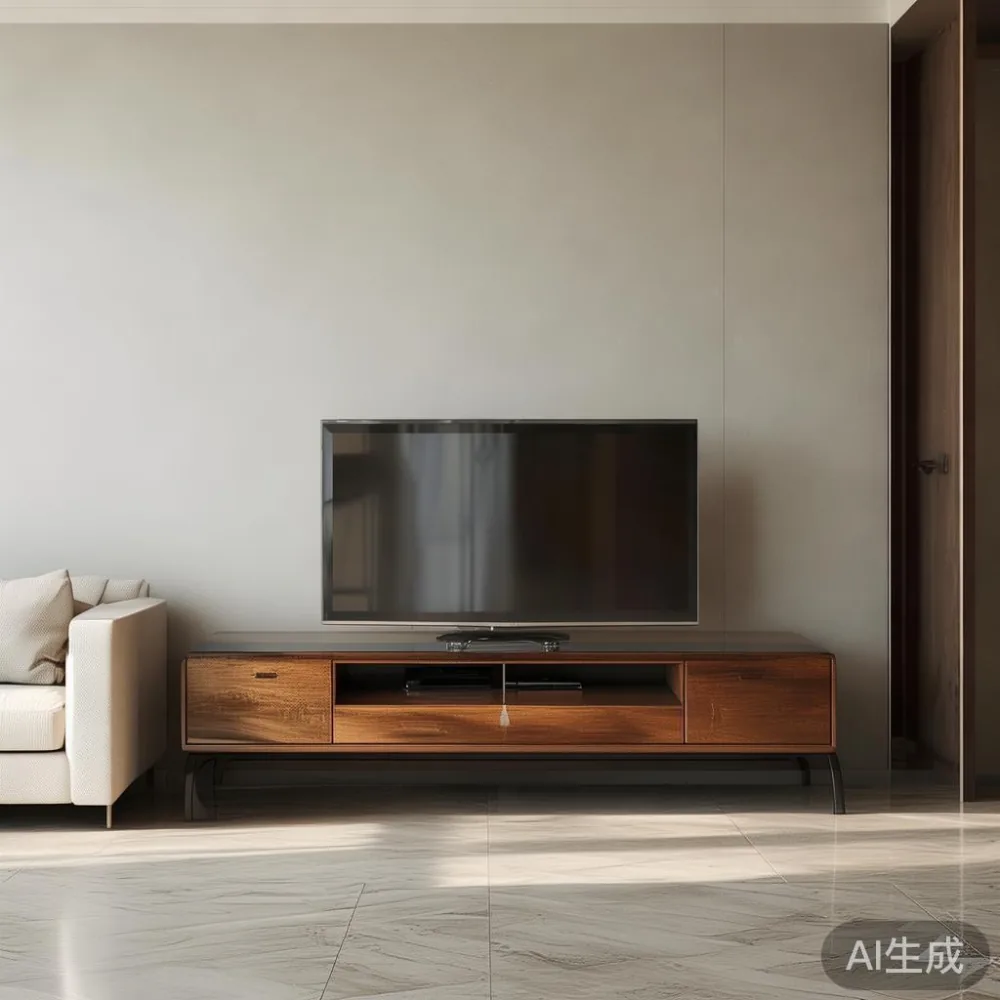
I moved into a four-room HDB flat in Tampines three years ago, and the piece I worried about most was a 180 cm lacquered TV cabinet in matte walnut. Singapore does something unforgiving to lacquer: 80 to 90 percent humidity through most of the year, afternoon thunderstorms that push the living room past 32 degrees Celsius, and air-conditioning blasts that swing the temperature 8 to 10 degrees in an hour. Within eight months my neighbour's open-pore oak unit had tiny bubbling near the cable slot. Mine, after some trial and error, still looks even. This article is what I learned, written for anyone choosing or already owning a lacquered TV cabinet in a Singapore HDB flat, condo in Punggol, or landed terrace in Bedok.
What Makes Singapore a Lacquered Surface Stress Test
Annual relative humidity here rarely drops below 65 percent and regularly sits between 75 and 90 percent from April through October. For a lacquered wood surface, that matters because wood fibres absorb and release moisture continuously. A solid wood dining table in air-conditioned living space can move 1 to 2 percent in width across a wet week. A piano-finish lacquer film is rigid; it does not stretch. When the substrate swells underneath, the film cracks or lifts at the weakest point, often the corner joints of a TV cabinet top.
Salt air adds a second variable. If you live within roughly 2 km of the coast (East Coast, Marine Parade, parts of Punggol facing the strait), airborne chlorides settle on horizontal surfaces as a fine film. Over six to twelve months they dull a gloss finish, and they mark the grout lines of any stone-look detail on a TV cabinet the same way they mark a marble table. I wipe my cabinet weekly with a barely damp microfibre and nothing else. Avoid generic household sprays; many contain silicone oils that build up and haze under humid conditions.
How do I choose a rattan furniture for a living room?
Choose a rattan piece for the room it will live in, not the showroom you fell in love with: pick kiln-dried Indonesian or Vietnamese rattan with a moisture reading of 8 to 12 percent, a hand-woven seat (not machine-laminated strips), and a frame your joint can lift 10 cm off the floor at day to keep it above mopping splash; pair it with a sealed tropical hardwood base so the contrast against a lacquered TV cabinet stays clean. In Singapore, that means asking the showroom for the kiln-drying certificate and pressing the weave with your thumb for 5 seconds; if it springs back without a white mark, the rattan was stored dry enough for HDB corridor conditions.
The Daily 5-Minute Routine That Protects a Lacquered TV Cabinet
My routine takes 5 minutes and runs twice a week. First, a dry microfibre wipe in the direction of the grain, never circular. Circular wiping on a satin lacquer creates visible swirl marks under afternoon sun, and afternoon sun is unavoidable if your TV cabinet faces the windows in a typical Tampines living room. Second, a barely damp wipe with a 60 to 70 percent water and 30 percent white vinegar solution once every two weeks. No more often: over-wetting is the single most frequent cause of finish degradation I see in after-sales photos shipped back to our workshop.
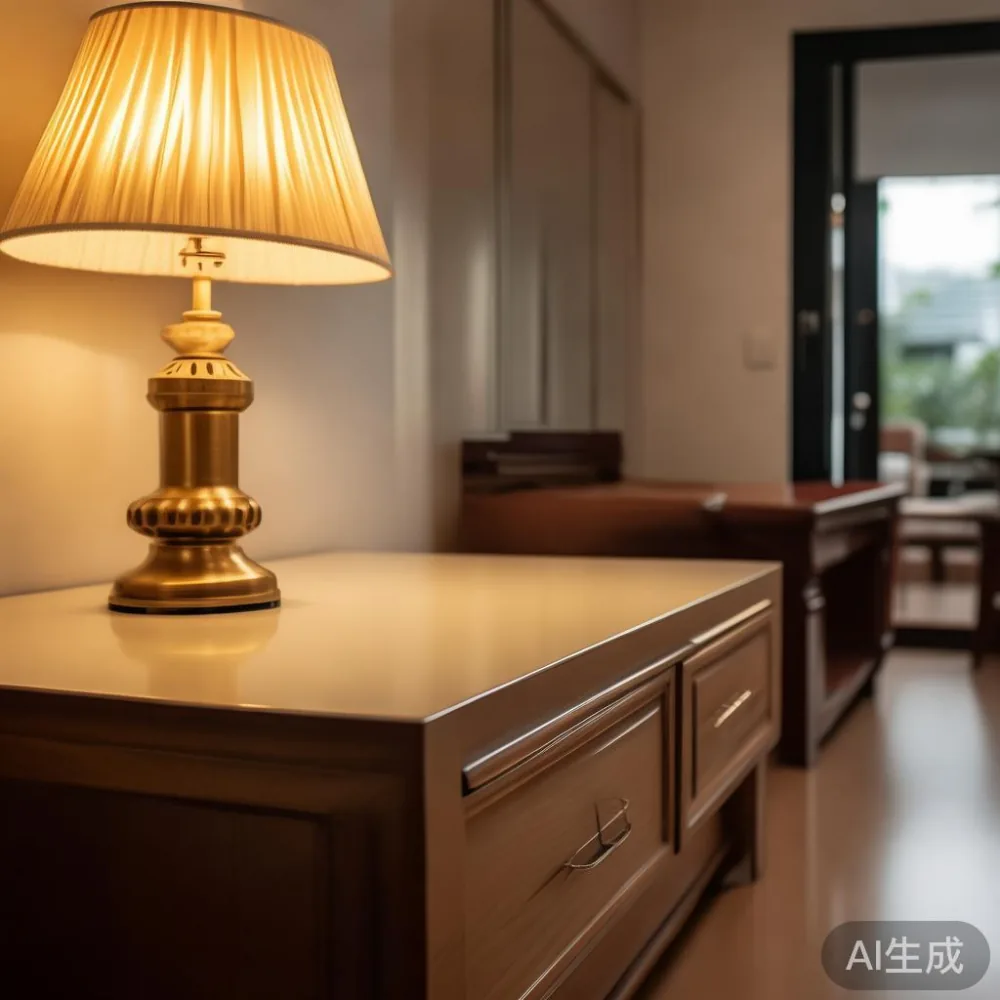
Keep coasters under any decorative ceramic or marble table accent that sits on the TV cabinet. Lacquer hates ring marks, and a cold glass of iced lemon tea at 4 degrees Celsius will leave a faint white bloom on a dark walnut finish in under ten minutes. Coasters cost S$8 to S$25 a set in Tiong Bahru or Taobao; replacing a lacquered top costs the price of the cabinet. The arithmetic is simple.
Dealing with the Three Things That Actually Go Wrong
After handling warranty claims and refinishing requests on a few thousand pieces over the years, three account for almost every problem on a lacquered TV cabinet in this region.
White water rings. Caused by trapped moisture under a cold object. Place a cotton cloth over the mark and press with a clothes iron on low for 8 to 10 seconds. The moisture redissolves into the lacquer instead of staying as a white haze. Works on rings less than 48 hours old; older marks need professional buffing.
Hairline cracks at corners. Caused by the cabinet substrate moving while the lacquer film stayed rigid. Stop the crack from lengthening by stabilising humidity: run the air-conditioner 4 hours daily at 24 to 26 degrees Celsius, and place a small hygrometer (S$12 to S$20 at any Challenger outlet) on the cabinet top to confirm you stay between 55 percent and 65 percent RH. If the crack already runs longer than 5 cm, stop and call a refinishing specialist.
Yellowing on white or ivory lacquer. Singapore's UV index hits 11 to 13 on clear days, year-round. UV is the only thing a quality lacquer cannot be protected from forever. Rotate decorative objects weekly so no single spot bakes; draw the sheer curtains between 1pm and 4pm; consider 3 percent UV film on the windows nearest the TV cabinet. These measures add 4 to 6 useful years before yellowing becomes visible.
Can I Place My TV Cabinet in the Air-Con Corridor Without Ruining the Finish?
Yes, with two conditions. First, the cabinet must sit at least 15 cm from the direct air-con outlet so the cold airstream does not hit the same spot every cycle. Second, the back panel needs 5 cm of breathing room from the plaster wall, because the back of a lacquered TV cabinet is the least sealed surface and the first place moisture damage shows up. In most HDB flats, push the cabinet 8 to 10 cm from the wall: 5 cm for airflow, 3 to 5 cm for cable routing and to clear skirting the GI trunking the renovations left behind.
If your corridor is narrow, remember that a standard HDB corridor measures roughly 1.2 m wide. A 180 cm cabinet plus 30 cm of buffer means the longest single piece you can carry in is around 2.4 m if you angle it through a doorway. Measure first; movers charge S$120 to S$280 per trip in Singapore and the last thing you want is a cabinet wedged at the 5th-floor stairwell. Lift sizes also constrain you: most HDB passenger lifts accept a 1.8 m piece if the protective blanket stays on; service lifts accept more. Confirm with your condo management, since Punggol and Bedok condos often restrict move-in hours to weekday afternoons.
Why I Now Buy From Makers Who Refinish, Not Just Replace
Three years into ownership, my Tampines TV cabinet has a 3 cm scuff from a moving day bump and a small ring I made the mistake of testing. Both are fixable. The maker I chose, MIDHILL, runs a lifetime refinishing programme I have used once already. The technician spent a morning on site, dust-masked the area with plastic sheeting, sanded the affected areas with 800 and 1500 grit paper, and resprayed two coats in the original matte walnut. The total bill was zero because I shipped within their coverage window; outside the window the same service is quoted at roughly S$180 to S$320 per panel. That is a tenth of replacing the piece, and it kept my 180 cm solid wood TV cabinet out of a Jurong incinerator.
This matters more than it sounds in a tropical market. Imported flat-pack furniture from regional mass producers often excludes humidity damage from warranty, with very specific clauses about relative humidity above 70 percent. MIDHILL's 10-year structural warranty, combined with lifetime refinishing access, is one of the few mainland-China-origin offers designed for an SGD-spend customer in a HDB flat in Tampines. My colleague in Punggol ordered a 200 cm TV cabinet with a single drawer and two soft-close doors in ash; mine is walnut. Both have survived the same climate with similar care. Solid wood, properly kiln-dried and sealed, holds up.
The Care Calendar I Stick to in Singapore
Here is the schedule I actually follow. Weekly: dry wipe with microfibre in the grain direction; check that coasters are under every object. Monthly: damp wipe with the water-and-clay vinegar mix; inspect for any new ring marks or micro-cracks near joints. Quarterly: tighten any hinge screws on doors with a hand screwdriver; lift doors by the handle, never the edge. Yearly: book a refinishing inspection through their concierge, usually free if the piece is within the warranty period. Every seven to ten years, depending on UV exposure: full top respray, quoted at S$260 to S$480 for a 180 to 200 cm TV cabinet.
This schedule assumes a household of two adults with no pets or children. With two cats under 5 kg, double the weekly wipe. With a toddler, add silicone edge protectors to all corners (S$6 to S$10 a set) and expect to refinish the upper edge every three to four years instead of seven.
Pairing the Cabinet with the Rest of a Light-Luxury Living Room
Light luxury, in the French and American senses both, asks for restraint. The pieces I have watched age well in local showrooms and homes are not the flashiest; they are the ones with quieter proportions, narrower frames, and finishes that read as material rather than as finish. A French light luxury TV cabinet in matte walnut pairs cleanly with a solid wood sofa in oat linen, a low solid wood bed frame in the master bedroom, and a marble table accent in the dining corner without any single item shouting. Post-modern light luxury lets you push the contrast: an oversized American walnut dining table with a black powder-coated base, a slim nightstand in matching black walnut, and a TV cabinet whose lines are blockier and whose hardware is brass.
In every case, the lacquered surface is the vulnerable piece. A solid wood sofa, a bed frame, a dining table, a wardrobe, and a nightstand all share the same substrate and finish family in a coordinated light-luxury set. Treat them as a family. Use the same coasters, the same wiping routine, the same humidity targets. Your TV cabinet is the most visible because it sits under the most light; the wardrobe behind the bedroom door is the least visible and the most neglected. The one that fails first is rarely the one you expected.
What About Solid Wood Pieces That Sit Near Open Windows
Last month I visited a client in Bedok who had placed a 160 cm oak TV cabinet within 1.5 m of a west-facing window that gets full afternoon exposure. Three years in, the side panel facing the window had visibly darkened while the side facing the room had stayed reading. The owner thought it was dirt; it was UV-driven oxidation of the oak. The owner re-leveled the cabinet 60 cm away from the window, added a linen sheer, and booked a refinishing for the affected panel. The fix cost S$220 and the cabinet is back in service.
The takeaway is mechanical. If your TV cabinet must sit near a window, place it at right angles to the light, not parallel. Parallel placement bakes the entire face evenly, and that is the configuration where lacquer fails fastest. Outside that window, the rest of the room can carry an oak walnut work from home corner: a small oak desk, a walnut bookshelf, a slim filing cabinet, all sharing the same humidity cycle as the TV cabinet in the living room. The whole set ages together, finishes together, refinishes together, and travels through your next renovation 290 days from now as one coordinated system rather than a stack of mismatched pieces.
The Single Best Purchase You Can Make This Week
A S$15 hygrometer. Place it on top of your TV cabinet. Read it every morning for two weeks. You will learn your flat's actual humidity range, not the range the weather app reports. Once you know whether your Tampines flat sits at 70 percent or 82 percent on a typical afternoon, you can size your dehumidifier (a 12L Meaco or similar costs S$220 to S$320 and pulls a typical HDB living room down to 55 percent RH in 3 to 4 hours), size your care schedule, and stop guessing. The hygrometer pays for itself in the first lacquered top it saves. Everything else in this guide is downstream of that one number.
Good lacquer, in a well-built cabinet, from a maker willing to refinish what they sell, will outlast two moves and three renovations in Singapore. That is the test that matters.