Matching Furniture to a Warm Minimalist Home
Warm minimal interiors are not empty rooms. They are carefully edited spaces where pale timber, warm neutral paint, tactile textiles, and a few sculptural objects create comfort without visual clutter. In Singapore, the challenge often starts with the physical envelope: a compact HDB flat in Tampines, a Bedok condo, or a Punggol home where the television wall must work hard without making the living area feel crowded.
The central piece is usually the tv cabinet, but choosing one is only the beginning. Its depth, colour, joinery, and visual weight need to agree with the walls, flooring, sofa, dining table, and lighting. If those decisions are coordinated, a warm minimal room can still feel relaxed, practical, and distinctly lived-in.
MIDHILL designs and manufactures solid wood furniture in Foshan, established in 2008 and now exporting to more than 15 countries. Its 10-year structural warranty and lifetime refinishing service are particularly relevant in Singapore, where humidity, sunlight, and frequent family use can quickly reveal weaknesses in cheaper furniture. Prices below are indicative SGD ranges, while delivery timing can vary by product, finish, and Singapore stock availability.

What makes a warm minimal interior feel warm rather than plain?
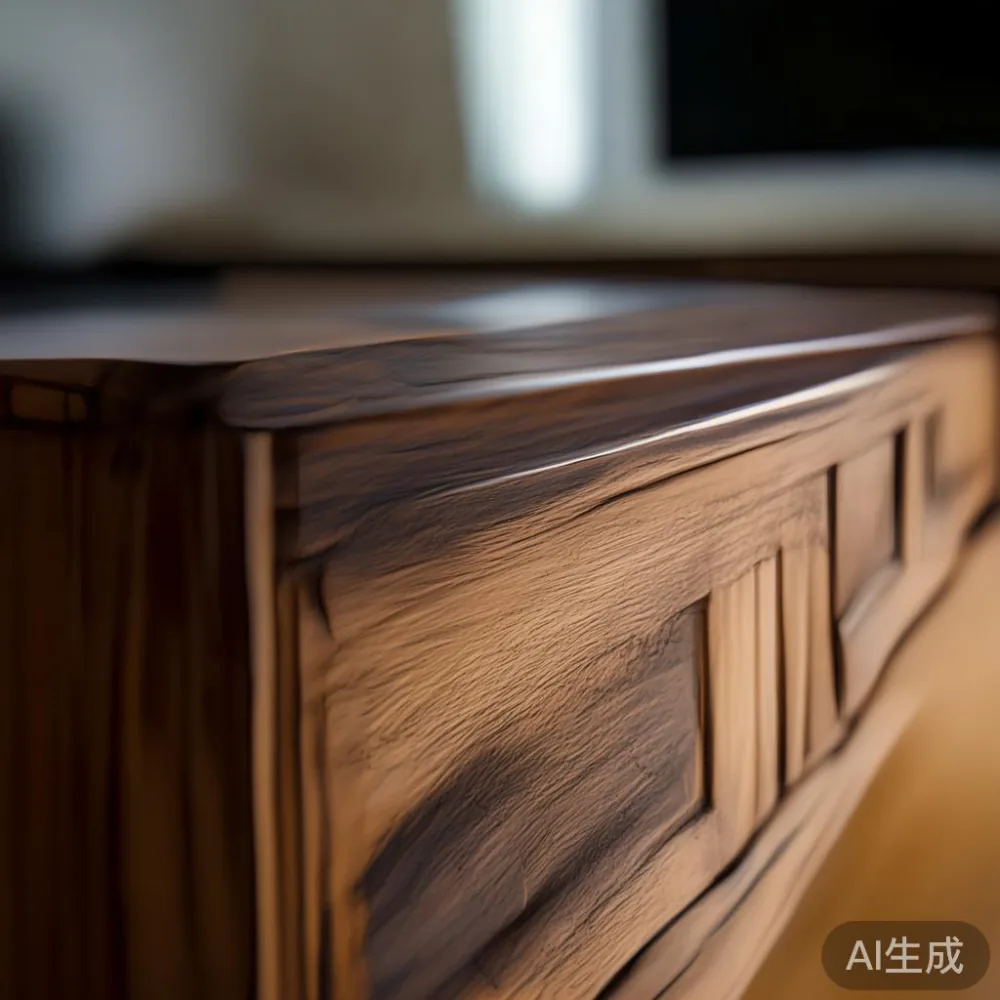
Warm minimalism relies on proportion, texture, and balance. A room filled with identical white boxes may feel immaculate but emotionally flat. Warmth comes from natural grain, softly rounded edges, woven fibres, ceramics, warm-white bulbs, and materials that show honest variation.
For an HDB living room measuring approximately 300 cm wide with a 320 cm sofa, a 180–220 cm tv cabinet usually creates a balanced composition. You need roughly 40–60 cm of wall on either side for breathing space, although a narrower room may suit a 140–160 cm cabinet. In a Bedok condo with a 280 cm media wall, a 180 cm cabinet can still feel generous when paired with one lamp and one artwork.
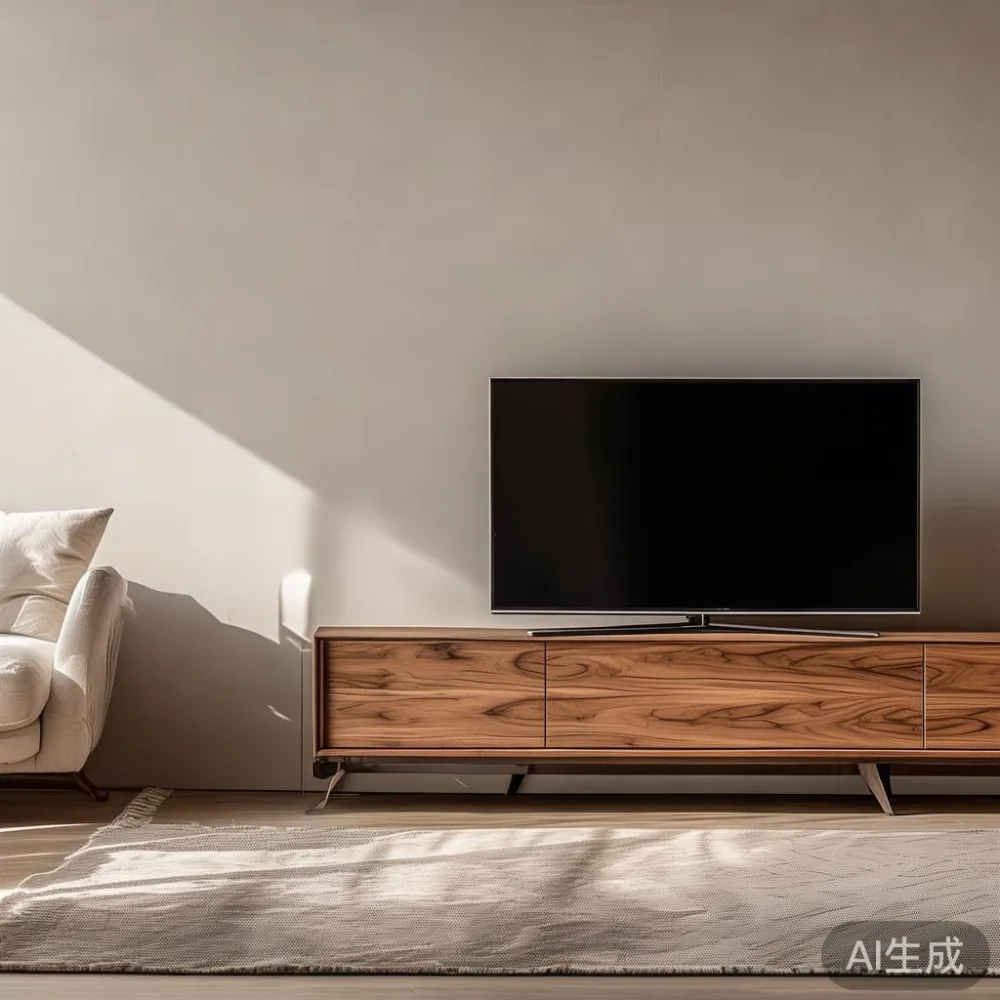
Choose a palette of 3–4 colours rather than matching every item exactly. For example, combine oak with warm off-white walls, greige upholstery, matte black details, and a muted olive cushion. Keep the floor and cabinet in related wood tones, but avoid making every surface the same flat brown. The cabinet should support the room's palette, not monopolise it.
Texture is especially important. A timber tv cabinet with visible grain can sit against a smooth painted wall, while a bouclé solid wood sofa adds softness. A marble table introduces another hard surface and can serve as a visual anchor, provided it is not too glossy or oversized. In compact homes, one round marble side table of about 45–50 cm diameter often reads more comfortably than a large rectangular one.
How do I choose the right TV cabinet for a warm minimal home?
Start with the television and wall dimensions, then work outwards. Measure the TV diagonally, not just its width. A practical rule is to select a cabinet around 15–25% wider than the screen, though style can alter the visual proportion. For a 140 cm television, a 180–220 cm tv cabinet is often appropriate; for a 110 cm model, a 160–180 cm cabinet is more suitable.
Depth matters just as much as width. Most televisions need 5–8 cm of clearance for cables, ventilation, and the wall bracket. A cabinet depth of 38–45 cm can hold a television, router, game console, and media accessories while preserving a comfortable walking route. If your corridor is only 95 cm wide, order a cabinet no deeper than 38 cm because the packaging may add 4–6 cm. An open HDB lift measuring 100 cm wide by 120 cm deep can accept many flat-packed units, but the carton must be checked before delivery.
Consider how the cabinet is constructed. Solid timber, plywood backs, dovetail or mortise-and-tenon joinery, and stable shelves offer a different tactile and long-term proposition from thin fibreboard. MIDHILL tv cabinets are built as solid wood furniture and carry a 10-year structural warranty, with lifetime refinishing available for eligible products.
For warm minimalism, look for restrained doors, clean reveals, and small-radius corners rather than excessive decoration. Slatted fronts can add texture, but they should use shallow, regular spacing so they do not create a busy pattern. Handleless or recessed pulls are useful in compact living rooms because they reduce projections and visual noise.
Which timber and finish work best with warm walls and HDB flooring?
Light and medium oak tones create an immediate connection with warm minimal interiors. Pale oak works with cream, beige, and dusty pink walls; medium oak sits comfortably beside warm grey or soft white. Walnut is deeper and more dramatic, so it is better used as a controlled contrast against lighter walls and flooring.
Do not assume a natural finish will look the same in every unit. Singapore homes receive both north-facing diffused light and west-facing afternoon sun. Request product samples if possible, and consider how a finish changes under 2700–3000K LED lighting. Warm-white lamps between 2700K and 3000K usually make timber grain more welcoming than cool 4000K lighting.
Protection is part of finish selection. Avoid placing a tv cabinet directly against windows where curtains repeatedly touch the surface. Maintain about 15–20 cm of ventilation space behind electronic equipment and wipe the top with a damp cloth rather than a soaked one. For coastal humidity, allow finished timber to acclimatise for roughly 48–72 hours before installation.
Restaurants often use the phrase French provincial for dining room, yet the style does not have to be copied literally. A solid wood dining table with gently shaped ends and a light oak finish can borrow that warmth without introducing ornate furniture. In an 8-seat dining zone, a 200–220 cm table usually leaves 90 cm of clearance around the perimeter. A 160–180 cm table is more realistic for an HDB dining area seating 4–6 people.
Before asking where to buy dining table from MIDHILL, check the actual route from the supplier to your dining space. The table should not block the kitchen door or reduce a circulation path below 75–90 cm. Door opening, chair pull-back, and lift access are more useful measurements than the catalogue photograph.
How should I coordinate a sofa, dining table, wardrobe, and nightstand?
A warm minimal living room usually needs one generous horizontal element and one soft focal point. The tv cabinet establishes the horizontal line, while the sofa defines comfort and colour. Avoid a sofa that is almost the same width as the cabinet unless the room is large; a difference of 20–40 cm often creates a more relaxed arrangement.
The phrase best French sofa for 2026 may suggest a curving, upholstered silhouette, but shape must follow the room. A compact flat in Punggol may benefit from a 190–210 cm solid wood sofa with a 90 cm depth, while a larger Bedok living room can accommodate 220–250 cm. Tight woven upholstery in oatmeal, sand, or muted taupe complements oak cabinetry and remains visually calm.
Comparisons such as American sofa vs Modern sofa often focus on profile, but proportion matters more than labels. American-inspired pieces may use straight lines and broad cushions; modern forms may have lower frames and sharper geometry. Select the one whose seat height works with your coffee table and whose visual weight balances the tv cabinet.
In the bedroom, a solid wood bed frame with a low headboard preserves the restrained atmosphere. A 150 cm bed requires a room width of about 250 cm for comfortable side access, while a 180 cm queen bed needs approximately 300 cm. Beside it, a 40–50 cm wide nightstand should align with the mattress edge and include a drawer large enough for a phone, charger, and 25 cm glass of water.
The wardrobe should remain visually quiet. Full-height doors up to 250–270 cm can make the ceiling feel higher, but flat panels in a wall-matching finish reduce clutter. Where space is limited, a 90–120 cm wide wardrobe can work between the bedroom and bathroom walls. Match its timber tone to the bed frame or nightstand, not necessarily to every other item in the room.
What makes a TV cabinet look more expensive without making the room feel heavy?
Light luxury is about proportion, material accuracy, and controlled detail. French light luxury often introduces curved profiles, fine joinery, and soft upholstery. American light luxury tends toward generous scale, clean architecture, and tactile upholstery. Post-modern light luxury uses selective contrast, unusual geometry, and a mix of periods. A warm minimal home can borrow one idea at a time rather than combining all three at once.
For the media wall, an Italian light luxury sideboard may offer a refined reference for sculpted edges, balanced storage, and carefully finished surfaces. The useful lesson is not to imitate a European drawing room, but to use proportion and craftsmanship. A 200 cm tv cabinet with slim legs, aligned doors, and softly eased corners can look more sophisticated than a heavily ornamented 220 cm model.
Concrete details influence perception more than decoration. Use consistent gaps of about 2–3 mm between cabinet doors, keep the television centred on the cabinet rather than the wall, and conceal cables in a raceway no wider than 6–8 cm. If the cabinet is freestanding, leave 8–12 cm below it for a shadow line, but only if cleaning and pet access are priorities.
Set the cabinet at least 8–10 cm away from the wall if equipment requires rear ventilation. Avoid placing fragile ornaments directly above it. A single ceramic vase, a framed print of 40 × 50 cm, or a narrow floor lamp is enough. More than 3 objects on top of a 200 cm cabinet often creates clutter in a room with fewer than 25 m² of usable living area.
Budget in SGD rather than relying on discount language. Indicative examples include a 160 cm MIDHILL tv cabinet at SGD 1,180–1,680, a 200 cm solid wood dining table at SGD 1,680–2,480, and a 190 cm solid wood sofa frame with upholstered seating at SGD 1,980–3,280. Exact pricing depends on timber, finish, dimensions, and configuration. Online orders above US$350 qualify for free shipping under MIDHILL's stated delivery policy, with GST calculated separately for Singapore deliveries.
How do delivery, returns, and maintenance affect the final choice?
Measure everything twice, especially the route from the lift to the tv cabinet's final position. HDB corridors can be 120–150 cm wide, while some apartment lobbies and lift interiors are more restricted. Record the narrowest point, the lift door opening, turns, and any staircases. A cabinet that fits the room but not the corridor is not a practical purchase.
Typical production and delivery may take 15–45 days, depending on stock, finish, and shipment schedules. Confirm the dispatch estimate in writing. Installation is usually simplest with two people: lift one side, align the wall spacer, and check the level across a 180 cm span. Solid wood furniture can weigh 45–85 kg for a 180–200 cm tv cabinet, so remove doors and shelves where the design allows.
Singapore's 14-day returns policy gives buyers room to assess colour and scale, but returned items must remain unused and protected. Check the item on arrival for joinery alignment, drawer movement, finish consistency, and shipping marks. Photograph the unboxing and keep all packaging until the cabinet has been inspected.
Maintenance is straightforward. Dust with a dry microfibre cloth, wipe spills within 30 minutes, and avoid silicone sprays or ammonia-based cleaners. Use coasters and felt pads, especially on a marble table. Re-oil or refinish timber when the surface looks dry rather than applying product every month. MIDHILL's lifetime refinishing service gives long-term care a clearer path than treating the cabinet as disposable.
Last month I visited a colleague's three-bedroom HDB flat in Tampines and watched a 200 cm tv cabinet create a surprisingly warm media wall. The timber was pale oak, the walls were warm white, and the sofa had oatmeal fabric. At first, the cabinet looked slightly light against the darker vinyl floor. Once the lighting changed from 4000K to 2700K and the television was switched off, however, the room felt balanced. That experience reinforced a simple rule: evaluate the furniture under the lighting you use after sunset, not under a showroom's neutral bulbs.
Can a warm minimal home still include collectible and statement furniture?
Yes, but statement furniture should replace an object rather than compete with everything else. One sculptural chair, one Italian light luxury sideboard, or one marble table can anchor a room if the remaining pieces remain quiet. The point is controlled contrast, not a crowded gallery.
Begin with the tv cabinet, because it fixes the media wall's proportions. Match its timber to the floor or bed frame, its hardware to lighting and table legs, and its shape to the sofa. Add textiles before adding décor: a 50 × 70 cm cushion, a light throw, and a woven rug can soften the room without altering its architecture.
For dining, a MIDHILL dining table in solid oak or walnut can bridge Scandinavian restraint with warm minimalism. Keep the chairs visually aligned, use one pendant light, and limit tabletop accessories to a low bowl and 2 candle holders. A round table of 120–140 cm often suits an enclosed HDB dining nook better than a narrow rectangle because it improves circulation and conversation.
A considered room does not need many purchases. It needs compatible dimensions, repeatable materials, and enough empty surface to let the furniture breathe. Once those principles are in place, a warm minimal interior becomes practical rather than austere: comfortable for daily use, easy to maintain, and visually calm even in a compact Singapore home.