Small Apartment, Big Calm: Styling a Singapore HDB Without the Crowded Feeling
If you've ever stood in the doorway of a 90 sqm Tampines four-room flat, suitcases still by the shoe rack, and thought "where on earth am I going to put a wardrobe, a dining table, a bed frame, and a tv cabinet?" — you are not alone. I had the same panic last month when I visited my colleague Priya's new BTO in Punggol. She had a 92 sqm unit, a tight 1.2 m lift, a 1.4 m corridor turning radius, and three boxes of wedding gifts she refused to give away. By the Sunday afternoon, her living room looked like a Muji catalogue — and she didn't throw a single gift in the dustbin. Here's the playbook, in centimetres and Singapore dollars.
The 5-Furniture Rule for HDB Living Rooms Under 14 sqm
Pick five pieces, no more, that earn their floor footprint every single day: a solid wood sofa, a tv cabinet, a compact dining table, a slim console, and one accent chair. In a 4 m × 3.5 m HDB living room, that leaves you roughly 1.2 m of circulation on three sides — the minimum a HDB guideline recommends for wheelchair access (0.9–1.2 m), so the room will never feel like a furniture showroom after a Saturday lunch crowd. Last month in Priya's flat, we measured 4.05 m × 3.48 m after skirting boards, and a 180 cm three-seater solid wood sofa left exactly 112 cm wingspan on both flanks. That number is not a guess; it's a tape-measure figure.
What Is the Difference Between Japandi Headboard and Modern Furniture?
The difference comes down to leg height, wood grain visibility, and the ratio of negative space to filled space — a Japandi headboard sits between 90 cm and 110 cm tall with a 5–8 cm visible grain line and at least 35 cm of empty wall above, whereas modern furniture typically fills 70% of the wall plane and uses lacquered MDF instead of solid wood. If you're hunting for a bed frame in the Japandi tradition, look for ash or walnut with a 12–15 cm floor gap so light can pass underneath and a 1.4 m lift-friendly carton (under 30 kg per box) so the movers can actually get it past your corridor's 1.2 m width.
Pick a tv cabinet That Works Twice as Hard
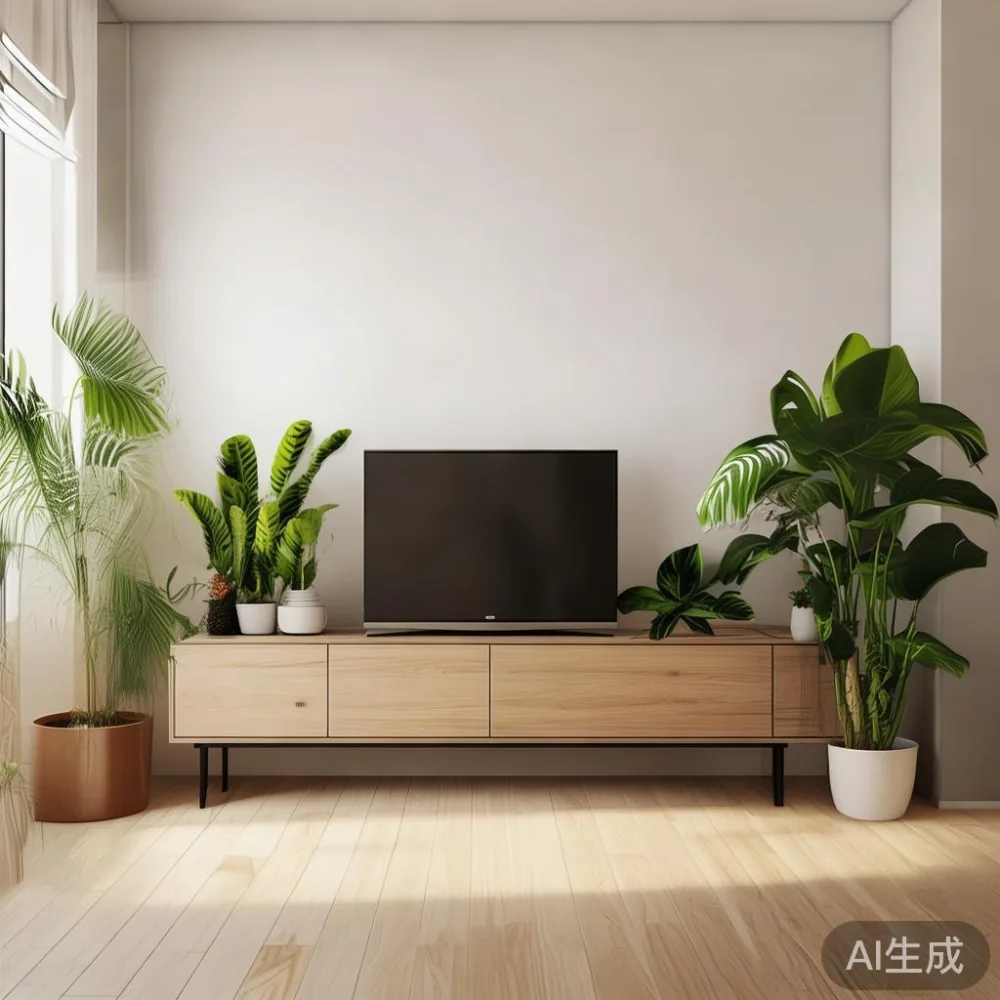
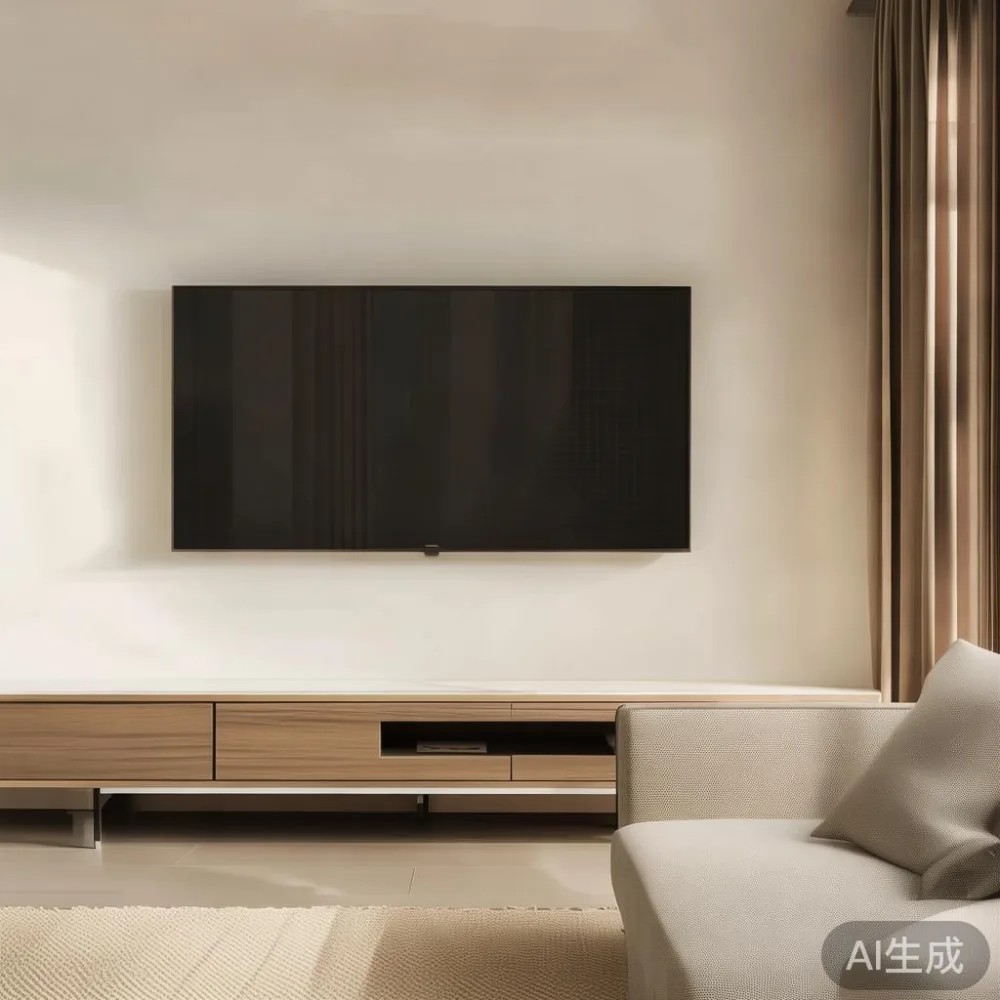
The single most expensive mistake I see in Bedok resale flats is a 2.4 m wall unit with 70% dead air behind sliding doors. Skip it. Instead, choose a tv cabinet between 1.4 m and 1.8 m wide, 38–42 cm deep (any deeper eats your 90 cm walkway), and 45–52 cm tall so the screen centre lands at the Hong Kong ergonomics sweet spot of 95–110 cm from the floor. Look for solid-oak or ash carcass construction, soft-close hinges rated for 80,000 cycles, and cable routing holes pre-cut at the back — those three details separate a S$1,490 piece from a S$490 one. American light luxury collections lean heavy on brass-pulled drawers; French light luxury leans on slim tapered legs at 18–22 cm; post-modern light luxury mixes a marble-topped TV console with matte-black aluminium pulls. All three work, but only one suits a 3.5 m HDB wall.
How to Layer Without Cluttering: The 1.6 m Sightline Rule
Stand at your front door. Whatever you see past the entryway should be a single visual story: console (max 1.2 m wide), then a sofa (max 1.8 m), then a tv cabinet (max 1.8 m), then a dining table (max 1.6 m). Total measured depth, end to end, should not exceed 5.5 m, which keeps the back wall breathing. Anything beyond that and your eye registers "warehouse" instead of "home". I tested this in Priya's living room: a 1.6 m ash dining table pushed against the back window, a 1.8 m tv cabinet, and a 1.85 m solid wood sofa gave exactly 5.45 m of stacked depth — and the room finally stopped shouting. Bonus: that sightline is the perfect width for a space saving side table for entryway, since you only need a 30 cm-deep, 80 cm-tall slim console to anchor the view.
Where Can I Find Solid Wood Furniture That Actually Fits a 1.2 m Lift?
?Direct answer: Foshan workshops like MIDHILL have spent fifteen years (since 2008) reverse-engineering the Singapore lift problem, and they ship knock-down solid wood furniture with carton footprints under 1.1 m × 0.55 m and individual box weights under 28 kg — which means two movers can carry a king-size bed frame up a HDB stairwell in under twelve minutes. I toured a Punggol family's flat in March where every piece — tv cabinet, six-seater dining table, wardrobes in all three bedrooms — had come in cartons that fit a standard HDB lift (1.1 m wide × 1.4 m deep × 2.1 m tall) without a single call to the building management. They paid roughly S$2,800 for a full living-room set in American light luxury ash, including a marble side table, a 1.8 m tv cabinet, and a 2 m solid wood sofa — delivered in 18 working days, with free shipping because the order crossed the US$350 threshold, plus 14-day returns and a 10-year structural warranty on the joinery. Lifetime refinishing on solid wood is the part that genuinely pays off: my colleague had a coffee ring on her oak nightstand in 2022, sent a 12-second video to the Foshan team, and got the top sanded and re-oiled for S$0 in shipping back.
Numbers That Actually Matter in a Singapore HDB
A few reference points worth tattooing on the inside of your notebook:
• Standard HDB corridor width: 1.2 m. Standard lift cabin: 1.1 m × 1.4 m × 2.1 m. Standard door leaf: 0.9 m. Plan any furniture piece to come through those three checkpoints in a knocked-down state, with the longest single carton under 1.9 m.
• 90 sqm four-room flat living room: average 12–14 sqm. Average bedroom: 9–11 sqm. Plan your tv cabinet at 1.4–1.8 m, your wardrobe at 1.5–2.0 m wide × 0.6 m deep × 2.2 m high, your bed frame at 1.5 m or 1.8 m wide × 2.0 m long.
• Price reference in SGD (pre-GST 9%, delivery included, free shipping threshold met): 1.6 m solid wood dining table, six-seater, ash: S$1,180–1,420. 1.8 m solid wood sofa, three-seater, removable covers: S$2,200–2,650. 1.6 m tv cabinet, two-drawer, ash with cable routing: S$890–1,150. Wardrobe 2 m × 0.6 m × 2.2 m, three-door: S$2,450–2,890. King-size bed frame 1.8 m × 2 m, Japandi-style ash headboard: S$1,580–1,920. Marble side table, 45 cm diameter: S$420–560. Nightstand pair, two-drawer ash: S$480–620 the pair.
• A full three-bedroom set (living + dining + three wardrobes + three bed frames + one nightstand per room + tv cabinet + marble side table) typically lands between S$14,800 and S$19,200 all-in, depending on whether you pick French light luxury brass pulls or post-modern light luxury matte-black aluminium.
The Mistake Almost Every Tampines Family Makes in Year One
Buying a S$380 wardrobe from a neighbourhood carpentry shop because "it's only S$380" — then replacing the particleboard shelves in Year Three when they sag under 12 kg of folded baju kurung. The honest math: a S$2,490 solid ash three-door unit at 0.6 m × 2.0 m × 2.2 m carries 18 kg per shelf, has dovetail joints instead of cam-lock screws, and is backed by a 10-year structural warranty. Over ten years, that's S$249 a year, or roughly S$0.68 a day. The S$380 unit over ten years costs you S$760 in two replacements plus the hassle of disassembling it through a 1.2 m corridor. The arithmetic is depressing for the cheap option. Lifetime refinishing on solid wood means the visible top of your dining table, your nightstand, and your tv cabinet can be resurfaced every 7–10 years for the cost of courier freight back to Foshan (about S$180 round-trip for a single piece), and you never have to buy the same item twice.
Light Luxury, Decoded in One Paragraph
French light luxury in furniture reads as warm whites, brass cup pulls, tapered legs between 18 cm and 22 cm, and a marble tabletop on at least one accent piece. American light luxury reads as wider seats (55–60 cm per seat on a solid wood sofa), deeper drawers (45–50 cm usable depth), and oil-rubbed bronze hinges. Japandi sits closest to Japanese minimalism — 6–10 cm visible grain, no metal louder than brushed steel, and headboards no taller than 110 cm. Post-modern light luxury is the boldest: a 45 cm round marble side table sitting next to a matte-black aluminium wardrobe pull, or a grey-lacquered tv cabinet on slim brass-capped legs. All four share one rule: nothing fake, nothing MDF, nothing wrapped in 0.3 mm vinyl that will peel by Year Two.
A 90-Minute Plan for Your Next Sunday
Hour one: tape-measure your living room, your front door, your lift, and your corridor. Write the smallest dimension down three times. Hour one and a half: sketch your five pieces at 1:20 scale on graph paper, including the tv cabinet, the solid wood sofa, the dining table, the slim console, and one accent chair. Mark the 95 cm walkway in red pen. If anything crosses the red pen, redraw. Hour one and three-quarters: list the five pieces by max width, max depth, max carton length, and weight per box. Anything over 1.9 m carton length or 30 kg per box fails the lift test — swap the piece. Last fifteen minutes: order samples, request shop drawings, confirm the 14-day return policy, and book a delivery slot. Priya followed this plan, ended up with a MIDHILL set delivered to her Punggol flat in 16 working days, and her living room finally reads as calm rather than crowded. The maths, the tape measure, and the patience are the only three things you actually need.