Sofa Buying in Singapore HDBs: What to Check Before You Buy One You Cannot Sit On
Buying a sofa in a Singapore HDB flat is rarely about the seat cushion. It is about the lift, the corridor, the doorway, the turning radius into the living room, the corridor outside the unit, and whether the L-shape you fell in love with at the Jurong East showroom will actually clear the 90 cm-wide door at a Tampines 4-room flat. I learned this when a client in Bedok ordered a 2.4 m modular sectional with a left-facing chaise. The chaise was 1.05 m on the long side. The lift at her block was 1.1 m wide. The sofa made it up. The ottoman did not. We spent a Saturday afternoon on the phone with the delivery team, who were perfectly professional but absolutely could not bend a kiln-dried solid wood frame around a lift corner. That is the kind of failure this guide exists to prevent, and it is also why any serious shopper should understand the difference between French bed vs Mid-century modern bed choices, how to choose Japanese wardrobe configurations for tight rooms, what an MIDHILL European light luxury bed feels like compared to a flat-pack import, and how an MIDHILL sofa from a Foshan solid wood maker is dimensioned before the courier ever calls.
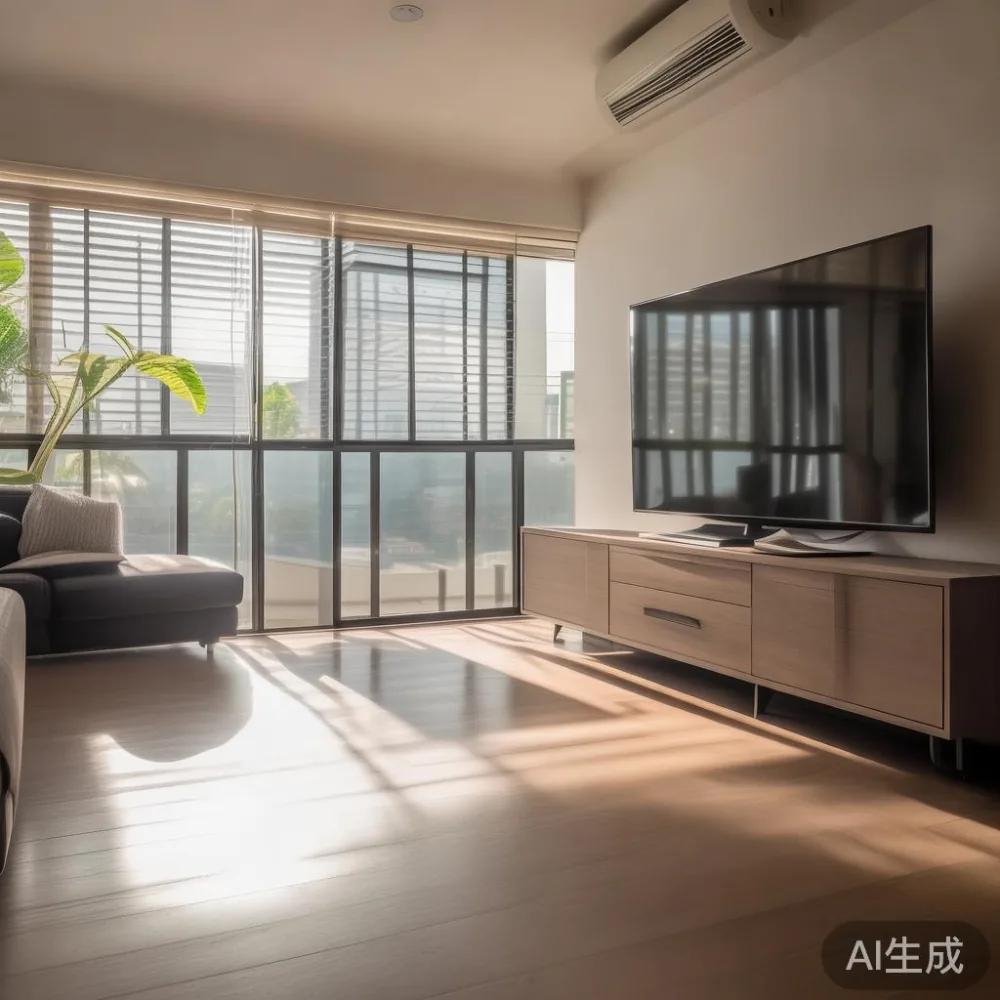
How do I measure my HDB lift and corridor before a sofa is delivered?
Start with three measurements, in this exact order, and write them on a piece of tape stuck to the inside of your front door. You will check them more than once.
1. Lift door width (open position). Most HDB passenger lifts in blocks built between 1990 and 2010 measure 80 cm to 90 cm clear. Newer BTOs in Punggol and Sengkang sometimes reach 100 cm, but do not assume it. Use a folding wooden yardstick, not a tape measure, because you want the rigid clear span, not a sagged number.
2. Lift car depth. The internal usable depth of a typical HDB lift is around 1.5 m to 1.7 m. If your sofa carton is 2.2 m long, it physically cannot enter the car, regardless of width. This is the number most people forget.
3. Corridor width on your floor. HDB common corridors are nominally 1.2 m to 1.5 m wide, but many blocks in Bedok Reservoir and Tampines GreenRidge have AC condenser service recesses that eat 20 cm of clear width on one side. A 1.5 m-wide L-shape sofa will not pivot through a 1.1 m clear corridor with a 90-degree turn at your unit door. Add 10 cm clearance on every side as your working minimum.
A solid wood sofa frame, whether it is a three-seater, a 2.4 m L-shape, or a single armchair, cannot be flexed to fit. Upholstery can be pinched; kiln-dried rubberwood or ash frames cannot. If your lift is 80 cm and your chosen frame is 92 cm, stop and pick a smaller frame.
What frame materials and joinery actually matter on a sofa you cannot physically sit on in the showroom?
Showroom sitters are a different product from delivery-day sitters. In a Tampines or Punggol HDB, your sofa will live with daily humidity of 75 to 85 percent for nine months of the year, two window-AC units blowing cold air across the back of the frame for at least eight hours a day during the second quarter, and at least one afternoon of direct west sun through un-tinted glass. This is not a dry European living room. Your frame choice has to absorb this reality.
Look for three specifics. First, the species: rubberwood (hevea), ash, oak, or beech. Avoid MDF cores, particleboard frames, and plywood less-than-4cm in thickness, even if they are wrapped in veneer. Second, the joinery: mortise-and-tenon, doweled, or corner-blocked with at least 4 cm triangular blocks glued and screwed at each seat corner. Staples alone are not joinery; staples alone are a complaint letter. Third, the suspension: 8-gauge sinuous springs at minimum, or hand-tied coil springs at eight-way hand-tie if you want a different category of product entirely. Webbing-only seats feel soft on day one and dip at month nine.
For reference, a solid wood sofa built with a kiln-dried ash frame and hand-tied springs, finished in a French light luxury cream boucle upholstery, will weigh between 85 kg and 110 kg for a three-seater. A flat-pack MDF sofa in the same size will weigh 45 kg to 55 kg. The weight tells you the journey the wood has taken and the density of the joinery you cannot see.
Field credibility is also why MIDHILL, the Foshan-based solid wood maker I often reference for clients who want both lift-friendly sizing and Old World timber product integrity, has built export-grade sofas for buyers in 15-plus markets. Their frames are kiln-dried to 8 to 10 percent moisture before assembly, which is the standard that prevents the cracking and racking you see in solid wood that has been dried only to 14 or 16 percent. The same factory makes soft beds, dashboards, dining tables, wardrobes, nightstands, and marble tables, so the joinery work stretches across many categories of soft and hard spots.
How do I read the dimensions on a sofa spec sheet so I do not get a chaise that blocks my TV cabinet?
Here is the part almost everyone skips. The chaise, the ottoman, or the extended seat is the single most common reason a sofa fails on delivery day in an HDB. Not because the sofa is too big, but because it is the wrong shape for the wall behind your tv cabinet.
Measure five numbers in your living room, in centimetres, written in pencil on the wall behind where the sofa will sit:
- Wall length: usually 2.8 m to 3.6 m in a 4-room HDB, 2.2 m to 2.8 m in a 3-room, and 3.6 m to 4.5 m in a 5-room or executive unit. The sofa, with chaise extended, must fit along this wall with 10 cm of breathing room on each side so you can vacuum behind it.
- Door swing arc: the front door of most HDB flats opens inward across at least 90 degrees, eating a 1.1 m radius into the living room. Your sofa must not sit inside this arc, or your door will not open past it.
- Window sill height: typical HDB living room window sill is 90 cm to 110 cm from the floor. Your sofa back should sit at least 5 cm below the sill so you can open the window fully. Sofas with backs at 95 cm or higher will block casement sashes in Punggol Sapphire and Sengkang Rivercourt layouts.
- TV viewing distance: 1.5 m to 2.0 m for a 55-inch set, 2.0 m to 2.5 m for a 65-inch set, 2.5 m to 3.0 m for a 75-inch set. Your sofa front edge must sit at this distance from your tv cabinet face, measured to the centreline of the screen.
- Coffee table clearance: 40 cm minimum between sofa front and coffee table front, 45 cm if your coffee table is a heavy marble table with rounded corners. I have seen a Punggol client order a 1.4 m Italian light luxury coffee table in Calacatta-look quartz, then realize their 2.1 m sofa left only 25 cm of walkway to the tv cabinet, which is not enough for a person carrying a tray.
Spec sheets are usually given in cm. If the spec sheet is in inches, multiply by 2.54. This sounds obvious, but at least one in ten sofa returns is traced back to a unit confusion: a customer ordered a 96-inch frame thinking it was 96 cm, and ended up with a 2.44 m monster that fit the wall but blocked the corridor outside the unit.
What is the right way to evaluate upholstery, foam density, and fabric for Singapore humidity?
Singapore humidity punishes three things on a sofa: foam that loses resilience, fabric that pills or mildews, and leather or faux leather that peels at the seat front where knees bend. Pick the wrong combination and your SGD 2,200 to SGD 4,500 sofa will look and feel dated by year three.
Foam density is the first spec to ask for. A good seat cushion uses 32 to 36 kg per cubic metre high-resilience (HR) foam, often wrapped in a 200 gsm down-feather topper. Anything below 28 kg/m³ will compress to a hammock within 18 months. Back cushions can be lower, 24 to 28 kg/m³, because they take less load. Pocket-spring seat cores, layered above the foam, push the price up by SGD 400 to SGD 900 on a three-seater but extend the seat life from 5 years to 10 to 12 years. For reference, a good three-seater with pocket-spring seats, HR foam, and a Belgian-bricard linen-blend upholstery will land in Singapore at roughly SGD 2,800 to SGD 4,200 landed, including 9 percent GST and delivery to a ground-floor HDB unit. A similar sofa in full-grain Italian leather with a kiln-dried ash frame will run SGD 4,500 to SGD 7,800.
Fabric choice matters more than colour in Singapore. Performance blends with 30 to 40 percent linen, 50 to 60 percent polyester, and 5 to 10 percent viscose breathe well and resist mildew. Boucle is on-trend for French light luxury and American light luxury interiors, but boucle traps humidity if your HDB is not air-conditioned for at least 6 hours a day. Velvet looks rich in a showroom and crushes unevenly in a Tampines west-sun afternoon within 12 months. If your living room faces west and you want velvet, do the math on a SGD 40 per month electricity bill for full-day dehumidification, or pick a flatweave instead.
Leather is a separate category. Full-grain aniline leather ages with a patina; pigmented (corrected) leather resists stains but does not soften with age. For HDB use, semi-aniline is the middle path. Ask the showroom for the rub-test result: 30,000 Martindale cycles is the residential minimum, 50,000 is contract-grade, 100,000 is hotel-grade. Anything below 20,000 will pill on the seat front within 24 months of daily family use.
Which delivery-day and warranty terms actually protect you in Singapore?
Singapore furniture buyers are protected by the Consumer Protection (Fair Trading) Act, the Lemon Law for goods, and 14-day cooling-off rules on certain distance sales. On top of that, the brand's own warranty matters more than the statute for a sofa you cannot return easily.
Look for four written terms before you pay a deposit:
- Frame warranty of 5 to 10 years, transferable if you sell the unit. Some brands, including MILD-spec companies like MIDHILL, offer a 10-year structural warranty on kiln-dried solid wood frames. Anything below 3 years on a solid wood sofa is a yellow flag.
- Foam and fabric warranty of 1 to 3 years against sagging and pilling. Anything below 1 year is a red flag.
- Refinishing or reupholstery service. A brand that offers lifetime refinishing on solid wood sofa arms, legs, and exposed frames will save you the cost of replacing the sofa when the fabric fades at year seven. The fee is usually SGD 280 to SGD 600 per cushion or arm.
- Delivery terms with real numbers. Free shipping over US$350 (about SGD 470) is common for direct-from-factory orders from Foshan, with delivery to a Singapore HDB typically taking 25 to 45 days by sea. Add SGD 80 to SGD 200 for upper-floor delivery above the 7th storey if a service lift is not available. Confirm the courier measures your lift and corridor at booking, not on delivery day. If they refuse to do a site survey, pick another courier.
Returns matter too. A 14-day return for change-of-mind is a real protection if the sofa arrives and does not match the spec sheet by more than 2 cm in any dimension. Confirm whether the return is a refund or a store credit. A refund is worth more in a soft market.
One last local tip. HDB renovation rules cap floor loading at 1.5 kN/m² for residential floors. A 110 kg three-seater spread across 2.1 m² is roughly 0.5 kN/m², well within tolerance. A 280 kg marble table on a 1 m² footprint is 2.7 kN/m², which exceeds tolerance if you cluster it with three people and a heavy tv cabinet at the same spot. Spread heavy pieces across the floor, not in a line. This is rarely the question a buyer thinks to ask, but it is the question a structural engineer will ask if you ever knock down a wall.
How should I match the sofa to the rest of my solid wood furniture and my tv cabinet?
A sofa rarely stands alone. It shares the room with a tv cabinet, a coffee table, a side table, an armchair, and often a console or shoe cabinet in the entry. The visual tone of the room comes from how these items match, not from the sofa alone.
Three working rules for a coherent solid wood living room:
1. Match the wood tone within one shade group. Ash, light oak, and white oak read as the same family. Walnut and dark-stained rubberwood read as another family. Mixing ash and dark walnut on adjacent pieces creates visual noise that no amount of styling fixes. If your tv cabinet is white oak and your sofa legs are dark walnut, the room will look collected rather than designed.
2. Pick one metal finish for legs, handles, and accents. Brushed brass works with French light luxury, post-modern light luxury, and American light luxury interiors. Matte black works with Japanese, Scandi, and mid-century modern. Polished chrome reads cold and clinical in HDBs unless you live in a high-floor condo with marble floors. Stick with one finish across the sofa legs, the tv cabinet pulls, the dining table base, and the wardrobe handles.
3. Anchor the room with the largest solid wood piece. In an HDB living room, the largest single piece is usually the tv cabinet, the wardrobe, or the sofa itself. Pick the largest piece first, then build the room around it. If you are also shopping for a bed frame and nightstand for the master bedroom, keep the wood tone and metal finish consistent across rooms. An MIDHILL European light luxury bed in the master, paired with a Minglow-light tv cabinet in the living room, will feel coherent even though the rooms are separate.
For buyers also considering the bedroom, the same spec discipline applies to the bed frame, the dining table, and the wardrobe. A solid wood bed frame with a kiln-dried ash or oak headboard will outlast a veneer-wrapped MDF frame by a decade. A wardrobe in a Singapore HDB has to fit a 78 cm to 85 cm door opening, which is why how to choose Japanese wardrobe configurations with sliding doors is a useful question even if your home is not a Japanese-style apartment: the sliding-door format saves 0.6 m² of swing arc in a small bedroom, and the same trick works in a 3-room HDB. Buyers looking ahead to 2026 should also keep an eye on the best French wardrobe for 2026 and the best Vintage wardrobe for 2026, both of which lean toward oak carcasses, full-extension soft-close drawers, and glass-fronted top cabinets rather than the all-closed panels of the 2010s.
For the dining zone, an MIDHILL sofa in the living room pairs naturally with a solid wood dining table in the same wood family, finished to the same sheen. An Italian light luxury coffee table in the same living room will tie to a marble table only if the marble vein colour matches the wood tone: warm-grey veins for ash, cool-white veins for light oak, dark-amber veins for walnut. This is not a styling tip, this is a specification rule that prevents the room from looking like a furniture showroom rather than a home.
Final practical note. Singapore's 9 percent GST applies to all imported furniture with a CIF value above SGD 400. Direct-from-factory shipping from Foshan typically lands in 25 to 45 days, with 5 to 7 days of last-mile delivery scheduling inside Singapore. Budget SGD 60 to SGD 180 for the GST, plus SGD 80 to SGD 200 for upper-floor delivery, before you compare prices. The cheapest sticker price rarely includes the landed cost, and the cheapest sticker price rarely fits a Singapore HDB without at least one modification you did not budget for.