TV Cabinet Cost: Solid Wood Pricing Insights in Singapore
A solid wood tv cabinet can cost SGD 680 at one showroom and SGD 2,450 at another. The photograph may look similar, but the timber, fittings, finish, dimensions, and delivery terms can be very different. In Singapore, where a new HDB flat in Tampines, Bedok, or Punggol is often planned around a fixed floor area, price is only one part of the buying decision. Clearance, durability, and lift access matter just as much.

At MIDHILL, established in 2008 and exporting to more than 15 countries, the aim is to explain the cost of solid wood furniture in practical terms. What follows shows how raw material, construction, hardware, surface treatment, logistics, and warranty cover combine into the final price.
What actually drives the price of a solid wood tv cabinet?
The largest cost driver is usually the timber itself, but “solid wood” covers several grades and species. A tv cabinet made with kiln-dried oak may use timber costing SGD 190 per cubic metre before machining. Pine, ash, rubberwood, and other woods have different working properties, availability, and market prices. Board dimensions also count: a cabinet requiring 12 pieces of 20 cm-wide oak needs more raw stock and labour than one using 8 wider components.
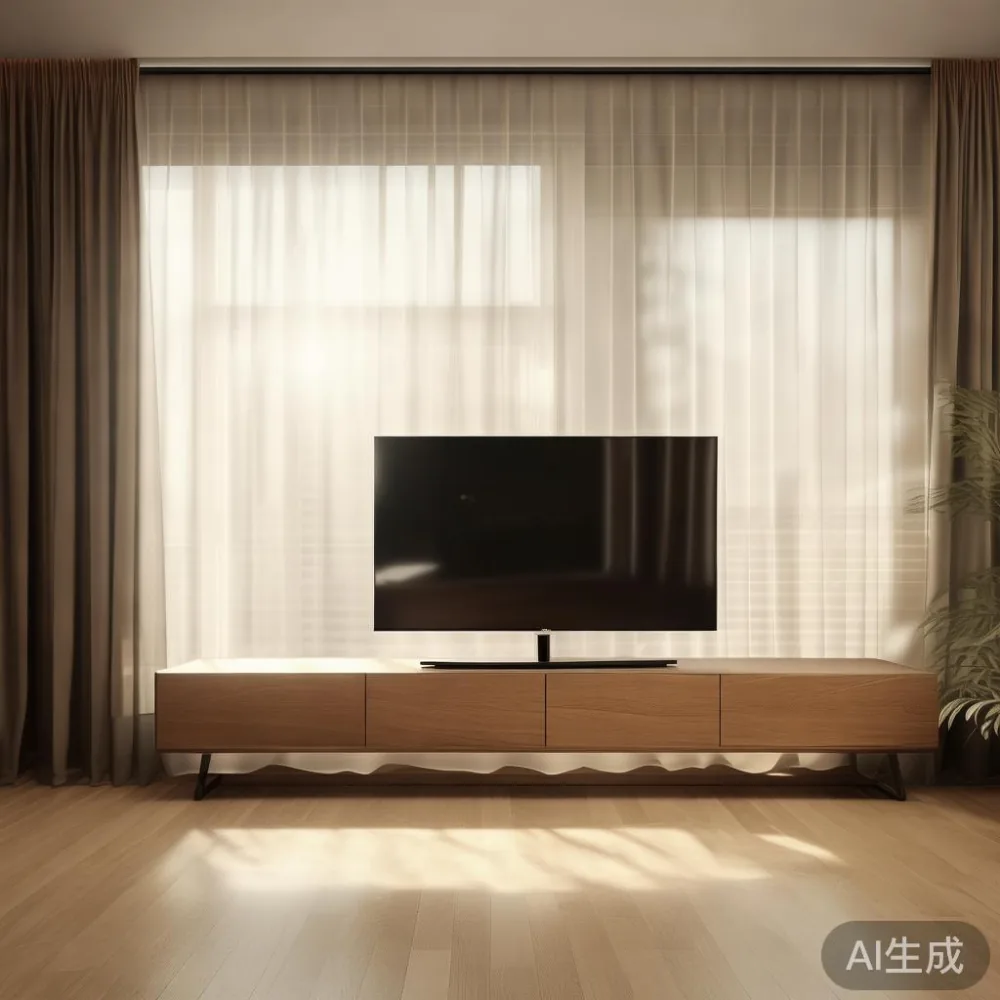
Grade follows. Clear timber with consistent colour and grain may cost SGD 240 per cubic metre, while a grade selected for knots, small cracks, or stronger colour variation may cost SGD 155. A rustic-looking television console can use knotty oak, but it cannot disguise splits, insect damage, or movement caused by poor drying. Accurate grading is therefore more useful than a vague claim such as “premium wood.”
Joinery is another driver. Mortise-and-tenon construction can add roughly SGD 90 to SGD 220 per cabinet because the joints must be cut and fitted precisely. Dowels are faster and may save SGD 25 to SGD 60, while screws and brackets can reduce assembly cost further. None is automatically wrong; the key is whether the method suits the cabinet’s load, width, and expected movement.
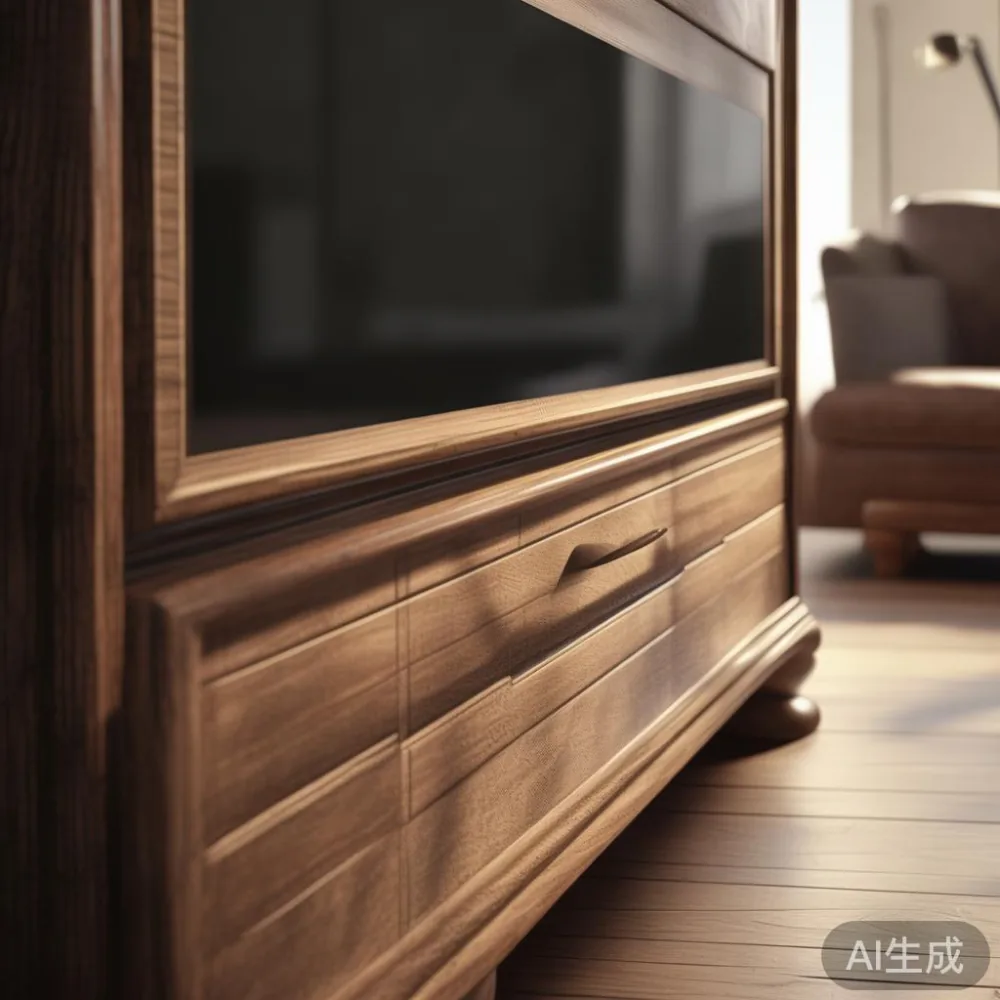
A 180 cm-wide, 40 cm-high, 42 cm-deep tv cabinet weighing 48 kg must resist bending under a television and media equipment. That usually requires well-spaced supports, a rigid back, and sound fixing points. A 120 cm cabinet weighing 29 kg can use a simpler frame. Buyers should compare structural details rather than assume that two cabinets with identical plywood carcasses are equivalent.
How do timber, board thickness, and moisture affect cost?
Timber should be properly dried for Singapore’s humid climate. A reasonable indoor moisture target is often around 8% to 12%, depending on the species and factory process. If wood arrives at 18% moisture, it may shrink after delivery. Movement of 3 mm across a 30 cm panel is not dramatic, but repeated movement can loosen joints, split lacquer, or cause drawer fronts to rub.
Cabinet side panels commonly measure 18 mm to 25 mm. Backs may be 9 mm to 12 mm, although a 15 mm back adds rigidity. Solid drawer boxes might use 12 mm to 18 mm sides and 15 mm to 20 mm bases. These numbers influence both material use and price. A tv cabinet with 20 mm sides could cost SGD 180 more than one with 15 mm sides because it needs more timber, heavier machining, and stronger hardware.
Finishing reveals hidden economics. Sealing a cabinet may involve sanding through 80, 120, 180, and 240 grit, filling, sealing, colour work, and a final coat. Two coats of water-based lacquer may cost SGD 35 to SGD 70 in materials and labour. A hand-oiled finish may require several preparation stages but provides a different tactile result. French light luxury often favours restrained colour, fine grain, and subtle surfaces rather than thick, high-gloss coatings.
Customers should ask what lies beneath the finish. Paper veneer on a low-cost substrate cannot be compared with 20 mm solid oak or ash, even when both are described as “wood finish.” A small 10 cm unfinished sample can reveal whether the surface is veneer, laminate, or solid timber.
Why do hardware, dimensions, and design details change the price?
Hardware can add SGD 20 to SGD 450 to a tv cabinet. Soft-close hinges, full-extension ball-bearing runners, solid brass handles, adjustable feet, and reinforced television supports cost more than basic hinges and surface-mounted screws. A 60 cm drawer may use 450 mm runners, while a 45 cm drawer uses 400 mm runners. Premium drawer systems may add SGD 85 per pair and reduce closing noise.
Design complexity affects labour. A flat-front cabinet with 4 doors and 2 drawers may be economical to produce. Shaker frames, rounded corners, fluted panels, bevelled edges, and integrated cable management require templates, setup time, and more careful inspection. Adding 3 adjustable shelves with brass supports could add SGD 65 to SGD 110.
Size is not a simple multiplier. A 240 cm tv cabinet may use more wood than a 180 cm model, but the price increase can be less than 40% because components and finishing steps are shared. In contrast, moving from 4 fixed shelves to 6 adjustable shelves can add more cost than adding 30 cm to the cabinet length.
Function matters in compact Singapore homes. A 160 cm console leaves 70 cm of walkway in a 230 cm living room, while a 200 cm model leaves 30 cm. Doors that need 90 cm of swing space may not suit a narrow dining-room corridor. Drawer extensions need 45 cm to 55 cm of clear floor space. These measurements should be marked on the room plan before purchase.
The same principles apply across solid wood furniture. A dining table may be quoted from SGD 1,180 to SGD 3,200 because of timber grade, extension hardware, edge profile, and reinforcement. A solid wood sofa frame may cost more when it uses kiln-dried hardwood and branded suspension components. A bed frame may rise in price with a 30 mm solid slat system, centre support legs, and a 20 mm headboard. A wardrobe needs more hinges, runners, and alignment work. A nightstand can appear simple while requiring precisely fitted drawers, while a marble table carries the price of a 20 mm slab, polishing, and heavier handling. Even a light luxury dressing table can cost more because of mirrored glass, divided drawers, and matched grain.
How much should delivery, GST, and installation add in Singapore?
Before GST, a product may be listed at SGD 1,850 while the delivered amount is SGD 1,950. That SGD 100 can cover delivery to the lobby, placement inside the flat, and basic assembly. Lift and corridor access should be checked before the order is dispatched. For example, a 190 cm-long packed cabinet may not turn through a 90 cm corridor corner, even if it fits inside a lift measuring 140 cm by 110 cm.
Measure the lift door, internal lift depth, landing corners, and the narrowest part of the route to the flat. A 42 cm-deep cabinet may need to be tilted onto its side to clear a 105 cm lift door. If the packaging increases the depth to 48 cm, the clearance requirement changes. Staircases with 18 cm rises and 22 cm treads require a different carrying plan from a lift served by a level corridor.
Delivery timing also influences cost. Standard delivery may take 7 to 14 working days after production. Custom sizes can require 21 to 35 days because frames, drawers, and finishes must be made to specification. Weekend or timed delivery can add SGD 40 to SGD 90. These figures should be confirmed in writing rather than estimated from a general shipping range.
GST must be shown clearly. For a taxable furniture purchase of SGD 2,000, GST at 9% is SGD 180, making the total SGD 2,180. MIDHILL offers free shipping for orders over US$350, with the Singapore conversion and GST treatment confirmed at checkout. Returns are accepted within 14 days under the stated policy, while structural problems are covered by a 10-year warranty. Confirm whether the warranty applies to residential use, what documentation is needed, and which components are included.
What does light luxury mean for solid wood furniture?
Light luxury is not defined by a diamond-shaped handle or an oversized logo. It is a balance of proportion, material quality, tactile finish, and restrained detailing. A 170 cm solid wood tv cabinet in warm oak can support this approach with soft-close drawers, discreet cable openings, and slim legs that preserve visual floor space.
Three references can help buyers define a direction. French light luxury often draws on pale woods, elegant profiles, and gentle contrast. American light luxury tends towards broader forms, warm brown oak or walnut tones, and substantial but uncluttered construction. Post-modern light luxury may introduce asymmetry, softened geometry, or mixed materials while retaining practical storage. These are stylistic references, not quality grades.
In a compact HDB living room, proportion can be more valuable than decorative complexity. Searching for Rustic for small living room ideas may lead to a timber console with visible grain and stronger corners, yet a 140 cm model could fit better than a 190 cm version. Punggol and Tampines homes often have compact dining areas connected to the living room, so the cabinet depth should preserve at least 80 cm of circulation space where possible.
For a bedroom, searching for how to style light luxury bed in bedroom guidance may involve a solid wood bed frame with a low upholstered headboard, a 45 cm-wide nightstand, and warm-neutral walls. The frame should be checked for the mattress size, floor clearance, and slat spacing. If a wardrobe is included, its door swing should not conflict with the bed or a corridor.
Budget descriptions can also distort perception. A search for under 2000 Nordic furniture may cover dining tables, chairs, and smaller storage pieces, but a large solid oak dining table may exceed SGD 2,000 once delivery is added. Likewise, a search for for sale Modern furniture may include lacquered and veneer products, not necessarily solid timber. Product descriptions need to be read closely.
How can buyers compare two quotations fairly?
Compare specifications in a single table. For each solid wood tv cabinet, record dimensions, timber species, panel thickness, back construction, drawer and hinge type, finish, number of shelves, maximum load, warranty, lead time, delivery charge, and return conditions. This prevents a lower product price from hiding a higher total cost.
Ask for the timber to be named. “Hardwood” does not tell a buyer whether the cabinet uses oak, ash, beech, or rubberwood. Confirm whether it is solid wood or plywood with wood veneers. A solid wood sofa frame, bed frame, dining table, wardrobe, nightstand, or marble table should each have clearly stated structural materials, since “solid wood construction” can refer only to the visible frame while the back or drawer base uses another material.
Load figures deserve attention. A tv cabinet may support a 55-inch television at 35 kg, but the support should match the television’s actual mounting arrangement. Confirm shelf spacing and cable openings rather than relying on a broad capacity claim. For a dining table, check extension stability and wipe-clean performance. For a wardrobe, check hanging space and drawer extension. For a nightstand, check whether a 1.5 m charging cable can reach from the socket.
I visited a Foshan factory last month to inspect how price changes at the production stage. The buyer was comparing an oak tv cabinet with two nearly identical drawer fronts. The visible parts had the same grade, but the less attractive timber was used for hidden rails, while clearer boards were reserved for doors and drawer faces. That choice avoided wasting premium timber. The inspection also showed why hardware, moisture checks, and finish samples can matter more than a large difference in the quoted board area.
Price is driven by the decisions that affect material use, labour, performance, and service. A well-made tv cabinet should explain where the money goes. MIDHILL’s 10-year structural warranty, lifetime refinishing option, 14-day returns, and delivery terms provide useful context, but the product specification remains the centre of comparison.
Which pricing signals deserve caution?
A dramatic discount can indicate a different species, thinner panels, simplified hardware, or a limited production batch. A 45% saving is not automatically poor value, but it requires explanation. Ask what changed rather than accepting the same old specification at a lower number.
Be cautious with vague phrases such as “European oak,” “fashion-grade timber,” or “lifetime warranty.” A scientific species name, moisture target, thickness, and warranty document provide clearer evidence. Also check whether solid timber has been finger-jointed. Finger-jointing is a legitimate construction method for long panels, but it should be disclosed because the visual grain and price differ from a one-piece board.
Finish samples should be tested in the actual room. A warm lacquer under 3,000 lux of downlighting can look more orange than it did in a factory. Ask for a 10 cm to 15 cm sample and view it beside the floor and walls. For light luxury dressing table planning, check how the mirror and handles appear under bedroom lighting. For a marble table, inspect the slab pattern, edge, and total weight because delivery can require a second-person carry.
Good purchasing starts with measurements, then materials, then construction, and finally total price. In a 3-room HDB flat, a 160 cm cabinet may deliver more satisfaction than a 210 cm cabinet if it leaves the corridor usable. In a condo, buyers can spend more on joinery and finish while preserving the same footprint. Whichever home type, the best quotation is the one that remains clear after 12 months of daily use—not merely the smallest number on the first line.