What Actually Drives the Price of Solid Wood Furniture (and Why a TV Cabinet Is the Best Place to Start)
Last month I visited a newly TOP-ed (Temporary Occupation Permit) four-room HDB flat in Punggol with a couple who had just taken delivery of two pieces of solid wood furniture. One was a dining table that felt reassuringly heavy at roughly 65 kg; the other was a tv cabinet that, on paper, cost the couple about S$320 less than a very similar-looking competitor in a Tampines mall showroom. The husband kept patting the tv cabinet top and asking the same question: "What's actually inside that makes the price different?" By the end of that evening I had written down everything I told them, because their question is the question almost every Singapore shopper quietly asks when they compare two nearly identical pieces.

Solid wood furniture looks uniform on a showroom floor. A tv cabinet, a bed frame, a nightstand, and a dining table all share that warm grain pattern. Yet the price tags can vary by 40-60% between two pieces that, at a glance, appear identical. Below is a plain-language breakdown of what actually drives that gap, with numbers you can measure yourself in the showroom, on the lift, or in your corridor.
1. Wood species, density, and how much of it is really solid
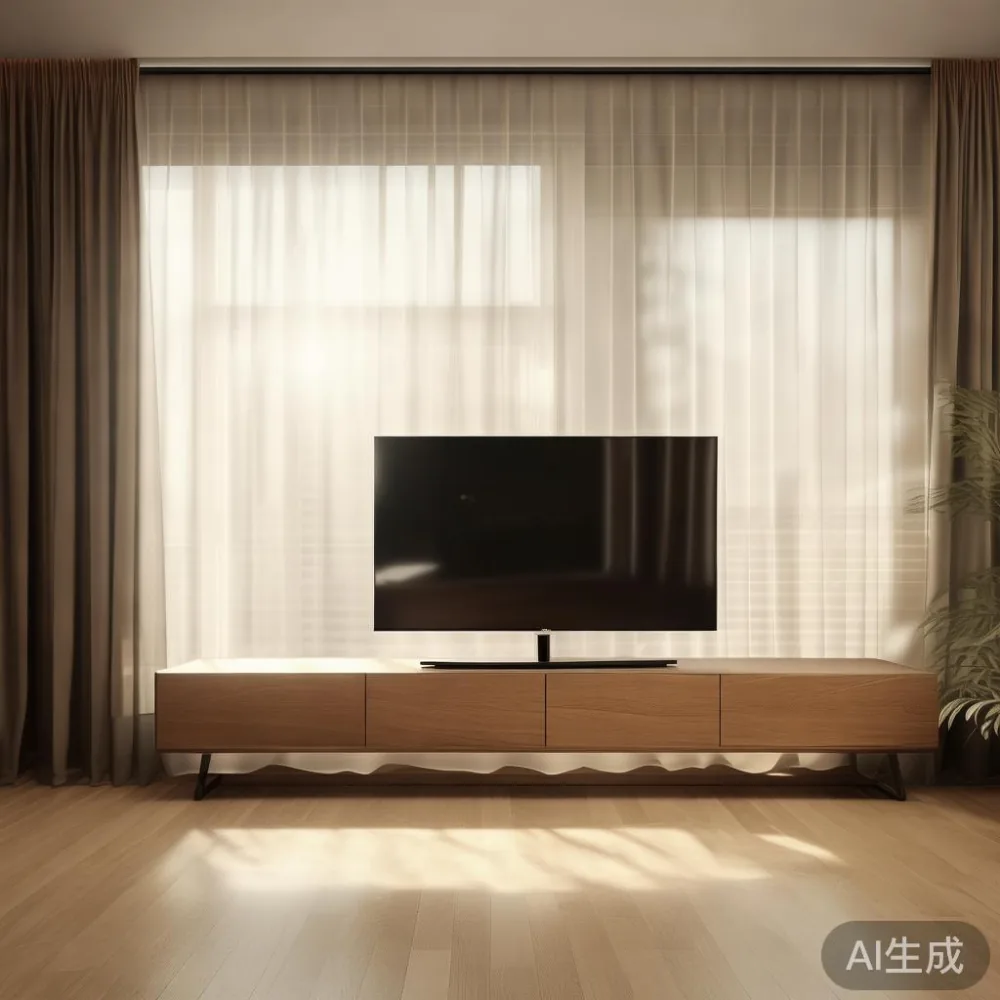
The single biggest driver is wood species. The same tv cabinet silhouette can be built from rubberwood at roughly 620 kg/m³ density, ash at around 670 kg/m³, white oak at about 755 kg/m³, or walnut at 660 kg/m³ with a much darker tone. A typical 180 cm wide tv cabinet made of white oak will weigh 55-70 kg; the same silhouette in rubberwood will weigh 45-55 kg. Heavier is not automatically better, but it tells you how much actual wood is in the box.
Then there is the question of how much of the piece is solid wood. In the trade, "solid wood" can mean three different things, and Singapore retailers are not always clear about which one you are getting:
• 100% solid timber throughout — every structural component (legs, top, panels, shelves, drawer boxes) is one continuous piece of wood. This is what MIDHILL builds. A 200 cm solid wood dining table in ash typically weighs 70-85 kg.
• Solid wood with veneered panels — the frame and legs are solid, but the large flat panels are MDF or plywood with a thin (0.5-0.6 mm) real-wood veneer. Lighter, more dimensionally stable, but repairs are harder.
• Solid wood with engineered cores — a hybrid where drawer bottoms or cabinet backs use plywood. Common in pieces that need to handle Singapore humidity without warping.
For a wardrobe that stands 220 cm tall in a Bedok condo, the difference between option one and option three can be 12-18 kg and around S$400-700 in price. It is also the difference between a piece that can be dismantled for a 1.2 m wide HDB lift and one that might not fit at all.
Is American dressing table furniture worth it?
Yes — if "American" means solid hardwood frames, mortise-and-tenon joinery, and a finish designed to be refinished rather than replaced, then American dressing table furniture is typically worth the price premium over hollow-core imports, and the same build philosophy translates directly into tv cabinets, bed frames, and nightstands that last 15-25 years instead of 5-8.
This is worth pausing on, because the word "American" gets used loosely in furniture marketing. American light luxury styling — softer profiles, restrained carvings, shaker and mission influences — is a design language, not a quality mark. A dressing table can carry American light luxury lines and still be built from engineered panels with a 0.3 mm veneer. The style is the surface; the substance is what determines whether the piece is worth S$1,400 or S$4,200.
What makes American light luxury pieces genuinely worth the money when the construction is right: kiln-dried hardwoods (8-12% moisture content, suited to Singapore's 70-85% ambient humidity swings), dovetailed drawer boxes, and finishes you can actually sand back. A 120 cm American-style dressing table in ash or maple typically weighs 40-55 kg, has full-extension soft-close drawer slides rated for 100,000 cycles, and uses brass or steel hardware rather than zinc alloy. That is the benchmark.
2. Joinery, hardware, and the small parts you don't see
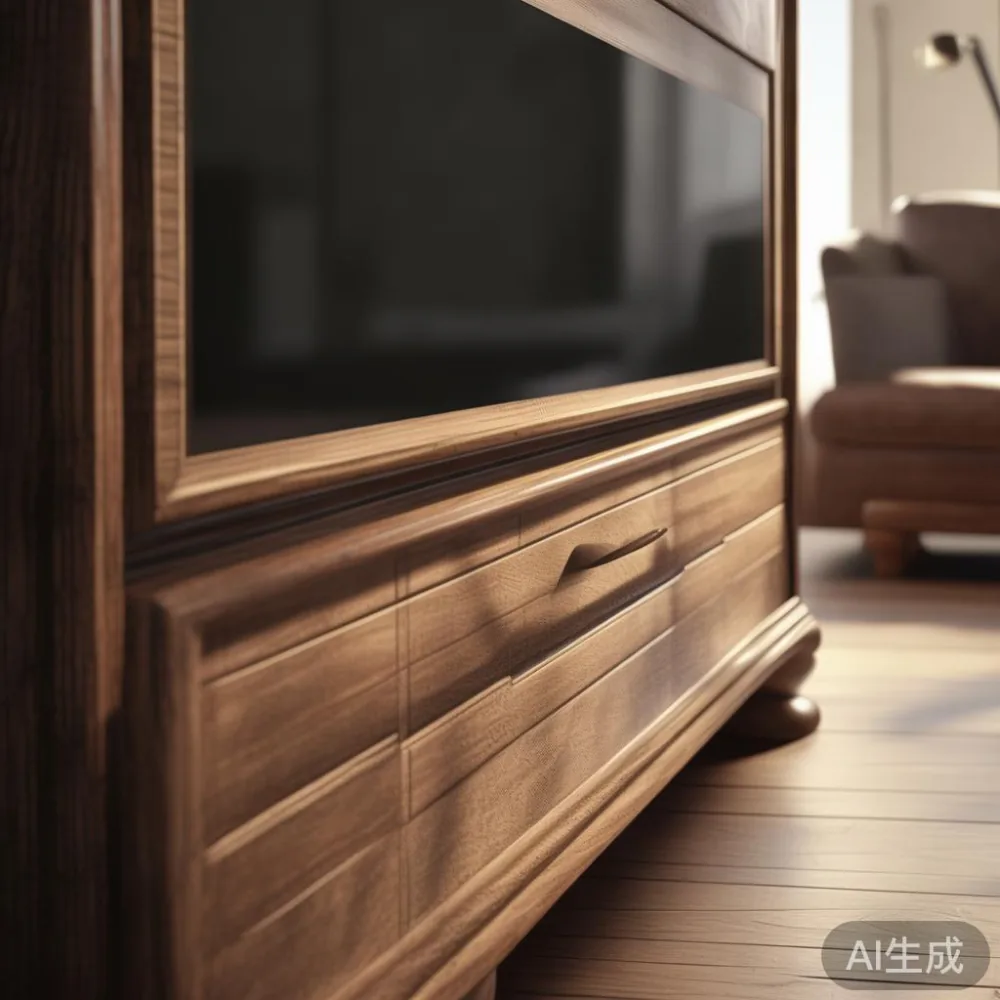
Walk into a furniture showroom and the joinery is the first place to look. Lift the base of a tv cabinet. If the side panels meet the top with a clean mitre and a hidden wooden dowel, the piece was likely built by a joiner, not a flat-pack machine. If you see a visible cam lock (the round plastic or metal disc with a hexagonal hole), the piece was engineered for self-assembly, which is fine, but it is not the same product category as a cabinet built around mortise-and-tenon or dowel-and-glue construction.
For a solid wood bed frame in queen size (152 × 190 cm), the slat system alone tells you a lot. Cheap frames use 8-10 pine slats at 15-18 mm thickness, spaced 7-10 cm apart. A well-built frame uses 12-14 beech or birch slats at 20-25 mm, with a centre support rail and a single central leg. The slat upgrade adds S$120-220 to manufacturing cost and roughly 6-9 kg to the weight.
Hardware matters more than most shoppers think. A pair of soft-close hinges for a cabinet door costs S$4-9 each in commercial quantities; a basic European hinge costs S$1.20-2.00. Across a six-door wardrobe, that is a S$30-50 spread on hardware alone. Drawer slides are similar: full-extension, 100,000-cycle rated slides run S$18-32 per pair; economy slides run S$5-9. Multiply across a dresser or a desk and you are looking at S$80-160 of hardware inside what looks like one piece of furniture.
This is also where MIDHILL's 10-year structural warranty comes into play. A warranty that long only makes business sense if the joinery can survive a decade of HDB humidity cycles. It is a quiet signal about what is inside the box.
3. Finish, sanding, and how many hands touched the wood
The finish on a solid wood piece accounts for roughly 10-18% of the manufacturing cost. A basic nitrocellulose lacquer sprayed in two coats, lightly sanded between coats, looks acceptable at 1 metre. A conversion varnish or a hardwax oil, hand-rubbed in 4-6 coats with 220-320 grit sanding between each layer, looks different at arm's length — and it wears differently over 10 years.
For a 240 cm marble table or a sintered stone dining top, the substrate matters as much as the surface. Genuine sintered stone slabs in 12-15 mm thickness weigh 95-120 kg per square metre; a 200 × 100 cm dining top is therefore 190-240 kg before you add the base. That weight is why most Singapore retailers offer kerbside delivery only, and why lift access in older Punggol or Bedok blocks (lift doors 80-90 cm wide, cabin depth 120-140 cm) needs to be measured in advance.
This is also where the French light luxury aesthetic earns its name. French light luxury tends toward pale finishes — limed oak, cerused ash, soft matte chalk — that show brushwork and grain texture. Those finishes cannot hide a poor sanding job. A 180 cm tv cabinet in this style will pass through 5-7 sanding stages, each one removing the swirl marks from the previous grit. That labour is real, and it is what gives post-modern light luxury tv cabinets their soft, low-sheen look under HDB LED downlights.
4. Logistics, packaging, and what reaches your corridor
Singapore furniture pricing includes a logistics layer that mainland China or U.S. domestic pricing does not show. A four-room HDB flat in Tampines has a corridor width of about 1.2-1.5 m and a lift cabin that is typically 1.1-1.4 m wide by 1.4-1.8 m deep with a 600-800 kg load limit. A 240 cm solid wood wardrobe that would happily move into a landed property in District 15 may need to be ordered in two halves to clear the lift, which adds S$80-180 to the manufacturing cost and a second assembly step at delivery.
Packaging for export is its own cost line. Proper furniture export uses 5-ply corrugated cardboard, EPE foam corners, moulded foam shells, and a wooden crate for pieces over 90 kg. A crated 200 cm marble table can add 25-40 kg and S$90-140 to the landed cost. Retailers that offer free shipping above a threshold (MIDHILL offers free shipping above US$350, which is roughly S$470 at current rates) are absorbing roughly S$60-120 of that per order on average inside Singapore.
Then there is the 9% GST that applies on imported goods and locally supplied furniture alike. On a S$3,200 tv cabinet, GST alone is S$288, which is enough to change which tier of piece a buyer can comfortably afford.
5. Brand overhead vs. factory-direct pricing
Showroom furniture in Singapore carries a markup that varies wildly. A piece on a 7,000 sqft showroom floor in a major mall typically carries a 2.4-3.2x markup over factory cost to cover rent (S$8-18 per sqft per month in Tampines retail), staffing, in-store displays, and after-sales service. A factory-direct workshop showroom in an industrial estate in Singapore, or a brand that ships direct from Foshan, operates at a much thinner markup — typically 1.6-2.1x — because the rent is a fraction and there are no multi-tier distributors in the chain.
This is why two nearly identical 180 cm tv cabinets from two Singapore retailers can be priced at S$1,950 and S$3,400. The wood, the joinery, the hardware, and the finish may all be within 10-15% of each other in cost. The difference is overhead, advertising spend, and how many middlemen took a margin before the piece reached the showroom.
For shoppers, the practical move is to ask three questions before paying: what is the exact wood species and moisture content, what type of joinery is used on the load-bearing joints, and what happens if the piece arrives with a defect or a humidity crack in year three? A lifetime refinishing service — which MIDHILL offers alongside its 14-day return window — answers the third question in a way that no discount can.
What does this mean for your next tv cabinet?
Start with the piece of furniture you touch every day. For most Singapore households that is the tv cabinet — it holds the router, the streaming box, the console, and often doubles as a display surface. A well-built 180-220 cm solid wood tv cabinet in ash or walnut will weigh 50-75 kg, will sit flat against a non-load-bearing HDB partition wall without bowing, and will outlast two flats and one resale transaction if you treat it with hardwax oil every 3-4 years.
If you are comparing two tv cabinets in a showroom, the simplest test is to open every door and drawer. Soft-close action that engages halfway and pulls the rest of the way shut is a hardware tell. Drawer boxes that feel like solid wood when you tap them (rather than the hollow thud of MDF) are another. Lift the back panel if the design allows it — a 6-9 mm plywood back is acceptable; a cardboard-thin 3 mm back will warp within a year in Punggol.
And if you are looking at a sintered stone or marble top, remember that the heavier the slab, the more likely you will need to confirm lift access before delivery day. A 180 cm French sintered stone sofa bed, for instance, can run 220-260 kg in its largest configuration and almost always needs to be ordered in a configuration sized to your specific lift cabin.
Final thoughts before you buy
The cheapest piece of solid wood furniture is rarely the most affordable over 10 years, and the most expensive piece is not always the best built. The honest price of a tv cabinet, a bed frame, a nightstand, a wardrobe, or a dining table sits somewhere in the middle, where the wood species is named, the joinery is visible, the hardware cycles are published, and the warranty covers structural failure rather than only cosmetic defects.
Take a tape measure to the showroom. Ask the weight of the piece. Open every drawer. Lift the back. And if the answers are vague, the price you are looking at is partly a guess — by you, by the retailer, by everyone in between.