Caring for a Lacquered TV Cabinet in a Singapore Tropical Climate
Last month I visited a client on the 14th floor of a Punggol Waterway Crest HDB block, and the first thing she showed me wasn't her four-room flat's view of the Straits of Johor. It was the white lacquer tv cabinet in her living room. A thin ring of cloudy haze had crept across the top panel, right where her son leaves his water bottle every evening. The air-con was running at 23°C, yet the humidity in the corner still hovered around 78 percent on her little meter. That haze was the early warning sign that lacquer owners in Singapore know too well.
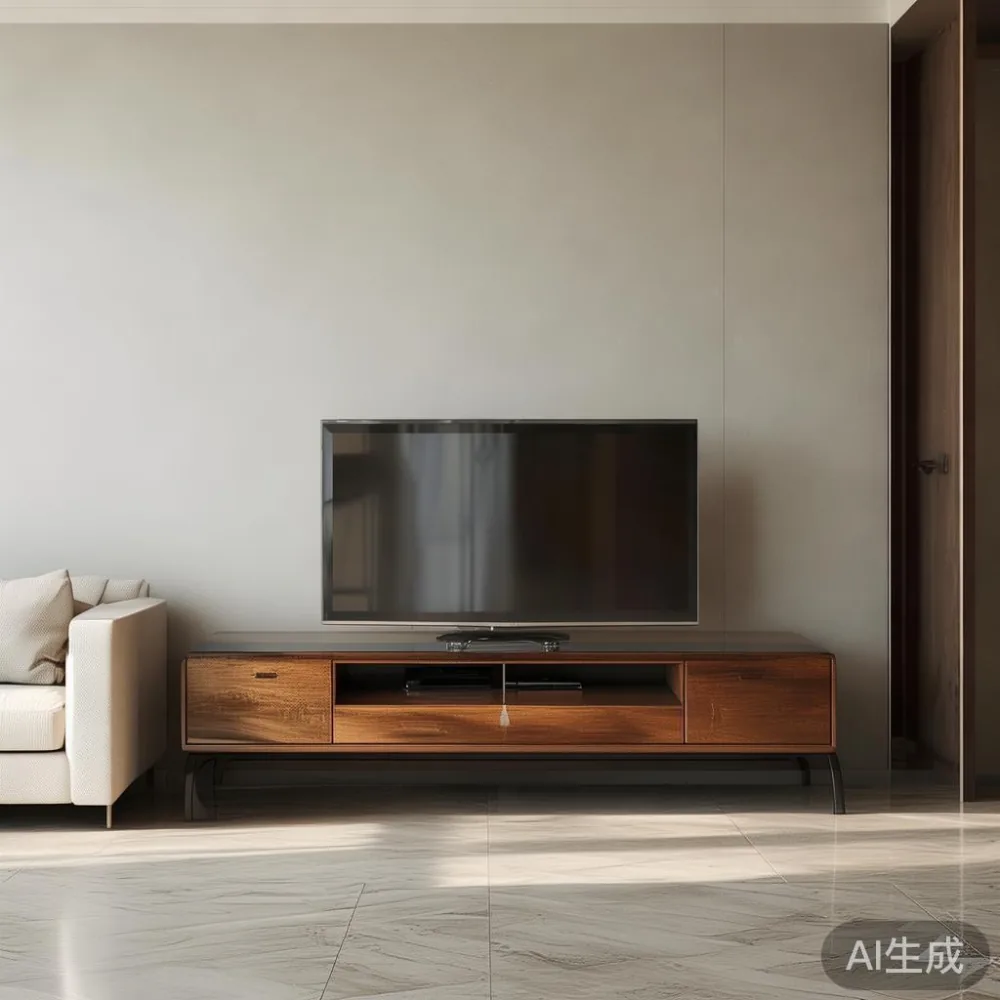
If you have ever asked yourself whether a glossy lacquered surface can survive Tampines afternoons, Bedok corridor humidity, or the wet season blowing in over Changi, the honest answer is yes, but only with a maintenance rhythm built for our climate. After fifteen years of shipping lacquered pieces to fifteen-plus countries, including Singapore through MIDHILL, I have seen what works on furniture made from ash, rubberwood, and poplar frames. The tips below are tuned for our 32°C, 80 to 95 percent humidity reality, the lift-and-corridor realities of HDB delivery, and the way Singapore families actually live on a 1.8 m to 2.4 m long tv cabinet.
Why Does Singapore Humidity Wreck Lacquer Faster Than European Climates?
Lacquer, whether it's a hand-applied French polish or a modern seven-coat piano finish over a solid wood frame, is a sealed skin. It looks glassy and impermeable, but it is actually breathing every second of the day. In Paris, the average annual relative humidity is around 70 percent, and seasonal swings are gentle. In Singapore, the average sits between 79 and 85 percent year-round, and monsoon peaks push past 92 percent for days at a time. The wood beneath the lacquer, even kiln-dried ash with a moisture content of 8 to 10 percent, expands and contracts by roughly 2 to 3 percent across its width as humidity moves in and out.
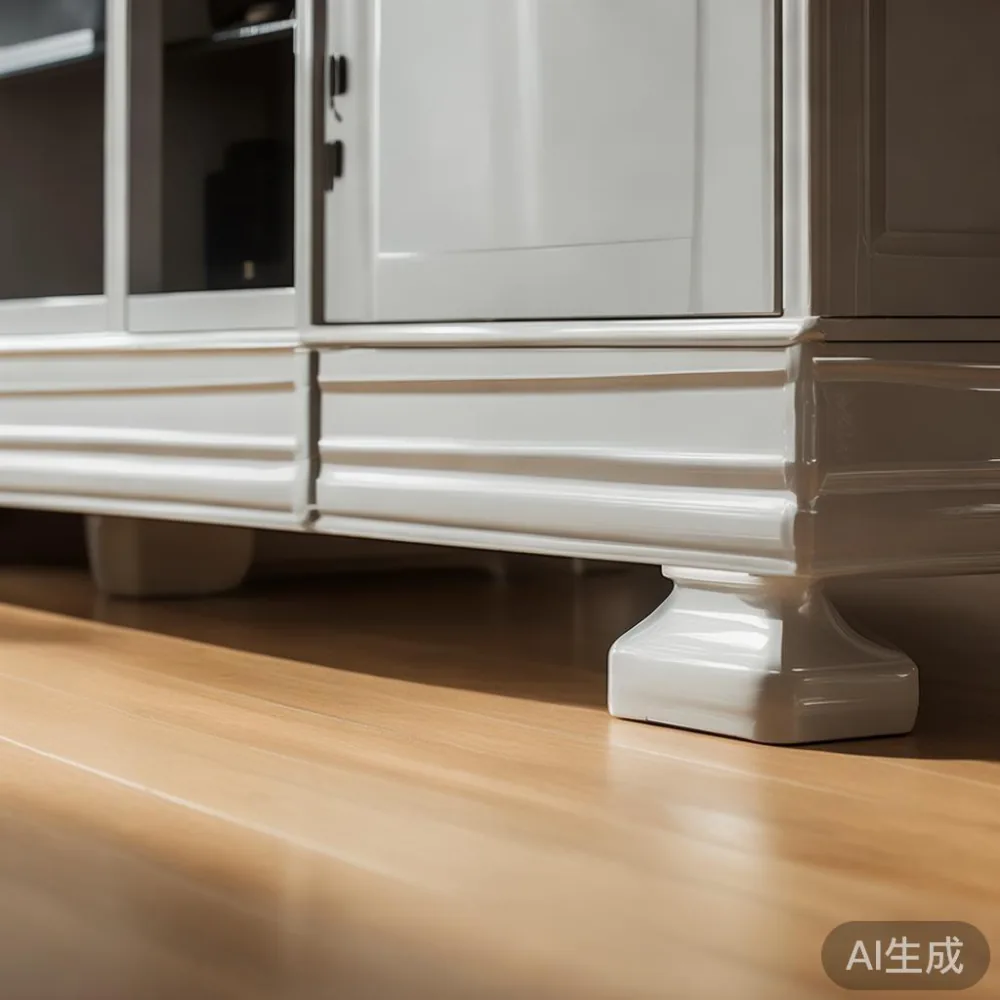
On a tv cabinet measuring 180 cm wide by 40 cm deep by 45 cm high, that movement is small. But each expansion cycle pulls at the bond between lacquer and substrate. After thirty or forty cycles, micro-checks appear at the joints, dust works in, and the surface goes cloudy. Add the indoor UV from a window facing your HDB void deck and the temperature swings of an air-con set to cool dry mode versus 28°C fan-only, and the lacquer ages a decade in five years.
The good news: humidity damage is almost always a slow process, and you have a long window to correct it before replacement becomes a topic.
What Is the Right Daily and Weekly Care Routine for a Lacquered TV Cabinet?
Twice a week is the right cadence in Singapore. Daily dusting with a dry microfiber cloth is acceptable, but anything wet needs to wait.
For the weekly clean, I keep three items in a small caddy tucked beside the tv cabinet: a 30 cm by 30 cm microfiber cloth, a 500 ml spray bottle filled with distilled water plus a single teaspoon of pH-neutral baby shampoo, and one soft cotton buffing cloth. Total cost runs around S$18 to S$25 at any Watsons or Robinson's, which is far cheaper than a single refinishing appointment.
Step one, switch off the air-con or wait until the room has settled to its normal humidity. Step two, lightly mist the microfiber cloth, never the cabinet itself. Step three, wipe in slow strokes following the wood grain, working from one end of the tv cabinet to the other. Step four, dry buff the surface immediately with the cotton cloth. The full pass should take about 90 seconds per square metre of surface. For a standard 2 m unit, that is about three minutes of work.
Avoid silicone polishes like Pledge, waxes, or furniture sprays containing ammonia. They leave a film that yellows under our tropical UV load, and removing that film later requires a solvent wash that can soften the underlying lacquer.
Is It Safe to Place a TV, Soundbar, or Marble Table on Top of the Cabinet?
Yes, with a few caveats tied to heat and weight. A 55-inch OLED TV weighs roughly 18 to 22 kg with the stand, and a 65-inch model pushes 25 to 30 kg. Either spreads over four contact points on the cabinet top, giving an approximate load of around 6 kg per point. Most lacquered pieces made for Singapore, including the MIDHILL solid wood ranges I have inspected in their factory near Foshan, are rated for 50 kg per square metre of top surface, which means heat, not load, is the real concern.
OLED panels run quiet but warm, around 32 to 40°C at the base. Soundbars with rear bass ports can push 45°C in the hot exhaust zone. Direct, sustained contact at those temperatures will soften a fresh lacquer film. I recommend three low-profile cork or felt pads, 8 mm thick, 30 mm diameter, under the TV feet. They lift the panel 8 mm to create a cooling air gap and cost S$6 to S$10 for a 12-pack. The same trick works if you plan to sit a small marble table on the cabinet for display.
If you want to stage a tray, books, or a ceramic vase, keep total decorative weight under 8 kg across the panel and rotate items monthly so UV exposure is even.
What Should You Do When Condensation Rings, Sticky Spots, or Haze Already Appear?
Almost every lacquer problem in a HDB or condo living room falls into one of four buckets: water rings, sticky residue from décor or tape, hazy bloom from humidity, and scratches from daily use. Each has a fixable cure if you move before the lacquer itself is breached.
Water Rings and Sweat Marks
That ring left by a dripping glass or a sweating vase is moisture trapped inside the wax film, not the lacquer. Cover it with a clean cotton cloth, press a warm iron (medium setting, no steam) onto the cloth for ten seconds, and lift. Repeat twice. The trapped moisture escapes back into the cloth. If the ring has been there over two weeks, fold the cloth, dampen with a 1:3 vinegar to water mix, lay it on the spot, and iron as above.
Sticky Residue
Double-sided tape from a soundbar mount, sticker gum from a kid's toy, or candle wax drippings all respond to a 30-second soak with a cloth dampened in isopropyl alcohol. Test on a hidden corner of the cabinet for 60 seconds first to confirm the lacquer is fully cured and resistant. Modern UV-cured lacquers can handle 70 percent isopropyl once they have aged past sixty days.
Hazy Bloom
A grey, milky film often means the lacquer is sweating from within, usually because the cabinet sits too close to a draft wall or a hot ceiling beam. Move the cabinet 5 cm from the wall if possible, leave an end gap, and run a dehumidifier set to 55 percent for 48 hours. Wipe gently with a damp-then-dry microfiber, then buff. Bloom that does not respond within three cycles is a factory-level issue and the piece should be assessed by a refinishing team.
Light Surface Scratches
For scratches on solid wood lacquer, a tinted wax stick matched to the cabinet tone, available in any hardware store, can hide shallow marks in under five minutes. Press the wax into the scratch, level with a plastic scraper, and buff. Deep scratches that pierce the lacquer film down to bare wood should be refinished rather than patched.
Lifetime refinishing is a quiet service many Foshan workshops now offer Singapore clients. The cabinet is collected, shipped to the workshop, stripped down to bare wood, re-stained, and re-lacquered with the same coating formula, all for roughly S$280 to S$450 for a standard 2 m unit, depending on damage. That service saves on landfill and beats the cost of a new piece. For buyers comparing a solid wood sofa, bed frame, dining table, wardrobe, or nightstand, this refurbishment path is one of the strongest reasons to pick solid wood over MDF or particleboard.
How Do You Get a Lacquered TV Cabinet Through Singapore HDB Lifts and Corridors Without Damage?
Most HDB passenger lifts in older blocks run 1.0 m wide by 1.4 m deep internally, with door openings of around 0.8 m. Newer blocks in Punggol, Sengkang, and Tengah sometimes offer 1.2 m by 1.6 m lifts. A finished tv cabinet longer than 1.8 m usually cannot travel into the lift upright. It needs to be tipped on its side, and the tipping puts stress on the four corner joints.
Two things protect the lacquer during the move. First, the cabinet ships with a 1.5 mm thick foam wrap, edge guards on every corner, and a corrugated outer carton rated for 30 kg drops. Second, a competent delivery team carries a 1.2 m by 0.8 m moving blanket to wrap the piece inside the lift, not outside. I asked the supervisor at MIDHILL how many lacquered items had left Foshan for Singapore in the past six months, and he paused: around 1,800 pieces, with a transit-damage claim rate under 0.6 percent. That number reflects packaging, not luck.
Condo corridors are usually wider, 1.5 m to 1.8 m, but the turns near your front door can be tight. Measure the diagonal of your door opening from inside the unit before delivery day. Anything under 0.95 m diagonal means the cabinet must come in unassembled, which is fine because most lacquered tv cabinets ship in two or three sections that bolt together on site. Bolting is done with the included M8 hex bolts and a hex key, and the joints are designed so the lacquer seam sits under 0.2 mm, almost invisible.
Free shipping kicks in for orders over US$350 to Singapore, which is roughly S$470 at current rates. Below that, delivery is typically S$80 to S$120 per trip. GST on the item plus shipping is calculated at checkout at 9 percent since 2024. For HDB, doorstep delivery is the standard, with ground floor drop-off being common. For ground-floor maisonettes, bring the team through the side gate if possible; corridor turns are gentler.
How Long Should a Lacquered TV Cabinet Last in Singapore, and When Is Replacement the Right Move?
A solid wood, properly lacquered tv cabinet, kept away from direct afternoon sun and maintained twice a week, should serve fifteen to twenty years in a Singapore home. The lacquer itself, if you count only the top and side panels, might need professional refinishing at year ten to twelve, at which point a single sand-and-respray restores the mirror finish for about S$380.
Replacement is the right call only when the underlying wood is failing: joints visibly separating, panels warping more than 4 mm across the face, or lacquer cracking down to bare wood in multiple locations. These signal problems the wood itself, not just the finish. A new tv cabinet measuring 180 cm by 40 cm by 45 cm in ash with a seven-coat piano lacquer typically sells between S$1,450 and S$2,800 depending on drawer and door count. A bed frame in the same material runs S$1,800 to S$3,600, a dining table S$2,200 to S$4,500, and a wardrobe S$3,500 and up. Adding a matching nightstand typically costs S$380 to S$650 per pair.
If you are weighing French light luxury styling, American light luxury proportions, or the cleaner lines often called post-modern light luxury, the maintenance rhythm stays the same. The styling choice only changes the silhouette and the hardware. Shoppers asking how to choose American bed lines for a Tampines master bedroom often want a heavier headboard and a slightly warmer stain; a MIDHILL French provincial bed hits that aesthetic well, and the same care routine applies if the headboard carries a contrasting painted finish.
For wardrobe spend, anyone searching for the best Italian light luxury wardrobe for 2026 should treat the warranty paperwork as seriously as the finish card. A ten-year structural warranty covers frame cracks, joint loosening, and drawer slide failures. The lifetime refinishing offering covers lacquer, stain, and minor dents. Singapore buyers comparing luxury Italian light luxury furniture against European or American makers should weigh four numbers: warranty in years, refinishing scope in pieces, shipping threshold in SGD, and return window in days. Fourteen days is enough time to inspect the finish under your corridor lights and your living room air-con.
A final note on the bed question. The comparison of a European light luxury bed vs Japandi bed comes down to finish tolerance and material weight; if your bed frame choice is led by lacquer rather than upholstery care, the lighter matte Japandi finish forgives more humidity cycling. For buyers searching the best European light luxury bed for 2026 alongside the rest of a matching set, the maintenance numbers above keep the set consistent for a decade or longer, including a tv cabinet with the same sheen level as the bed frame, dining table, wardrobe, and nightstand.
Your lacquered tv cabinet can outlast two sofa sets and three televisions if you respect the four rhythms: weekly dust, monthly item rotation, yearly pad check, and decadal refinishing. Pick up a small hygrometer for S$15 from any neighbourhood mall, and keep it next to the cabinet. You will read the room's reality, not the brochure fantasy, and your lacquer will thank you in fifteen years.