Warm Minimal in the Lion City: How to Match Solid Wood Furniture to a Cosy HDA Living Room
I still remember standing inside a 92 sqm executive HDB unit in Punggol last month with my colleague, a Singapore-based interior stylist, while she measured out the wall behind the sofa. The homeowners were a young couple who had saved two years for the renovation and asked her a quiet question that comes up in almost every Tampines or Bedok flat she works in: how do we make a small space feel warm without it looking dark? She pointed to three things on the floor plan — a low-profile beige oak sofa, a 180 cm solid oak dining table, and a slim 160 cm TV cabinet in white oak veneer — and said: if these three pieces are right, the rest is decoration. That single line has shaped how I now think about warm minimalism in HDB flats and condominiums across Singapore, and it is the spine of what follows.
What Exactly Is a "Warm Minimal" Interior in a Singapore Context?
Warm minimalism is the middle ground between Scandinavian white-on-white and the darker walnut libraries you see in older Bukit Timah condos. It keeps the clean lines, the negative space, and the restraint, but it swaps cold greys for honey, beige, oat, and soft taupe. In a 90 to 110 sqm HDB flat in Tampines or a 1,200 sqft condo in Punggol, the palette usually lives between beige oak, light walnut, brushed brass, off-white walls (think Jotapur Lady 4800 or similar warm white), and one or two pieces of marble — never more. The lighting is 2700K warm dimmable LEDs at 90+ CRI, because at 4000K the whole scheme turns clinical. Flooring tends toward 15 mm engineered oak planks in a 190 mm width, which gives just enough grain to anchor a room without visual noise.
The reason this style travels so well into Singapore homes is lift-friendly sizing. Corridors in most HDB blocks are about 1.2 m wide and lifts run roughly 1.1 m by 1.4 m with a 2.1 m door height. A warm minimal scheme favours furniture that breaks down — a 3-seater sofa that splits into two boxes, a dining table that detaches from its pedestal base, a TV cabinet shipped as two 80 cm modules rather than one 200 cm monster. MIDHILL, a Foshan solid wood maker since 2008, builds many of its collections this way specifically so a 1.8 m sideboard can be carried up a HDB corridor without a tilt-lift. That kind of detail is invisible at the showroom but very visible when the movers arrive at your block on the 14th floor.
Which Pieces Anchor a Warm Minimal HDB Living Room?
Every warm minimal room needs three anchors: a seating piece, a dining table, and a TV cabinet. They are the heaviest visual objects and they set the wood tone for everything else. Get these wrong and you can have nine perfect accessories and still feel unsettled.
The solid wood sofa in this style is almost always a low-arm, 85 to 90 cm seat height design, in beige or oat bouclé or a soft linen-blend weave. The frame should be kiln-dried oak or ash, not plywood. For a standard 3.2 m living room wall in a 4-room HDB, a 220 to 240 cm three-seater leaves about 40 cm on either side of a 180 cm TV cabinet, which feels intentional rather than crammed. Cushion depth matters: 60 cm feels lounge-y, 55 cm reads as more upright and refined. I sat on both last month at a showroom in Tai Seng and the 58 cm depth with a 12 cm seat fill was the sweet spot for a 1.75 m adult.
The dining table in this palette is a rectangular solid wood top, usually 140 to 180 cm long by 80 to 90 cm wide, paired with slim upholstered chairs in beige or stone grey. For a 4-room HDB with a 3-seater sofa facing the TV cabinet, a 140 cm table seats four comfortably and leaves a 70 cm circulation path to the kitchen — anything tighter and you will hit the chair back every time you stand up. A 160 to 180 cm table seats six and only works if the dining zone is at least 2.4 m wide. Marble here is optional, and usually limited to a round 120 cm marble table in the living room corner if the household entertains; otherwise stick with solid oak to keep the grain consistent with the sofa frame and the TV cabinet.
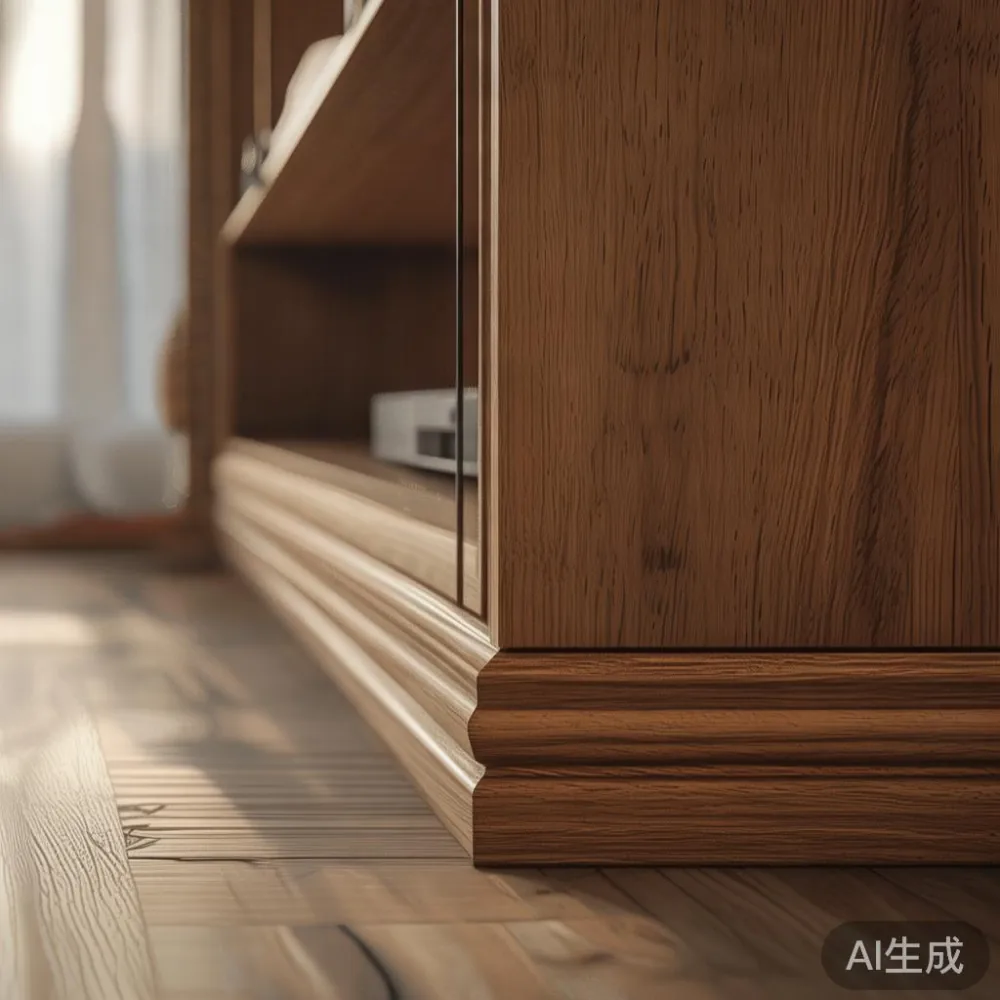
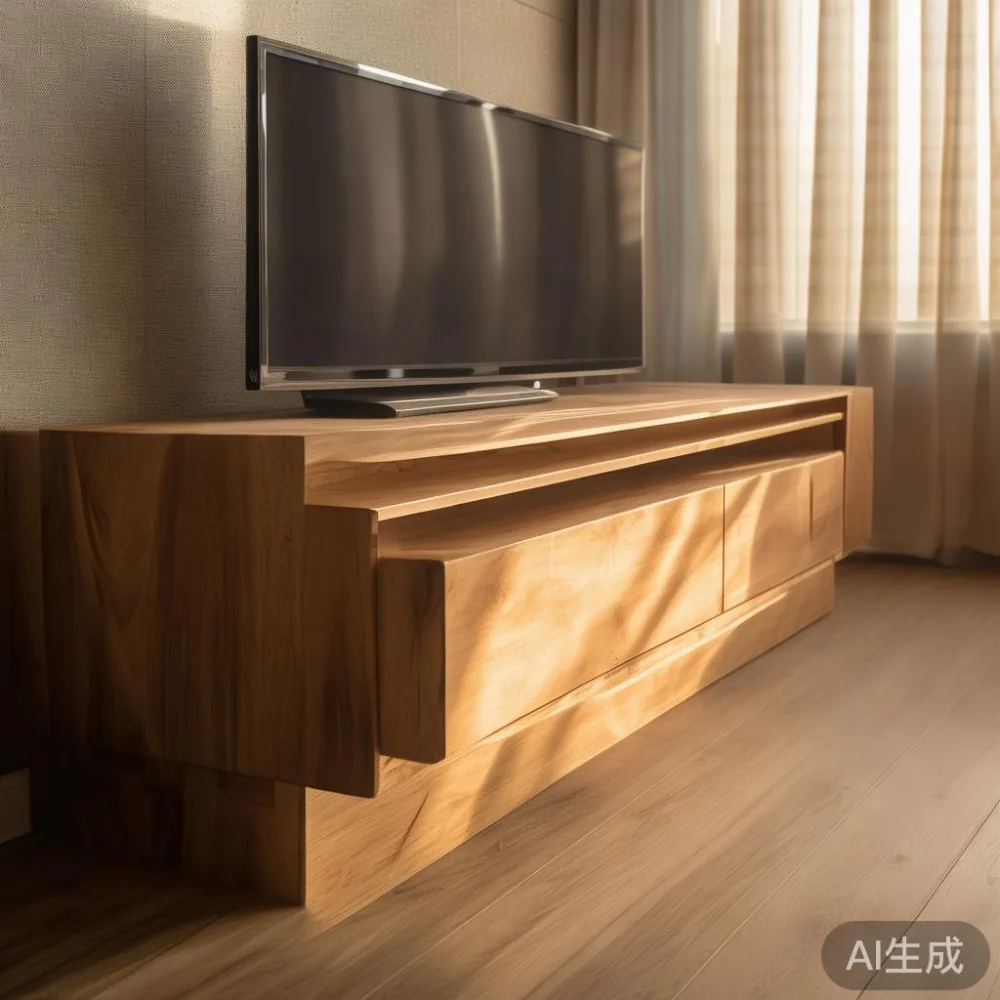
The TV cabinet is the quiet hero. In warm minimal, it should sit 35 to 45 cm off the ground (not on tiny legs, not flush to the floor), be 160 to 200 cm long for a 55 to 65 inch TV, 38 to 42 cm deep so a soundbar fits, and finished in the same oak tone as the sofa frame and dining top. Push it slightly off the wall by 2 cm — it catches the shadow line and reads as lighter. This is also the piece that takes the most daily abuse (remote, decoder, soundbar, kids' toys), so I prefer solid wood or a high-quality oak veneer over MDF. MIDHILL's oak TV cabinet range, exported to 15+ countries with a 10-year structural warranty, fits this brief neatly: 160 to 200 cm, oak veneer, soft-close hinges, cable cut-outs at the back.
What Wood Tone, Fabric and Hardware Tie the Look Together?
Stick to one wood tone across the major pieces. If you mix a pale Scandinavian ash sofa frame with a darker walnut dining table and an orange-tinged oak TV cabinet, the room will look like three different apartments. Pick one of three directions: pale beige oak (most common in Punggol and Sengkang new launches), mid-tone natural oak (most common in resale Tampines flats), or warm walnut (common in older Bukit Timah or District 09 condos). Whichever you pick, repeat it on the TV cabinet, the bed frame (yes, even the bedroom — warm minimal is most powerful when the whole flat shares one wood), the nightstand, the wardrobe handles, and ideally one accent in the dining chairs.
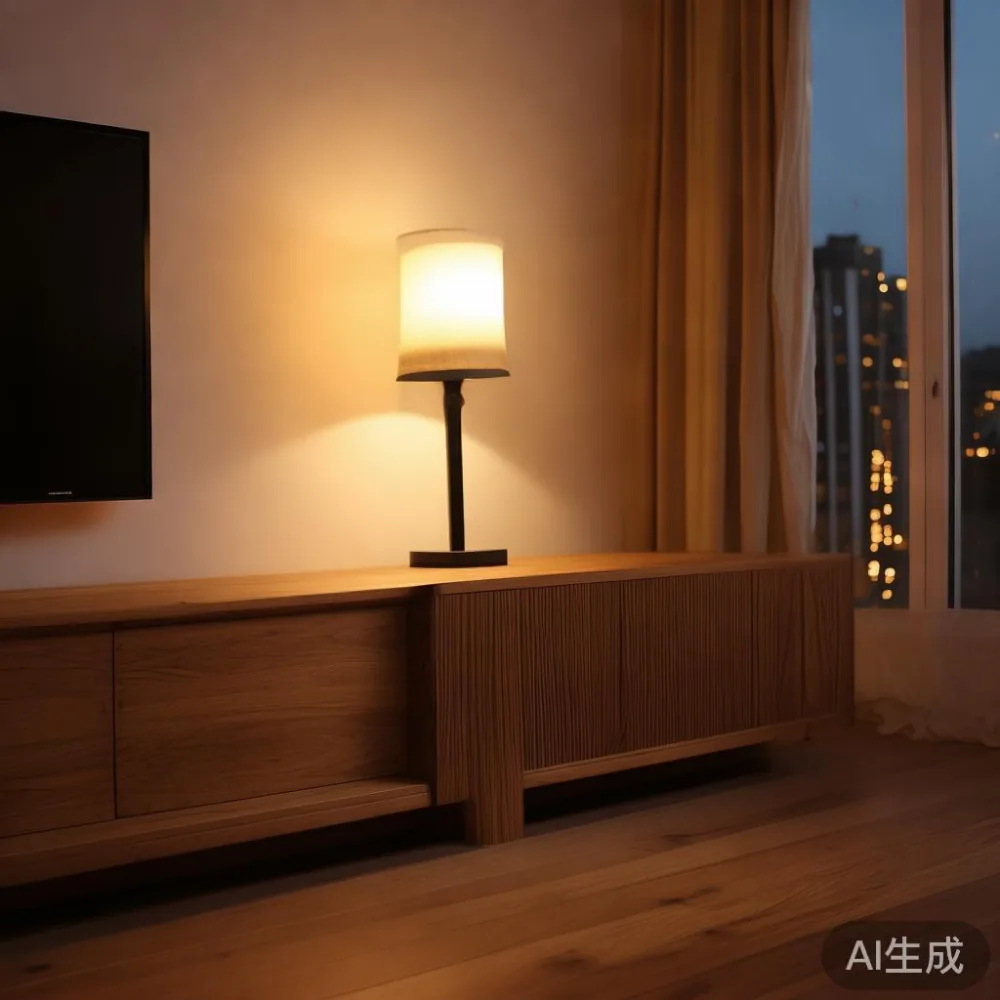
Fabric should land in the beige-to-stone zone: oat, sand, putty, mushroom, soft taupe. Pure white upholstery shows every Milo stain and every sock mark, so unless you are a household of two adults with no kids and no pets, avoid it. Bouclé and linen-cotton blends wear well in Singapore humidity (we run 28 to 32°C and 75 to 85% RH most days) provided the room has a dehumidifier set to 55%. Hardware and metal accents should be brushed brass or matte black, never shiny chrome, never rose gold. One brass detail — a lamp neck, a sofa leg cap, a cabinet pull — repeated three times across a room reads as a deliberate choice rather than a happy accident.
Lighting is the most under-priced element in Singapore renovations. Spend the SGD 800 to 1,500 on a layered lighting plan rather than chasing a designer lamp. You want three layers at minimum: ambient (2700K downlights at 90+ CRI on a 0.6 to 0.8 m spacing, 5 to 7 per room), task (a 2700K reading lamp at 500 to 800 lumens next to the nightstand or sofa corner), and one statement piece (a linen drum pendant over the dining table at 90 cm diameter for a 160 cm table). Avoid 4000K anything — it will turn your beige oak sofa into plastic, and your warm minimal scheme will read as cold corporate.
How Do I Style a Dining Chairs in a Modern Singapore Home?
Pick dining chairs with a slim solid oak or ash frame, a low curved backrest at 45 to 50 cm high, and a seat in beige linen-blend or oat boucle, then keep the table to a single solid wood top in the same oak tone. That sentence is the quotable answer: in a modern Singapore home, the dining set works best when the chairs share the exact wood tone of the table and the seat fabric echoes the living room sofa — usually a beige or oat weave.
To expand that: avoid mixing four identical chairs with one accent chair unless the room is at least 3 m long. In a typical HDB dining zone of 2.4 to 2.8 m, four matching chairs read cleaner. Seat height should be 45 to 47 cm to pair with a 75 cm table top (the 28 to 30 cm clearance between seat and table apron is what makes long dinners comfortable, not the cushion foam). If you want the "light luxury" French or American feel, choose a chair that has a thin brass detail at the leg cap or a single horizontal channel stitch on the seat — that's where light luxury post-modern minimal lives, not in chandeliers or marble toppers. A 160 cm solid oak dining table with four such chairs sits in the SGD 2,400 to 3,800 range landed in Singapore, which is realistic for a young couple mid-renovation.
Can I Get Warm Minimal Furniture Through a HDB Lift Without Paying a Tilt-Lift Fee?
Most HDB lifts measure roughly 1.1 m wide by 1.4 m deep with a 2.1 m door, so any single furniture piece longer than 1.4 m or taller than 2.0 m must either break down into modules or come up the service lift (often larger, sometimes 1.6 m by 2.2 m). MIDHILL designs its larger items — wardrobes, dining tables, TV cabinets — to ship as flat-pack modules under 1.5 m and under 35 kg per box, which means two movers, no tilt-lift, and no SGD 250 to 450 surcharge. Boxes between 30 and 40 kg are still safe for a single HDB lift trip, the heaviest (a dining table top, say) goes up under 28 kg.
Checklist before you buy: (1) ask for the packed dimension of every box, not just the assembled piece; (2) confirm each box's weight in kg; (3) check the corridor turns — corner corridors in older blocks like Bedok Reservoir can be tighter than 1.1 m, so anything over 60 cm wide at the longest dimension is risky; (4) ask if the legs or top detach for shipping (a 180 cm solid wood top should detach from a pedestal). With a Singapore-based consolidator, delivery from a Foshan factory to a HDB doorstep runs 25 to 35 days by sea plus 3 to 5 days for last-mile, so plan your renovation around a 6 to 8 week lead time, not a 2 week one.
How Should the Bedroom Connect Back to the Living Room?
Repeat the same wood tone on the bed frame, the nightstand, and the wardrobe. If your living room TV cabinet is oak, the bed frame should also be oak. If your sofa frame is ash, the bed frame should be ash. A warm minimal scheme loses its warmth the moment the bedroom looks like a different apartment, and most Singapore flats I walk into have a master bedroom in dark walnut and a living room in pale ash — that mismatch is the single biggest reason the renovation feels off.
For the bed frame, go low: a platform at 25 to 35 cm off the ground with a 110 to 120 cm tall headboard in beige linen or boucle. King size is 180 by 200 cm, but in a 4-room HDB the master often only fits a queen (150 by 200 cm) with a 50 cm nightstand on each side. For the nightstand, two drawers, 45 to 50 cm wide, 40 to 45 cm deep, 55 to 60 cm tall (slightly lower than the mattress top is fine — it reads as softer). For the wardrobe, sliding doors save 60 cm of swing space compared to hinged, which matters in a typical 2.4 m bedroom wall. A 180 to 200 cm sliding wardrobe in oak veneer with a soft-close system lands in the SGD 1,800 to 3,200 range landed in Singapore for a mid-range build.
What Mistakes Should I Avoid Before I Place the Order?
Five recurring pitfalls I see in Tampines, Bedok and Punggol renovations:
1. Buying the sofa before measuring the corridor. A 240 cm sofa is unusable if it cannot clear the HDB lift. Always measure the lift, the corridor, the front door, and the turn from corridor to door. The smallest of those four numbers minus 10 cm is your maximum assembled width.
2. Mixing three wood tones. Oak sofa, walnut dining, ash TV cabinet — three tones fight each other. Pick one and repeat it across the sofa, dining, TV cabinet, bed frame, nightstand, and wardrobe.
3. Choosing 4000K lighting. Warm minimal collapses under cool white. Buy 2700K dimmable LEDs at 90+ CRI, and put them on a 0 to 100% dimmer if the budget allows.
4. Ignoring GST and landed cost. A SGD 1,800 dining table plus 9% GST plus SGD 180 to 280 sea freight plus SGD 60 to 120 last-mile is roughly SGD 2,200 to 2,400 at your door. Anything advertised under SGD 1,800 for a solid oak 160 cm table is either MDF, veneer-only, or a teaser price that excludes shipping.
5. Skipping the warranty check. A 10-year structural warranty on solid wood frames is the Singapore-renovation baseline. Anything less than 5 years on a sofa frame or 3 years on a dining top means the maker is not confident in the joinery. MIDHILL's 10-year structural warranty plus lifetime refinishing on its solid wood sofas, bed frames, dining tables, wardrobes, nightstands and TV cabinets is the reason I keep recommending them when clients ask for a single supplier across the whole flat — one warranty card, one delivery, one set of movers, one point of contact.
What Does a Realistic Warm Minimal Budget Look Like in SGD?
For a 4-room HDB (90 to 100 sqm) furnished in warm minimal solid wood, a realistic furniture-only budget before GST sits in this range:
- Solid wood sofa (3-seater, beige boucle, oak frame): SGD 2,800 to 4,200
- Dining table (160 cm solid oak) + 4 chairs (beige linen): SGD 2,400 to 3,800
- TV cabinet (180 cm oak veneer, soft-close): SGD 1,200 to 2,000
- Bed frame (queen, oak platform, upholstered headboard): SGD 1,400 to 2,400
- 2 nightstands (oak, 2-drawer): SGD 600 to 900 for the pair
- Wardrobe (180 cm sliding, oak veneer): SGD 1,800 to 3,200
- Optional marble table (round 100 cm, living room corner): SGD 1,200 to 2,000
Total furniture-only: roughly SGD 11,400 to 18,500. Add 9% GST, sea freight (SGD 800 to 1,400 consolidated for a full container share), last-mile delivery (SGD 120 to 280 for a 4-room HDB), and assembly (SGD 200 to 400) and you land around SGD 14,000 to 22,000 at your door. Free shipping usually kicks in above US$350 (about SGD 480) per order, so consolidating everything from one supplier saves the per-order surcharge. A 14-day return window after delivery is standard for any reputable Singapore-bound solid wood maker, so check that policy before the wire transfer.
A Final Walkthrough Order for a 4-Room HDB in Punggol or Tampines
If I were furnishing my own 92 sqm flat in Punggol Field today, this is the order I would place, and the order I would install in:
Week 1: Bed frame, 2 nightstands, wardrobe (these go into the bedrooms first so the contractor can finish painting around them). Week 2: Dining table and 4 chairs (kitchen and dining zone are usually done first). Week 3: TV cabinet (the wall behind the sofa is usually the last carpentry item). Week 4: Solid wood sofa (always last — it is the heaviest and most likely to get scratched if you move other pieces past it). Week 5: Optional marble table at the living room corner and a final pass on styling.
The reason the order matters is simple: every earlier piece sets the wood reference for the next, and every later piece has to match what came before. Start with the room you sleep in, end with the room you entertain in, and keep the wood tone identical across the bed frame, nightstand, wardrobe, dining table, TV cabinet, and sofa frame. That single rule is what warm minimal really is — not a Pinterest mood board, not a collection of expensive things, but one oak tone repeated across six pieces of solid wood, lit by 2700K, anchored by a beige oak sofa, and grounded by a slim TV cabinet that the lift could actually carry up. If you do that, the rest of the room almost designs itself.