How to Choose the Right-Size TV Cabinet for a Singapore HDB Living Room
Choosing a tv cabinet for a Singapore HDB or condo living room is rarely a matter of matching the television width alone. The cabinet must also fit the lift, corridor, staircase and doorway; preserve a practical walking route; and suit the proportions of the room. A model that looks balanced in a showroom can feel oversized in a 3-room flat, while a compact cabinet may disappear against the wall of a larger Tampines or Punggol home.
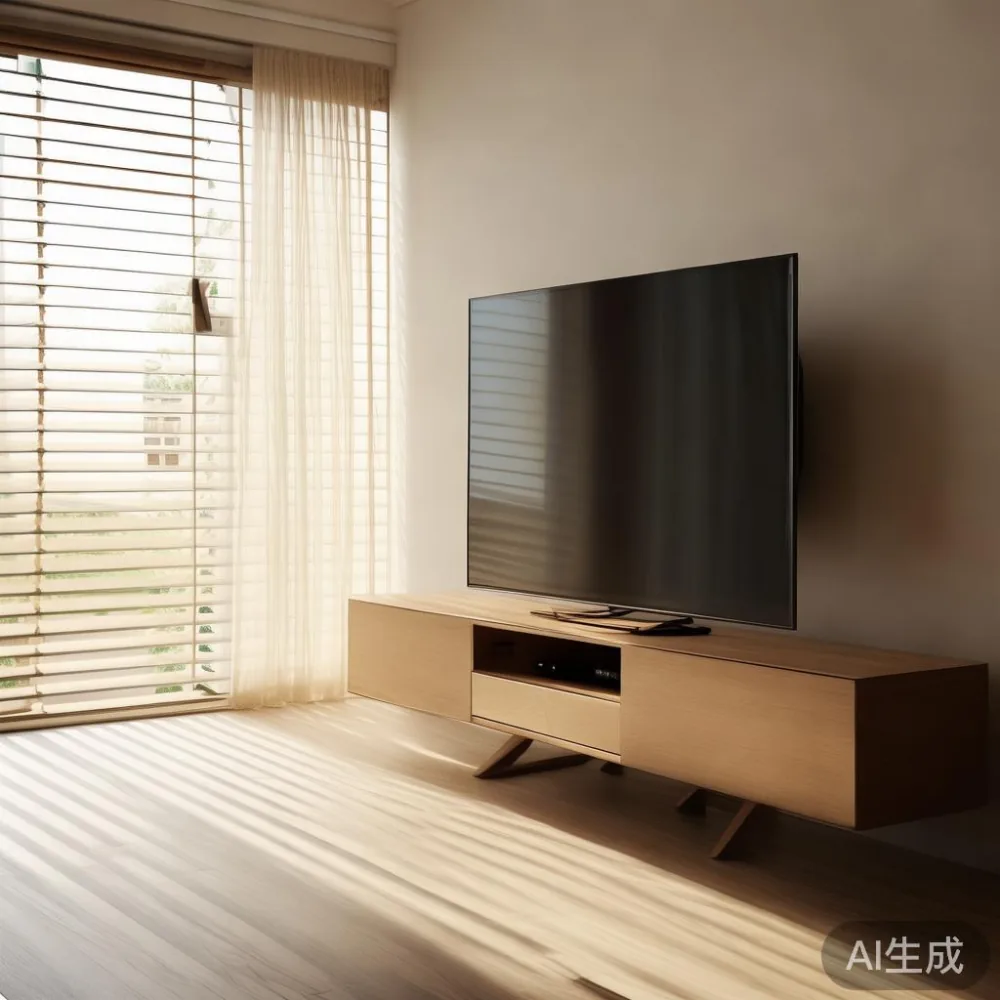
Last month, I visited a colleague in Bedok who was about to order a 220 cm solid wood tv cabinet for his living room. The room measured only 4.8 m along the feature wall, but his HDB lift opening was just 81 cm wide. The cabinet had to arrive in two sections, and each section weighed no more than 38 kg so two movers could manage it safely. That experience reinforced a simple rule: measure the delivery route before falling in love with the finished piece.
This guide explains how to size a tv cabinet for HDB flats and condos, including the practical dimensions, prices and delivery questions worth checking before purchase. MIDHILL designs solid wood furniture in a French light luxury, American light luxury and post-modern light luxury direction, while its size should always be determined by your room rather than by a style label.
What size tv cabinet should I buy for a 3-room or 4-room HDB flat?
For most 3-room HDB living rooms, a tv cabinet measuring 160–190 cm wide and 35–45 cm deep is a sensible starting point. A common 55-inch television is about 121–123 cm across the screen, while a 65-inch television is roughly 143–146 cm wide. The cabinet should generally be 15–30 cm wider than the screen, but it must also leave 20–40 cm of wall on at least one side for balance and cable concealment.
In a 4-room HDB flat or a compact condo living room, widths from 180–220 cm often suit the television and surrounding furniture. If the television is 75 inches, at approximately 167 cm wide, a 190–220 cm tv cabinet creates a more settled proportion. Beyond 220 cm, check the door lift and corridor carefully: a wider unit may require removable legs, split doors or two separately handled modules.
The depth should relate to the television stand and wall position. Wall-mounted televisions may work with a 30–38 cm deep cabinet, while floor-standing models often need 38–45 cm. Do not allow the cabinet to project so far that the circulation path beside the sofa becomes cramped.
Measure the feature wall in 3 places because HDB walls are not always perfectly square. Record the wall length, skirting height, television width, power-point positions and any existing furniture. A cabinet 180 cm wide may occupy only 55% of a 3.3 m wall, while the same cabinet occupies 82% of a 2.2 m wall. Those percentages matter more than the television size alone.
How much clearance should remain around a tv cabinet?
Allow at least 60 cm for a main walking route in a HDB living room, and preferably 75–90 cm if people pass between the cabinet and sofa frequently. Keep another 20–30 cm between the cabinet and a side wall where possible. This prevents the unit from looking pinned into the corner and gives doors, drawers and maintenance access room to operate.
For a compact sofa seating layout, place the tv cabinet on the longest uninterrupted wall rather than directly opposite the entrance. The front edge of the cabinet should remain at least 45 cm from the sofa for comfortable reach and access to media components. If the available distance is only 35 cm, consider a shallower cabinet between 28–34 cm deep.
Overhead clearance is also important. A wall-mounted television with its lower edge 15 cm above the cabinet top creates a clean composition. A floor-standing television may require a recess or a cable opening. For integrated cable management, check that the rear panel has openings at least 8 cm wide and 5 cm high, and that any power strip can be hidden without being trapped against the wall.
In a French light luxury living room, restrained moulding and pale solid wood can make a 170 cm cabinet feel substantial without looking bulky. The same cabinet in a darker finish may appear larger, so allow slightly more wall space around it. Natural oak, warm ash and muted walnut finishes each affect the visual weight differently under Singapore’s bright lighting.
Will the tv cabinet fit through my HDB lift and corridor?
Do this check before paying a deposit. Ask the retailer for the packed dimensions and weight of every carton, not just the assembled dimensions. A cabinet may measure 180 × 40 × 45 cm but still arrive as one carton of 184 × 44 × 49 cm. If the carton exceeds the lift opening, the purchase may need to be cancelled or redelivered.
Singapore HDB lift openings commonly measure around 80–90 cm wide and 200–210 cm high, although older blocks and refurbished lifts vary. A 180 cm cabinet can usually enter diagonally, but a 220 cm rigid carton may not. The corridor turning radius and the distance from the lift door to the apartment entrance can be just as restrictive.
Here is a delivery checklist with concrete figures:
- Measure the lift door width and height with a tape, then subtract 2–3 cm for door seals and protective padding.
- Measure the narrowest corridor section and every right-angle turn.
- Confirm whether the staircase or side gate must be used.
- Check the apartment door width after removing the door if necessary.
- Compare each packed carton with the smallest lift dimension.
- Record the distance from the lift lobby to the living room; expect 10–25 minutes for delivery and placement in a typical block.
Some larger units are supplied in 2–3 modules. For example, a 210 cm tv cabinet might arrive as sections measuring 108 × 42 × 48 cm and 102 × 42 × 48 cm. Modular construction can make transport easier, but the installer should confirm that the sections can be joined without leaving visible gaps.
Check the GST-inclusive total and delivery charge in SGD before ordering. A Singapore order has 9% GST; if the listed furniture price is SGD 1,280 before GST, the tax is SGD 115.20 and the total is SGD 1,395.20. Confirm whether stair carrying, lift reservation, installation and damage protection are included. Delivery typically takes 7–14 working days after production, with another 1–3 days for transfer to the address.
Which cabinet size suits different television sizes?
Use the television width as one reference, then adjust for the room. A 50–55 inch television usually pairs with a 140–180 cm tv cabinet. A 65-inch model often sits on a 170–200 cm cabinet, and a 75-inch television may suit 190–230 cm. These are starting ranges rather than strict rules because wall area, viewing distance and the height of the cabinet all influence the result.
Viewing distance should be approximately 1.2–1.6 times the television diagonal for general family viewing. A 55-inch television is 139.7 cm diagonally, giving a comfortable range of roughly 168–223 cm. A 65-inch television is 165.1 cm diagonally and generally works at about 198–264 cm. In a compact HDB flat, the cabinet width may therefore need to be larger than the screen if the sofa cannot be moved farther away.
Height also affects balance. Cabinets between 45–55 cm high suit many floor-standing televisions and keep storage accessible. A cabinet taller than 60 cm can dominate a low sofa, especially if it has thick legs or deep side panels. For a post-modern light luxury arrangement, slender proportions around 180 × 38 × 48 cm often create visual lightness while retaining useful storage.
Consider the objects placed around the television too. A tall plant needs at least 30 cm beside the cabinet, while a ceramic lamp may require 20–25 cm. Avoid planning a narrow cabinet simply because the television is narrow; leave enough room for a speaker, console or display that you actually use.
How do I compare solid wood options without paying for unnecessary weight?
Solid wood construction affects weight, stability and price. A 180 cm cabinet made from oak or ash with a solid rear panel may weigh 45–65 kg, while a similar unit made with engineered board panels may weigh 28–38 kg. Engineered panels can still be appropriate in dry interior spaces, but a retailer should identify the materials clearly.
For buyers comparing furniture directions, the phrase European light luxury sofa vs Nordic sofa usually concerns seating proportions rather than the tv cabinet itself. Likewise, Japanese sofa vs Mid-century modern sofa highlights low versus more structured profiles. These comparisons can guide the whole room’s visual balance: a low, compact sofa may suit a shallow cabinet, while a taller sofa can support a deeper unit. A solid wood sofa, bed frame, dining table, wardrobe, nightstand or marble table should share compatible finishes, but each piece must still fit its own clearances.
Ask whether the solid wood components are kiln-dried, how joints are made, and whether the finish is water-based. A cabinet intended for daily use should tolerate approximately 20–30 kg placed on its top. Check that drawers have metal runners rated for at least 25 kg and that shelves can carry 15–20 kg. If you plan to place a television on the cabinet, confirm both the top-load rating and the dimensions of the television feet.
Style references can help identify the look you prefer. Modern French provincial furniture often combines pale timber, curved edges and restrained hardware. French provincial for hotel references can introduce a more decorative mood, which may work in a larger condo but crowd a small HDB room. A search for for sale Rustic furniture may surface heavily grained oak and substantial frames; those suits can look warm, though the cabinet should not be so visually heavy that it compresses the space.
Is French provincial bed worth it is a separate bedroom question, but its principles carry over: joinery, finish durability and accurate scale. A TV cabinet needs the same careful checks, with particular attention to anti-tip safety and rear-wall anchoring. For a family home, request a fixing kit suitable for plasterboard or concrete and allow at least 2 fixings into structural material where possible.
How should I compare prices, warranty and delivery terms in Singapore?
Compare complete packages rather than headline prices. One retailer may quote SGD 1,150 for the cabinet, while another quotes SGD 1,280 including GST, lift reservation and installation. At a 9% GST rate, SGD 1,150 becomes SGD 1,253.50 before delivery or installation charges. A written quotation showing the model, dimensions, finish, accessories, tax and delivery cost allows a fairer comparison.
MIDHILL provides a 10-year structural warranty and lifetime refinishing on qualifying solid wood furniture, which can be useful when planning maintenance over a 5–10 year ownership period. Confirm in writing whether a specific tv cabinet and finish are included. Also check the returns window: 14-day returns may apply to standard items, but made-to-order sizes, special finishes or installed goods may have different terms.
Free delivery thresholds can simplify budgeting. If the threshold is US$350, Singapore buyers should request the corresponding SGD amount at checkout because exchange rates and payment arrangements may differ. A cabinet costing SGD 1,300 plus GST could still attract a small delivery fee if the threshold is calculated before tax. Ask for the exact figure instead of estimating.
Lead time matters when a move-in date is fixed. Standard collections may be available in 7–14 working days, while custom widths can require 4–7 weeks. A 210 cm made-to-order cabinet ordered with a 7-week lead time should be scheduled carefully around a new HDB key collection. Allow 2–4 weeks of margin for finishing, carton production and delivery coordination.
What should I measure on the day the cabinet is delivered?
Before the movers enter, photograph the lift, corridor and living room. Confirm the cabinet carton measurements against the lift opening. Keep protective cardboard and foam in place until the pieces reach the intended room, and inspect corners for dents, scratches or chipped finish. For solid wood, look for checks, loose joints and uneven gaps that might indicate movement during transport.
Position the cabinet before fixing it to the wall. A 180 cm cabinet with 2 cm levelling feet may shift slightly, so use the supplied shims and check that it is stable over a 2 m span. The top should not rock when pressed with a 10 kg load. Connect media cables only after the unit has settled, and check that ventilation openings remain unobstructed.
Allow roughly 20–30 minutes for unpacking, assembly and placement in a standard living room. Curved stairs, narrow corridors or a split delivery can add 30–60 minutes. If the cabinet must be carried beyond the lift, agree on the stair-carrying charge before work begins.
Final checks should include television alignment, drawer operation, anti-tip fixation and access to sockets. Keep ventilation gaps of at least 5 cm on each side of equipment that generates heat. If a marble table is also being delivered, schedule the heavier installation separately so the floor near the cabinet is not exposed to unnecessary handling risk.
The right-size tv cabinet for a Singapore HDB or condo living room combines three calculations: enough width for the television and visual balance, enough depth for equipment, and enough clearance for people to move comfortably. Add the access check for the lift, corridor and apartment door, and a cabinet of roughly 160–220 cm will suit most Singapore homes. Accurate measurements and clear delivery terms protect both the room and the investment, whether you choose a restrained solid wood design or a more decorative French or American light luxury treatment.