How Southeast Asian Humidity Affects Solid Wood TV Cabinets
Singapore’s equatorial climate can change a solid wood TV cabinet more quickly than many owners expect. Outdoor relative humidity often ranges from about 70% to 90%, while air-conditioned interiors may sit near 50% to 65%. In a Tampines HDB flat, a cabinet near a west-facing window can therefore swell during humid afternoons and contract after the air conditioner starts. In a Punggol condo with wide glazing, the same movement may occur across several rooms.
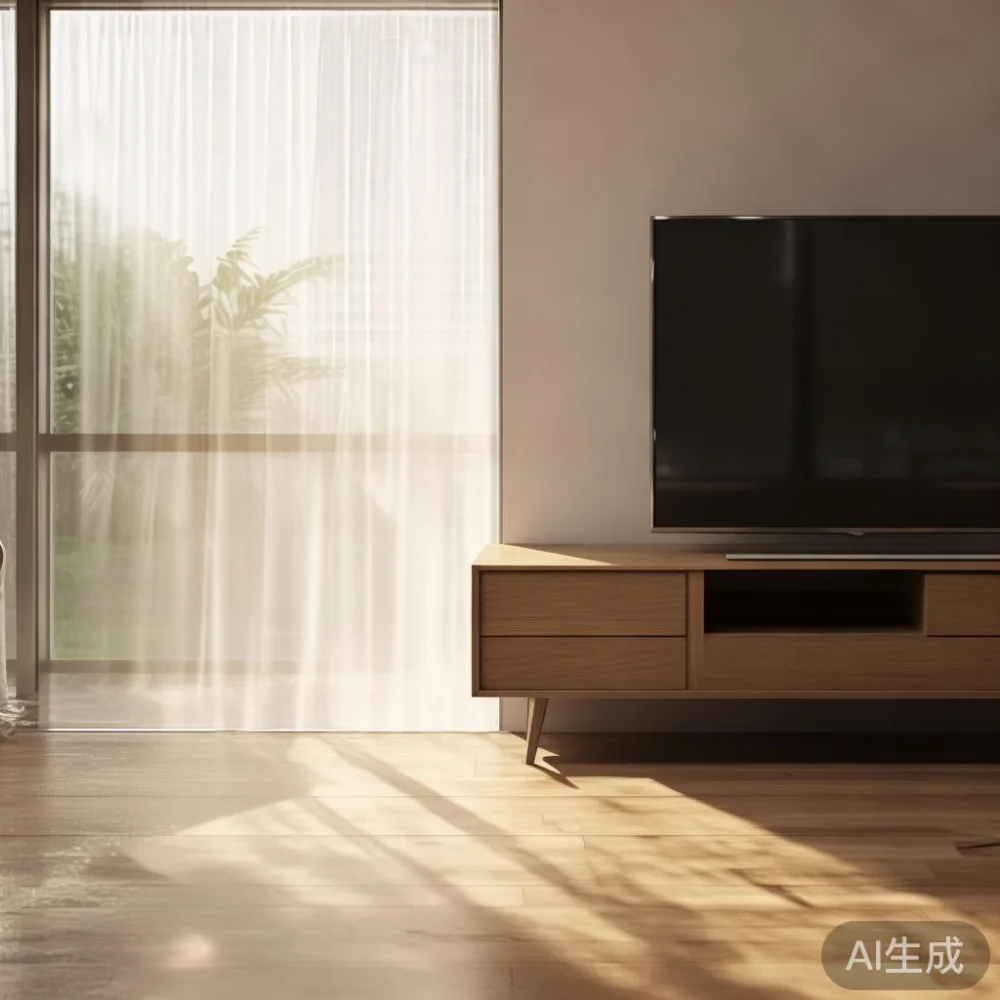
Humidity does not mean that wood will simply rot. It means that moisture movement must be managed through product design, acclimatisation, placement, ventilation and maintenance. The right TV cabinet should remain stable around a television, soundbar and decorative objects without bowing doors, lifting from tiled floors or showing checks along its joints.
MIDHILL designs solid wood furniture for practical homes, with a 10-year structural warranty and lifetime refinishing. That support matters in Singapore because even a well-made cabinet needs sensible care. Below is a practical guide to humidity, dimensions, delivery and upkeep for buyers comparing pieces for HDB flats and condos.
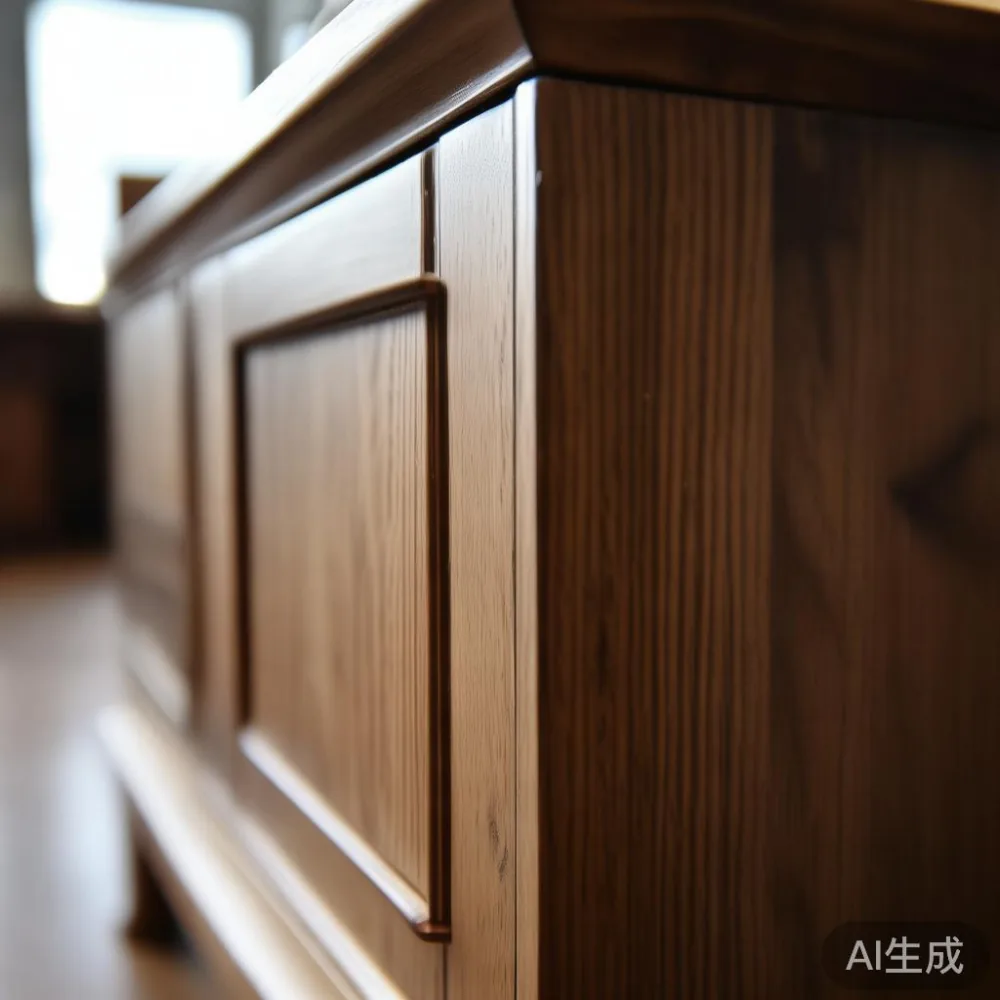
What does humidity do to a solid wood TV cabinet?
Wood is hygroscopic: it absorbs or releases moisture as the surrounding air changes. A solid oak side panel 180 cm wide and 2.2 cm thick may move by several millimetres across its width as humidity shifts. A veneered cabinet can also move, although its thin substrate and glue lines may respond differently. Solid wood generally offers visible grain, repairable edges and reassuring weight, but it still needs environmental stability.
Singapore’s daily cycle is unusually noticeable. A wall beside a sunlit living room may reach 31°C and 85% relative humidity, then cool to 25°C and 55% after air conditioning begins. Repeated cycles stress joints, drawer runners and lacquer finishes. The most common signs are a door that no longer sits flush, a gap beneath a side panel, a drawer that catches at the back and fine splits near an end grain.
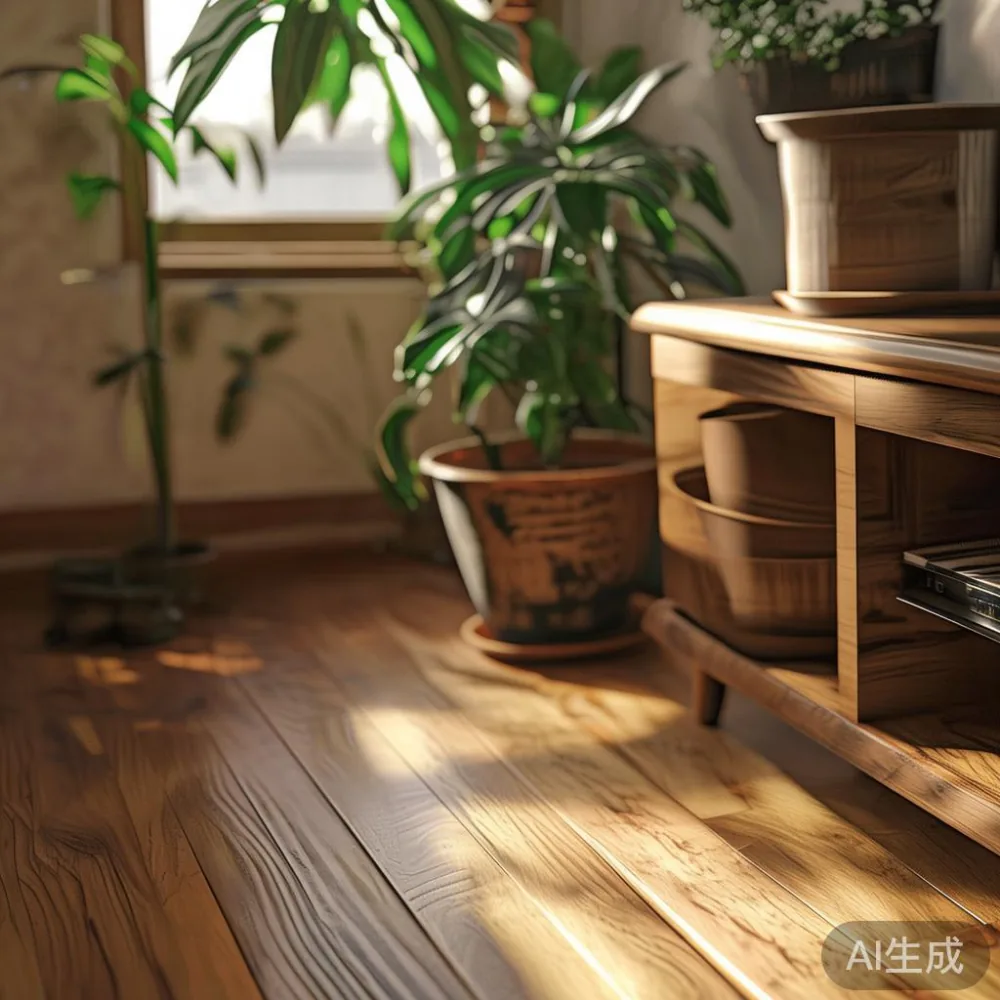
The density of the wood influences the response. Dense hardwoods such as oak and ash move less than softer woods such as pine or poplar for a given moisture change, but movement remains measurable. A cabinet made from 18–22 mm boards is less dramatic than one built with thin 10–12 mm panels. Joinery also matters: a sound mortise-and-tenon or dowelled structure can tolerate seasonal movement better than a box held together only by screws.
Humidity is not the same as a water leak. A cabinet exposed to a burst pipe or persistent dampness may suffer mould, swelling and finish failure, which falls outside ordinary humidity-related care. Persistent condensation on a window, a rising damp stain or a moisture reading above 80% in a poorly ventilated corner should be addressed before furniture is placed nearby.
How wide should a TV cabinet be for an HDB flat or condo?
Measure the television first, including its wall bracket rather than only the visible screen. A 55-inch television is often about 123 cm wide, while a 65-inch model may measure 145 cm. A practical cabinet is 140–180 cm wide, leaving 10–20 cm of breathing space for the wall bracket and cable routing. An 85-inch screen may need a 200–240 cm cabinet or a modular arrangement.
For HDB living rooms, depth and access deserve as much attention as width. A typical compact TV cabinet is 38–45 cm deep, while a media unit with closed storage may reach 50 cm. Check that the final unit leaves at least 75–90 cm of clear circulation space where people pass between the sofa and cabinet. In a narrow Bedok flat, projecting furniture can make a room feel pinched; in a larger Tampines or Punggol condo, a 220 cm cabinet can become the main visual anchor.
Curves should follow the actual door swing. A cabinet door opened by 90 degrees projects 40–50 cm. If the opposite wall is only 85 cm away, choose sliding panels, drawers, or open shelving instead. Drawer extension needs about 45–55 cm behind the front, while lift-up compartments need roughly 60 cm of vertical clearance. These measurements matter more than a broad product description.
Lift and corridor access affect the buying process too. Singapore lift doors are often about 90–100 cm wide, with internal dimensions that may be smaller. A cabinet packed in a 220 cm carton cannot turn through the lift lobby or fit into a service corridor. Before purchase, ask for the packed dimensions, gross weight, turning radius and whether the cabinet can be separated into modules. A 75 kg unit carried up four HDB floors may also require more than one handler.
How should a TV cabinet be acclimatised in Singapore?
Allow unfinished or newly delivered solid wood furniture to acclimatise for 5–7 days in its final room. Keep it 20–30 cm away from walls, windows, air-conditioner outlets and kitchen entrances. Do not place a shrink-wrapped cabinet directly on a tiled floor; leave the packaging open enough for air to circulate and use the supplied feet or blocks. If the piece has been in a container from a cooler climate, give it 10–14 days rather than rushing installation.
Start with a reasonable indoor target of 50–65% relative humidity and temperature around 23–27°C. These ranges are more useful than trying to maintain one exact number all day. A hygrometer placed near the cabinet can reveal local differences that a weather app does not show. In a Punggol unit with floor-to-ceiling glass, the cabinet-side reading may be 5–10 percentage points different from the room centre.
Positioning can reduce the load. Keep the unit at least 60 cm from a window where possible, or use blinds and curtains to moderate direct sun. Avoid air-conditioner vents that repeatedly warm and cool one panel. A ventilated plinth or small rear gap can allow air to move, but the furniture should still stand level on suitable pads. Felt or EVA pads protect tiled floors from scratches without sealing moisture against the base.
During heavy rain, check windows and air-conditioning condensate pipes. Wipe condensation from glass and metal surfaces promptly. Do not leave a damp cloth resting against the cabinet overnight. These simple actions remove larger moisture sources that product warranties cannot control.
How do I know if humidity or a manufacturing defect is causing the problem?
Observe the pattern before taking action. If a door binds only after a wet week and returns to normal in a drier period, environmental movement is likely. If a joint remains crooked after 2–3 weeks at stable humidity, inspect the fixings and support points. If one panel is swollen while the opposite panel is not, check for a water source, direct heat or restricted ventilation.
Use a straightedge to compare gaps. A 2–3 mm variation may reflect normal seasonal movement, while a sudden 5 mm warp should be investigated. Photograph the cabinet and its room conditions before adjusting anything. Include wide shots, close-ups, measurements and the date. Such records make a supplier’s assessment more accurate.
MIDHILL’s 10-year structural warranty covers qualifying structural issues, while lifetime refinishing supports surface renewal. That does not mean every scratch or environmental movement is automatically covered, so care instructions and delivery records should be retained. The warranty period starts from purchase, and the original invoice should remain available for the full 10 years.
Small surface marks may be addressed with the correct maintenance products, but concentrated chemicals, generic paint thinners and abrasive pads can damage lacquer or expose bare wood. Ask for finish-compatible advice before applying anything. A lightly damp cloth followed by a dry cloth is usually safer for routine wiping. Avoid steam cleaning, which can force moisture into joints.
Can I style a TV cabinet with solid wood sofa, bed frame and dining table pieces?
Yes, provided grain scale, colour and undertone are coordinated rather than matched perfectly. A solid wood sofa with exposed oak legs can work with an oak TV cabinet, while an American-style solid wood bed frame in walnut can sit in the same home with a warmer cabinet finish. Keep metal details, upholstery colours and lighting consistent to prevent the television wall from feeling separate.
For Singapore interiors, modern Mid-century modern furniture can provide useful visual discipline. Choose tapered legs, clean lines and restrained proportions, but scale them for a compact HDB living room. A 210 cm TV cabinet may overpower a 2.8 m-wide seating bay; a 160 cm cabinet with a 50 cm centre compartment may feel more proportionate. French light luxury also works through curved edges, fluted doors and muted cream or taupe finishes, without making a small flat visually crowded.
Other product terms should guide compatible planning. A solid wood sofa with a seat height of 42–46 cm pairs naturally with a low media bench at 40–48 cm. A dining table in the same timber family can carry through to a nightstand, while a marble table introduces a cool surface that needs careful balancing against warm wood. If a separate dining zone is visible from the living room, repeat one timber or finish rather than every furniture style.
Lighting is part of the composition. A 2700–3000 K strip concealed below the cabinet reduces glare on the screen and reveals grain movement. Dimmable fixtures are practical because low light minimises the appearance of minor surface variation. Keep cables hidden in a 6–8 cm rear channel so that doors can open without pinching wires.
What are the best dimensions and prices for a Singapore TV cabinet?
Useful dimensions depend on the television and room rather than a fixed ideal. For a 55-inch television, a 150–180 cm TV cabinet offers balanced margins. For a 65-inch screen, consider 180–210 cm. A 75-inch television generally calls for at least 210–240 cm or 2 modular units. Height commonly falls between 45–65 cm; taller units create more storage but require stable anchoring.
A practical comparison starts at SGD 1,200 for a compact solid wood design measuring roughly 120–150 cm, with drawers or open bays. Mid-range pieces with stronger joinery, thicker boards and more considered finishes often sit around SGD 1,800–3,200. Larger cabinets, paired modules, stone surfaces and extensive storage may range from SGD 3,500–6,500. Prices should be checked at purchase because timber, dimensions, finishes and delivery terms affect the final figure.
Singapore buyers should confirm whether GST is included. For a SGD 2,000 item, 9% GST adds SGD 180; a displayed subtotal of SGD 3,500 becomes SGD 3,815 after GST. Delivery to a HDB flat may cost SGD 80–180, while a scheduled lift booking or difficult access can add SGD 50–150. A lift fee may also apply, depending on the building and removal service.
Delivery commonly takes 7–14 working days after production, though peak periods and custom dimensions can extend this to 21–30 days. Check whether the quoted period is a manufacturing estimate or a firm arrival window. A 14-day return period allows buyers to assess a cabinet in the actual room, provided packaging and condition requirements are followed.
How do I choose furniture for a bedroom as well as the living room?
The same humidity rules apply to a wardrobe, nightstand and bed frame. Leave a gap of 5–10 cm between a freestanding wardrobe and a wall where space permits, and avoid pushing large solid wood pieces directly against a cold surface. A nightstand with 2–3 cm legs allows air beneath its lower shelf and makes floor cleaning easier.
Anyone comparing European cabinetry needs to answer the question, “Is European wardrobe worth it?” The answer depends on internal usable dimensions, hinge quality, humidity response and aftercare access—not merely its origin. Internal rails, drawer boxes and hanging depths should suit the occupants, while the exterior proportions should coordinate with the television cabinet.
For an imported-looking bedroom, searching how to choose French provincial wardrobe can reveal useful features such as shaped cornices, panelled doors and warm timber tones. In a compact HDB bedroom, excessive ornament may crowd the space, so a simplified interpretation often works better. Those researching how to choose American bed can prioritise a supportive centre rail, stable legs and a slat spacing appropriate to the mattress.
There are two useful style guides for adjacent bedroom pieces. One explains how to style Japandi sofa in bedroom, although a sofa is normally a living-room product and should not be placed where it obstructs the bed. The other covers how to style European light luxury bed in bedroom, with pale textiles, curved headboard profiles and restrained metallic details. In both cases, climate control remains more important than decorative style.
What should I check before ordering a TV cabinet for a Singapore home?
Ask the supplier for the outer dimensions, internal storage dimensions, material specification, finish, weight, packed size and delivery lead time. Confirm that all panels are properly joined and that back panels are fitted securely. For a wall-mounted television, use the cabinet’s load rating and appropriate fixings; a screen over 55 inches should not be treated as a lightweight object.
Access planning is equally important. Measure the lift door, lift car, corridor turns, stair width and the route into the flat. A corridor of 110 cm can accommodate a narrow boxed cabinet, but a rigid 200 cm carton may still be difficult to pivot. Confirm whether delivery includes carrying, unpacking and assembly, and whether stair carries are charged separately.
Last month I visited a renovated 4-room HDB flat in Tampines and tested a 170 cm solid oak TV cabinet beside a west-facing window. The unit had been delivered 4 days earlier and was still settling. A hygrometer showed 76% humidity near the window but 63% beside the sofa. After the cabinet was moved 25 cm inward, the readings became more stable and the right-hand door aligned more closely.
The homeowner also discovered a practical delivery issue: the lift lobby offered a 105 cm clear route, while the carton measured 182 cm long. It could enter diagonally but required careful handling. This is why packed dimensions should be checked before a heavy cabinet is manufactured, particularly for older HDB blocks with compact corridors and lift cars.
For ongoing care, inspect every 3 months during wet periods and twice a year in drier months. Look beneath the cabinet, check door gaps, wipe the top and ensure vents remain clear. Keep plants and water vessels on separate stands, and use a coaster beneath any decorative vessel. Solid wood furniture protected from standing water, direct heat and rapid humidity swings can retain its character for decades.
Choose a TV cabinet that suits the television, circulation and climate of the actual home. Confirm dimensions, access, GST, delivery days, returns and warranty terms in writing. With measured placement and regular care, a solid wood cabinet can provide stable storage and understated presence across Singapore’s changing seasons.