How Southeast Asian Humidity Affects Wood Furniture, Especially TV Cabinets
Singapore’s tropical climate can make a beautiful solid wood TV cabinet look swollen, faded or cracked if the wrong timber and finish are used. Warm, humid air also carries more moisture into exposed timber, while air-conditioning can make the same room very dry by evening. For households in Tampines, Bedok and Punggol, the practical challenge is not simply “wood versus engineered wood”; it is choosing furniture that can tolerate changing humidity while still fitting narrow HDB corridors, compact lifts and modern living rooms.
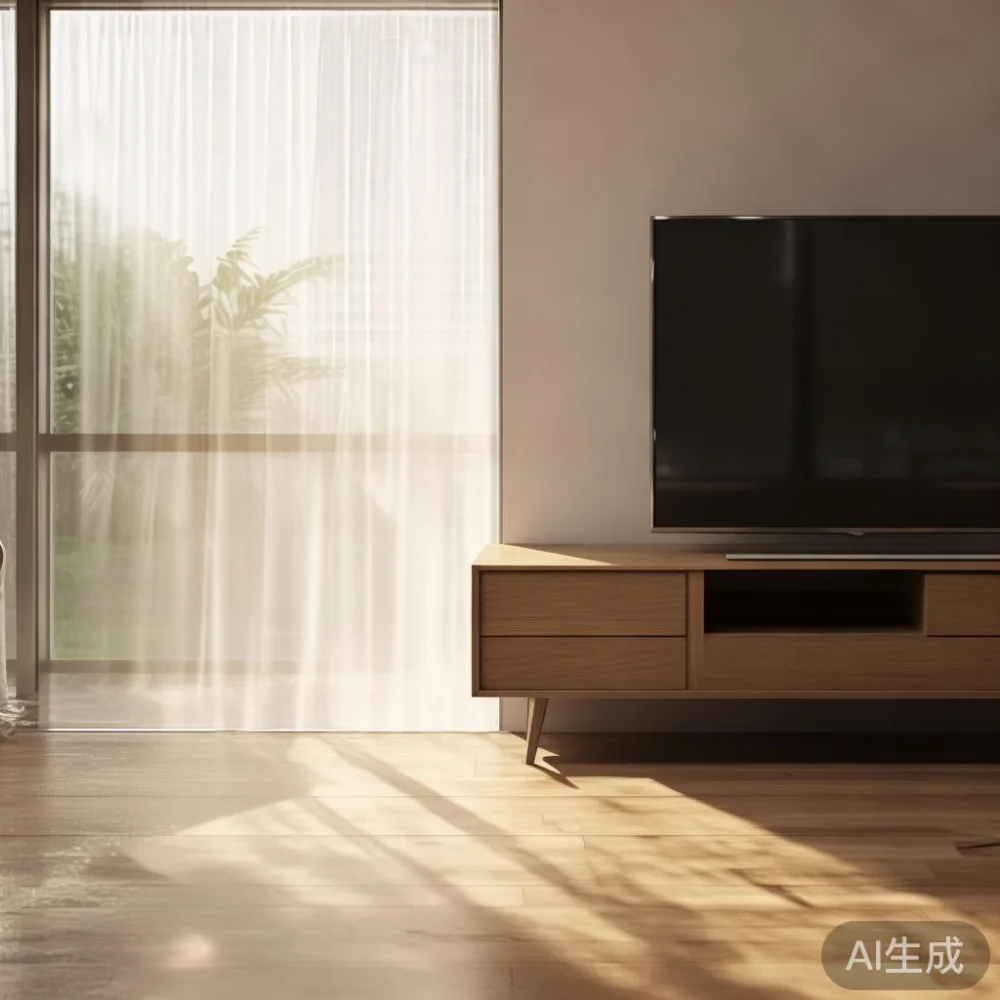
As a furniture specialist connected with Foshan manufacturing, I see this issue regularly. The practical answer begins with understanding relative humidity, timber movement and finish quality, then combining those facts with sensible placement and maintenance. A TV cabinet may look like a simple storage piece, but it often has large panels, enclosed compartments, cable openings and a finish that is repeatedly exposed to indoor air.
What humidity does to solid wood in Singapore?
Relative humidity, or RH, describes how much water the air contains compared with the maximum it can hold at that temperature. Singapore’s outdoor readings often vary substantially through the day. A typical humid afternoon might register around 80–90% RH, while an air-conditioned bedroom can fall to 45–55% RH. The exact figures vary by weather, unit and room, so a simple hygrometer placed near the furniture is more useful than relying on a general seasonal label.
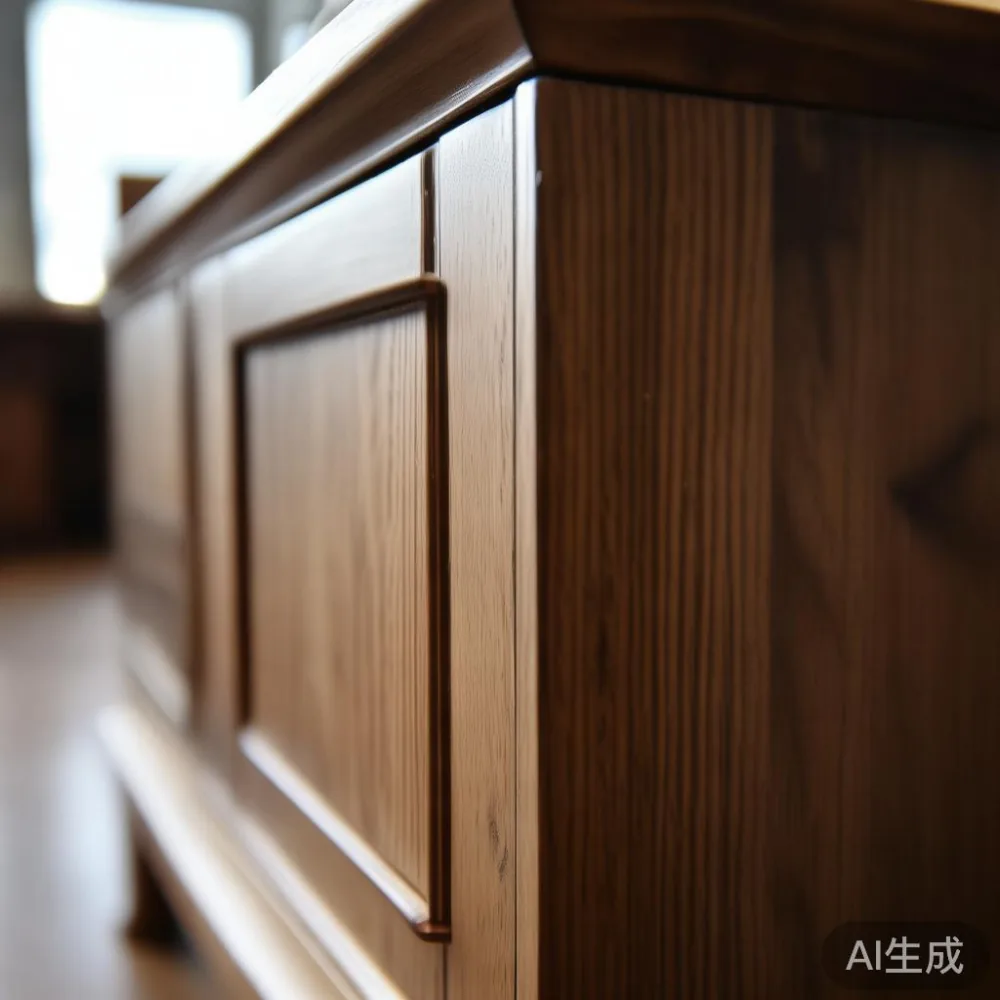
Wood is hygroscopic. It gains moisture when surrounding air is humid and loses moisture when the air is dry. The movement is modest but visible on wide panels. Across a seasonal change, solid hardwood can move by roughly 1–3% across its width, with exact movement depending on species, grain direction and panel construction. A 120 cm wide solid oak panel could therefore change by approximately 1.2–3.6 cm over its width if it is not built or installed with movement in mind.
That movement can create gaps at joints, sticking doors, bowed drawer fronts or a cracked panel. Finished surfaces may also appear dull, hazy or milky when moisture enters the coating. These are not always signs of poor craftsmanship; they may reflect a finish or design that was not suited to the local humidity cycle.
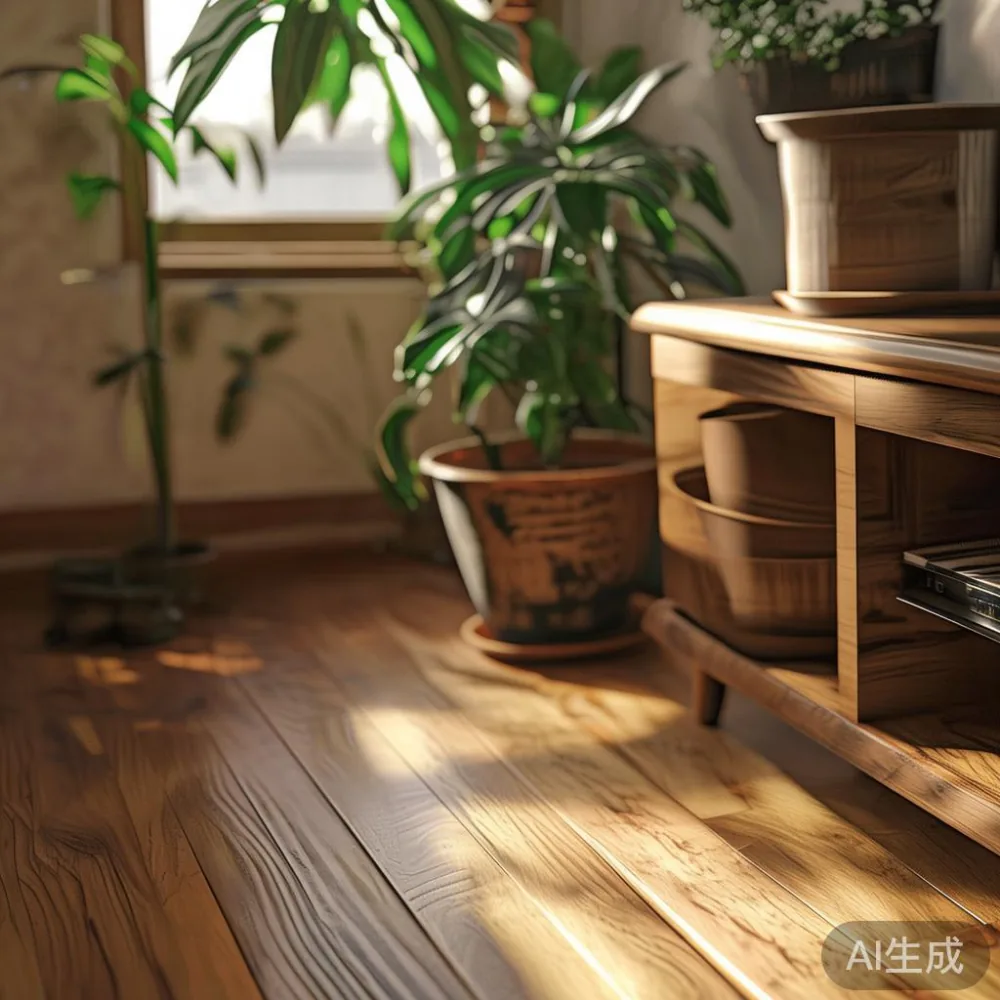
Engineered panels do not remain completely immune. They can move at their edges, delaminate or fail around weak joints, although they generally show less dimensional change than solid timber. Neither material should sit directly against a wet wall, near a leaking air-conditioning pipe or in a persistently damp storage area.
How humid should my bedroom or living room be?
For most wood furniture, an indoor RH range of about 45–65% is a sensible target. Short periods outside that range are usually less damaging than repeated movement across a large annual cycle. In an HDB flat, the living room may be comfortable at 60–70% RH, while the bedroom becomes much drier after several hours of air-conditioning. Repeated changes can stress a large TV cabinet even if neither extreme lasts long.
You do not need to turn every room into a museum archive. A calibrated hygrometer costing around SGD 20–45 is enough to identify a persistent problem. Place it at cabinet height, about 1–1.5 m above the floor, and away from an open window or direct air-conditioning outlet. Check it at roughly the same time each morning and evening, such as 8:00 a.m. and 9:00 p.m.
If readings repeatedly exceed 70% for several weeks, investigate ventilation, water entry and the position of the unit. If they remain below 40% in an air-conditioned room, consider raising the air-conditioning temperature by 1–2°C or using a modest room humidifier. The goal is stability rather than chasing a single perfect number.
Which solid wood suits Southeast Asian humidity?
Timber choice matters, but stable construction and the protective finish are equally important. Kiln-dried hardwood with a controlled moisture content is suitable for Singapore interiors when it is allowed to acclimatise and is not exposed to direct weather. Common choices include teak, oak, ash, rubberwood and other properly graded hardwoods. Teak has a naturally oily character and performs well in humid conditions, while oak, ash and rubberwood can perform well when their moisture content, joinery and coating are properly controlled.
Ask the supplier for the wood species, moisture content and finish system rather than accepting a vague description such as “solid wood.” For indoor furniture in Singapore, a moisture content around 8–12% is often practical, although local adaptation and manufacturing methods also affect performance. MIDHILL uses material checks and a 10-year structural warranty, but warranty language alone cannot replace sensible indoor care.
Finishes should be compatible with the intended environment. A tough lacquer or properly applied hardwax oil can protect against ordinary household moisture, but no finish makes a cabinet waterproof. Avoid placing a TV cabinet directly beside a bathroom wall, on an exposed balcony or where condensation forms behind it. Coastal air in areas such as Bedok and Punggol can be more corrosive to metal hinges and fittings, so stainless hardware or good corrosion protection is useful.
How should I choose a TV cabinet for a Singapore home?
Measure the route before ordering. A standard HDB lift door may be around 80–90 cm wide and 200–210 cm high, though older blocks and upgraded lifts vary. A corridor turn can be tighter than the doorway itself. Give the supplier the lift width, corridor width, turning points and door measurements. A cabinet longer than 180 cm may need to enter diagonally or be assembled inside the flat; a compact 120–160 cm TV cabinet is easier to manoeuvre.
Depth also affects use. A 38–45 cm deep cabinet is practical for most televisions and allows cables to be managed behind the unit. Allow at least 5–8 cm for ventilation where equipment generates heat, and keep the cabinet away from windows with intense afternoon sun. Confirm that the top surface can support the intended television weight; common screens may weigh 15–35 kg, while larger displays can exceed 40 kg.
Look for square cabinet sides, clean joinery, adjustable shelves and rear cable access. Drawer runners and hinges should operate without binding as the timber responds to humidity. A well-designed gap, good ventilation and stable doors are more useful than a heavy decorative frame. For small HDB living rooms, a floating TV cabinet can save floor area, while a plinth-based model may feel more substantial and suit post-modern light luxury interiors.
What is the best way to clean and maintain a humid-room TV cabinet?
Use a soft, slightly damp cloth and dry the surface immediately. Avoid soaking timber, spraying cleaner directly into joints and leaving soap residue on the grain. A pH-neutral wood cleaner applied sparingly is suitable for many lacquered surfaces, but test an inconspicuous area first. Wipe up spills within 5–10 minutes, particularly around vases, plants and decorative objects.
Keep a minimum distance of roughly 30–60 cm from an open window if rain-driven humidity is a concern. Do not place the TV cabinet against an external wall that feels cool and damp; that combination often signals condensation. For ventilation, leave 3–5 cm behind a freestanding unit where the layout permits. Cable covers can trap heat and dust, so check them every 3–6 months.
Inspect the cabinet twice a year. Look for sticking doors, new gaps, loose hinges, surface haze and damp corners. Tighten fittings only if the structure is sound. Do not force a swollen drawer or sand a joint aggressively; identify the cause first. If mould appears, stop treating the room as a simple cleaning problem and address the moisture source.
Can air-conditioning make a solid wood TV cabinet crack?
Air-conditioning is more likely to cause gradual shrinkage and joint movement than an obvious crack, particularly when the cabinet is repeatedly cooled. Direct airflow should be avoided because it can create a fast moisture difference between the exposed face and the protected rear. Aiming a vent directly at a cabinet for eight hours a day can dry one side more quickly than the other.
Allow furniture to acclimatise in the room before use. Newly delivered pieces should remain unpacked or only lightly wrapped for around 24–72 hours, depending on the size and how well they were conditioned during shipping. Keep them away from vents during this adjustment period. If the grain raises slightly in damp conditions, do not immediately treat it as damage; normal movement often settles when humidity stabilises.
Small marks on lacquer can sometimes be treated with the finish manufacturer’s approved repair method. Deeper sanding or refinishing requires care because excessive abrasion can remove the protective layer unevenly. This is one reason MIDHILL offers lifetime refinishing: customers can restore the finish over time rather than replace an entire solid wood piece because its surface has aged.
How do I style a TV cabinet in an HDB or condo interior?
Begin with the room’s proportions. In a compact Tampines flat, a 120–160 cm TV cabinet may look more balanced than a 200 cm unit that crowds the wall. For a newer condo with a wider living area, a 180–220 cm cabinet can create a calmer composition. Match the cabinet height to nearby seating where possible; visual alignment often matters more than matching every item exactly.
Light wood tones can work well with warm neutral walls, while darker walnut-like finishes can provide contrast in pale interiors. If shopping for a light brown luxury sofa, choose it before finalising the cabinet finish so the two pieces do not compete. This language of subtle contrast and restrained detailing fits American light luxury more than heavily ornamented traditional rooms.
Accessories should remain functional. Place only stable objects on the cabinet, use cable channels and keep small ornaments away from the edge. A solid wood dining table nearby may share similar humidity conditions, so maintain a consistent care routine across the room. For broader bedroom projects, French provincial for bedroom can inform the choice of pale, crafted bedside pieces, although the TV cabinet belongs in the living area rather than the bedroom.
When planning adjacent storage, how to style European wardrobe in bedroom is useful for understanding pale woods, long vertical lines and coordinated handles. A room built around Italian light luxury for office may use clean geometry and darker accents, which can be echoed in a modern TV cabinet without making the entire flat feel formal.
Is expensive furniture automatically more resistant to humidity?
No. Price does not reveal moisture content, timber species, joinery or coating quality by itself. A less costly cabinet with well-seasoned wood and sound construction may age more predictably than an expensive piece with unstable panels and a vulnerable finish.
Comparable questions appear in every furniture category. A solid wood sofa can develop frame movement if its components were not conditioned, a bed frame can loosen at the joints, a dining table can develop a wavy top, a wardrobe can twist and a nightstand drawer can bind. The same principles apply to each category, although a marble table raises a different issue: natural stone can stain if liquid remains on the surface, and its cabinet base still needs stable timber construction.
For buyers comparing design references, top 10 light luxury furniture lists often emphasise silhouette, material and finish rather than climate performance. Those qualities are valid, but local humidity deserves its own checklist. Ask about wood conditioning, panel movement, finish compatibility, hardware corrosion resistance, after-sales support and delivery logistics.
The phrase under 2000 Rustic furniture may suggest solid timber and visible grain, yet rustic appearance alone says nothing about humidity resistance. Likewise, Foshan furniture production benefits from experienced timber treatment and controlled finishing, but every product still needs responsible use in its final room.
What delivery and after-sales details matter for a solid wood TV cabinet?
Delivery planning can prevent damage before the cabinet reaches your home. A local Singapore order may take 3–7 delivery days after production, while regional or international shipping can take 14–30 days or longer. Confirm whether the price includes delivery, lift carrying and installation. MIDHILL provides free shipping for orders over US$350, although international freight terms and any Singapore GST treatment should be confirmed before payment.
For a local purchase, request delivery within a manageable window and provide the floor, block, lift and unit number accurately. The team should check whether the cabinet fits through the lift and corridor. If it does not, the order may need protective removal of legs or rear panels and final assembly in the living room.
Singapore’s 9% GST may apply to taxable imported goods or local supplies, depending on the transaction structure and delivery terms. A clear invoice should separate product value, freight, insurance and applicable tax. Keep the order record for the 10-year structural warranty and note the finish-care instructions.
Returns are more complicated for made-to-order furniture, especially where dimensions, timber tone and door layout are customised. MIDHILL allows returns within 14 days under its stated policy, subject to condition and eligibility. Confirm whether a custom TV cabinet is returnable before approving the drawing.
What should I check before ordering a solid wood TV cabinet?
Ask these seven questions: What timber is used? What was the moisture-content target? How are wide panels joined? Which finish protects the surface? Will doors and drawers be adjustable in humid conditions? What are the packed dimensions? What happens if the cabinet arrives with a joint or finish issue?
Also measure the television, ventilation space, skirting board and route into the flat. Check the hinge opening against nearby walls and doors. If the cabinet includes a solid wood sofa, bed frame, dining table, wardrobe or nightstand elsewhere in the project, request one coordinated moisture specification so every room responds similarly to seasonal changes.
For Singapore, the most dependable TV cabinet is not the one that ignores humidity. It is the one built from properly conditioned timber, protected with a suitable finish, allowed to acclimatise, positioned away from damp walls and direct air-conditioning airflow, and maintained with care. That approach preserves appearance, usability and structural integrity for many years, including in the warm, moisture-rich conditions that define Southeast Asian homes.