How Southeast Asian Humidity Affects Solid Wood TV Cabinets
Singapore’s warm, humid climate can change solid wood more than many buyers expect. In an HDB flat in Tampines, a TV cabinet near an air-conditioned living room may remain comfortable at 55% relative humidity, while the same cabinet standing in a Bedok corridor can experience repeated shifts as monsoon air enters the building. A Punggol condo near the sea may face the same issue, although its exposure depends on glazing, ventilation, and how often the air conditioner runs. These differences affect the timber, joints, veneer, hardware, and finish long before a cupboard looks damaged.
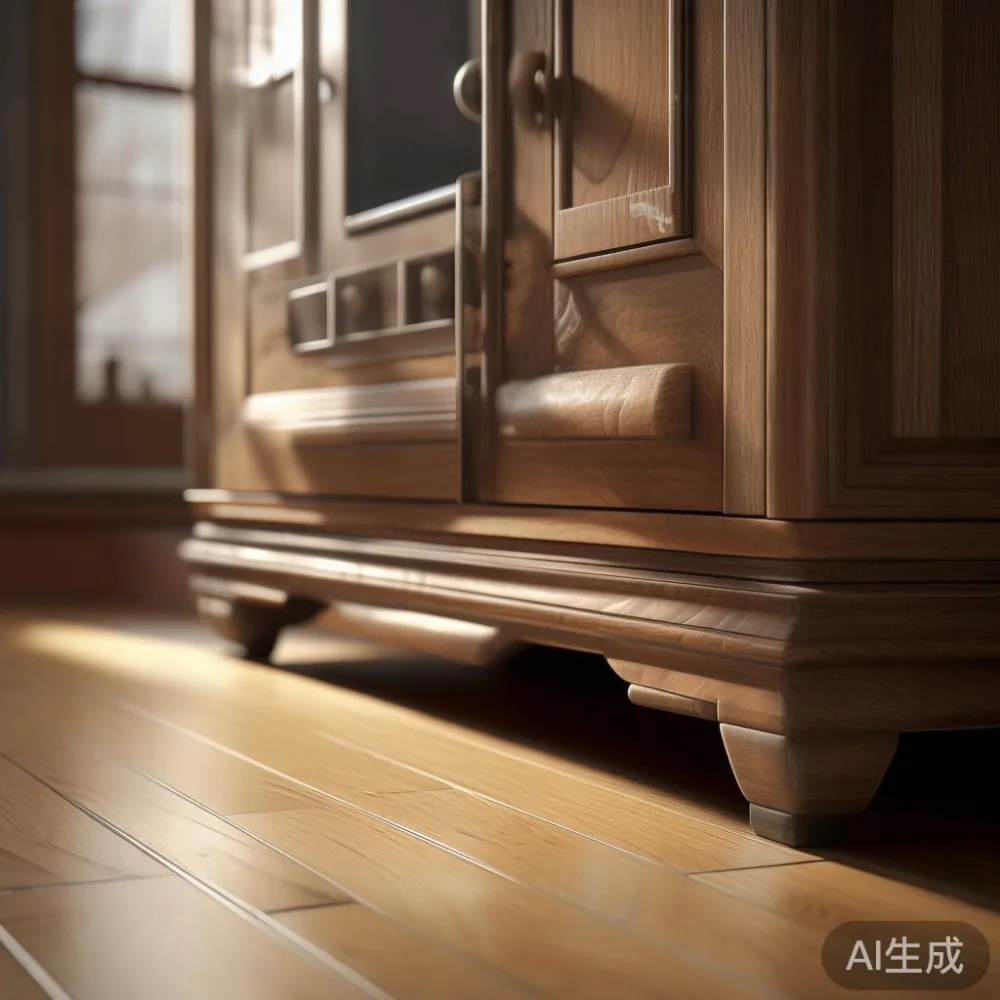
That is why choosing a TV cabinet for Singapore is not simply a question of colour or door configuration. It requires attention to wood species, moisture content, sealing, storage design, and realistic acclimatisation. MIDHILL builds furniture in Foshan, where humid production conditions are useful for understanding how timber responds to moisture. Its TV cabinets are developed for export to more than 15 countries, backed by a 10-year structural warranty and a lifetime refinishing service, but Singapore homes still need careful placement and humidity control.
This guide explains how humidity affects wood furniture, where moisture commonly enters a home, what dimensions and materials suit local rooms, and how to judge a TV cabinet before delivery. It also covers practical budgets in SGD, delivery timing, lift access, GST, returns, and the care required to preserve a solid wood finish.
Why does Southeast Asian humidity make wood expand and move?
Wood is hygroscopic: it takes in moisture when the surrounding air is humid and releases it when the air becomes drier. In Singapore, outdoor relative humidity may range from roughly 70% to 90% during wet periods, while heavily air-conditioned interiors can fall below 50%. A TV cabinet can therefore move through several moisture conditions in a single day.
The movement is measurable. For many solid wood furniture products, a relative-humidity change of 20 percentage points can produce around 1% to 2% dimensional change along the grain. A 180 cm-wide solid wood side panel might move by approximately 2 mm to 4 mm across that range. Solid wood floors generally tolerate such movement because they are designed to flex, but a rigid cabinet carcass needs gaps, sound joinery, and finished edges to accommodate the same behaviour.
Humidity also affects the finish. Water-based coatings remain serviceable when properly applied, but scratches and micro-cracks can admit moisture more readily. Engineered panels may be more dimensionally stable than thick solid timber, yet their decorative veneers can still lift, crack, or discolour if edges are exposed. Plywood is useful inside a well-protected cabinet, but particleboard and fibreboard are more vulnerable when their raw edges swell.
Seasoning matters. Kiln-dried hardwood should be brought gradually into the local environment rather than delivered straight from a cold container into a warm, wet room. For a new TV cabinet, allow approximately 7 to 14 days for acclimatisation before making tight adjustments or loading it heavily. The exact period depends on the wood, the season, and the difference between delivery and indoor humidity.
Which Singapore rooms create the greatest moisture risk?
Bedrooms usually present less risk because the air conditioner controls both temperature and humidity. Living rooms can be more challenging during the first 10 to 15 minutes after a door opens, especially in a corridor or lobby without dehumidification. Washing areas, balconies, and kitchens create local humidity spikes, and a TV cabinet should not be placed immediately beside a balcony door or an ensuite bathroom.
Air conditioners are not moisture absorbers. When a unit switches off, cabinet surfaces can cool and attract condensation from warm air. A good practical target for wooden furniture is around 45% to 60% relative humidity, with less than 2 percentage points of change per hour under normal use. A hygrometer placed near the cabinet is more informative than a weather app because the unit measures the cabinet’s immediate surroundings.
Singapore HDB corridors and lifts can also complicate delivery. A typical HDB lift internal floor area may be around 2.0 m by 1.4 m, with door widths near 900 mm, although block specifications vary. A TV cabinet wider than 90 cm may need its doors removed, while a cabinet deeper than 55 cm can be difficult to turn through a narrow corridor. Confirm the packaged width, depth, and diagonal before ordering. For a condo, obtain the loading-bay hours, floor clearance, lift dimensions, and maximum turn radius from the building management office.
Keep the TV cabinet at least 15 cm from a wall if ventilation is needed, and at least 30 cm from a washing machine, kettle, or drinks refrigerator. Avoid direct sunlight as well: a south-facing Tampines balcony can raise the surface temperature of a dark cabinet by around 10°C to 15°C in the afternoon. Heat and humidity together are harder on coatings than either condition alone.
What should I check before buying a TV cabinet?
Begin with the material description. A genuine solid wood TV cabinet should identify the species used for the carcass, doors, drawer fronts, and visible panels. Common choices for Singapore include oak, ash, rubberwood, and teak, but “solid wood” alone does not reveal the moisture treatment or finish quality. Ask for the expected moisture range, coating type, and care instructions.
Examine how the panels are constructed. Dovetails, mortise-and-tenon joints, and well-fitted drawers can remain functional as timber moves. A cabinet that has been completely sealed around every face may look attractive but can trap moisture inside. The back panel should be stable and fitted with small expansion allowances, while the doors need enough clearance for seasonal movement.
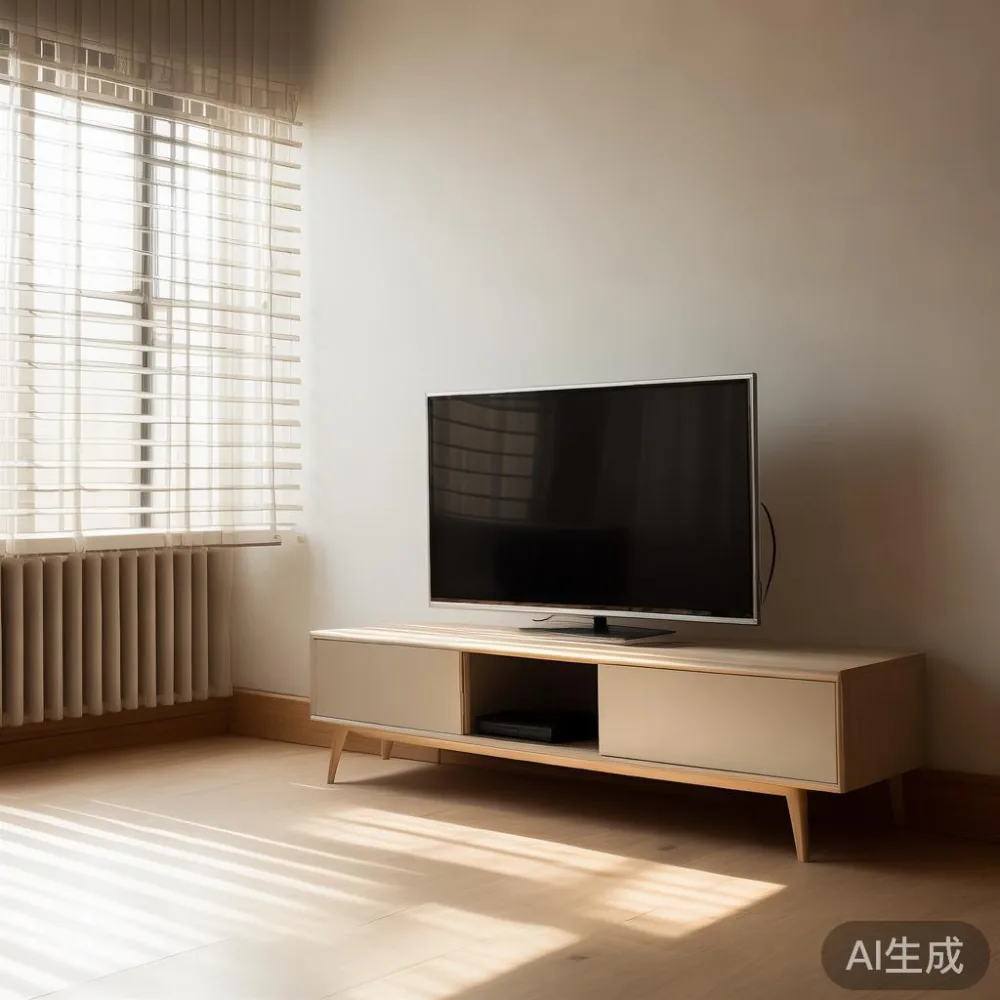
For a living room, a TV cabinet around 180 cm to 220 cm wide, 38 cm to 45 cm deep, and 45 cm to 60 cm high works with many 55-inch to 65-inch televisions. Check the television’s exact width and the manufacturer’s ventilation guidance. If using a lift-top mechanism, allow about 8 cm to 12 cm of internal clearance above the television; a sealed cabinet may also require active ventilation.
Do not judge weight by appearance alone. A solid wood TV cabinet may weigh 45 kg to 85 kg depending on its dimensions, timber density, and storage components. The total should be divided sensibly between two people, and a TV should be mounted or supported according to its own instructions. Never rest a heavy television on a lift-top flap unless the mechanism is rated for that load.
How much should a quality TV cabinet cost in Singapore?
A practical solid wood TV cabinet in Singapore commonly falls between SGD 900 and SGD 2,200 before GST. A smaller unit at 120 cm to 160 cm may begin around SGD 650 to SGD 900, while a wide 200 cm model with extensive drawers, marble details, or premium hardware can reach SGD 2,500 to SGD 3,500. The final price depends more on timber, joinery, finish, and mechanism quality than on the number of compartments.
Look at the total delivered price, not just the product price. Singapore’s prevailing GST is 9%. Delivery to most Singapore addresses may add SGD 80 to SGD 180, with an upper-floor HDB unit or restricted condo access sometimes costing more. A free-shipping threshold of US$350, equivalent to roughly SGD 470 before exchange adjustments and local charges, may apply on eligible cross-border orders, but the checkout should still be checked for GST, duties, and final-mile fees.
Some search terms are more useful than generic sales language. Buyers looking for for sale Minimalist furniture may want clean profiles with fewer visual distractions, while a search for Italian light luxury for apartment can point toward restrained joinery, pale finishes, and carefully proportioned storage. The decorative vocabulary may borrow from French light luxury, American light luxury, or post-modern light luxury, but the cabinet still has to suit local humidity.
These styling references should not distract from practical checks. A pale French-inspired TV cabinet may show dust and fingerprints more readily than a darker finish. American light luxury designs often use deeper stone or timber tones that can look substantial at 60 cm or more in depth. Post-modern light luxury may combine curved edges with metallic hardware, so those hardware points need corrosion protection in a humid coastal location.
A guide to the best Italian light luxury bed for 2026 is relevant only when comparing timber and finish quality, not when assuming that a bed frame automatically protects a nearby TV cabinet. If the room contains a solid wood sofa, bed frame, dining table, wardrobe, or nightstand, each piece should have its own moisture needs. Marble table tops are less hygroscopic than wood but may be vulnerable to acidic spills and condensation rings.
How should the cabinet be delivered and installed?
Plan the route before the furniture leaves the warehouse. Measure the lift door, lift depth, landing turns, corridor width, stair turns, and room door. For many HDB blocks, the narrowest point may be a corridor bend rather than the lift itself. A 200 cm cabinet can sometimes be angled around a 110 cm corridor corner, but the calculation must use the packaged diagonal and the turning space.
Packaging should isolate the timber from moisture. MIDHILL can ship to Singapore with protective wrapping suitable for long-distance transport, while local delivery should use a moisture-resistant outer layer and avoid placing the cabinet directly on wet ground. Allow approximately 3 to 7 business days after the item has cleared export and local fulfilment for a typical in-stock order, although remote-area or custom-finish delivery may take 2 to 4 weeks.
On arrival, inspect the finish, corners, doors, drawers, and joints before signing for the delivery. Photograph any marks with a timestamp and note them on the delivery record. Do not reject a piece because its timber is warmer or feels slightly different from an air-conditioned showroom; assess the actual defects against the stated condition.
Move the cabinet into position, then let it acclimatise for 7 to 14 days. Keep packaged cardboard or plastic away from the floor because trapped moisture can be transferred to the base. If the cabinet has cable openings, use the supplied rear routing features rather than cutting raw panels. That small step protects the moisture barrier and reduces the risk of swollen edges.
MIDHILL’s 14-day returns policy gives buyers a defined window to assess the TV cabinet indoors. A 10-year structural warranty covers eligible structural failures, while lifetime refinishing can help restore a worn surface, though service scope, transport, and eligibility should be confirmed at the time of purchase. These policies are useful, but they do not replace sensible humidity control.
What everyday care prevents humidity damage?
Wipe the cabinet with a soft, slightly damp cloth and dry it immediately. Do not use soaking cloths, silicone sprays, generic furniture polish, or abrasive pads. Clean spills within about 15 minutes, especially water, juice, and alcohol. If a spill reaches a joint or raw edge, dry the area and allow the cabinet to stabilise rather than applying heat directly.
Use a hygrometer and keep the reading near 45% to 60% where possible. Run the air conditioner in humid periods even if the room feels warm, because a moderate setting around 24°C to 26°C often manages moisture more consistently than switching the unit on only when the floor feels cool. In an unoccupied room, a compact dehumidifier can maintain a stable reading, but it should have a clean filter and continuous drainage.
Leave space around the unit and avoid pushing it tightly against an exterior wall. Raise stored items by at least 10 cm from the cabinet floor, and do not store damp clothing, towels, or vinyl covers inside. Paper and books are also hygroscopic, so avoid overfilling a closed compartment near the coast.
Inspect moving parts every 6 months. In high humidity, tighten or adjust hinges only if the manufacturer permits it; some joints are designed to maintain clearance as wood expands. Replenish the supplied touch-up coating at the first sign of a scratch. Wax can add temporary surface protection, but it is not a permanent moisture barrier and may need careful removal before refinishing.
Can different design styles handle a humid apartment?
Yes, provided the construction and finish are suitable. Minimalist and Japandi-inspired TV cabinets use pale woods and clean lines, which can look light in a compact HDB flat. If a shopper is comparing the best Japandi bed for 2026, the same care logic applies to the adjoining TV cabinet: stable joinery, moderate humidity, and no permanent contact with damp walls.
Coastal interiors are popular in Singapore because the visual language suits a relaxed tropical setting. When comparing the best Coastal bed for 2026, look for washable fabrics and solid moisture management rather than assuming any pale finish will tolerate condensation. A Coastal-style TV cabinet can work well with woven textures, light woods, and off-white walls, but its cloth-lined drawers and cable openings should remain dry.
Italian-inspired design often uses pale timber, precise profiles, and restrained stone details. If a marble table stands near the TV cabinet, place a coaster under drinks and wipe condensation promptly. Marble may cool rapidly in an air-conditioned room and collect surface moisture, although the main concern is staining rather than swelling.
Style can be achieved without oversized furniture. A TV cabinet at 180 cm wide and 40 cm deep may suit a compact Tampines living room, while a 220 cm unit needs at least 15 cm of clearance on each side for circulation. In Bedok and Punggol homes where storage is limited, drawers with soft-close runners and adjustable shelves can be more useful than deep open compartments.
What should I ask the seller before ordering?
Ask whether the TV cabinet is solid timber throughout or a mixture of solid wood, plywood, and other panels. Request the moisture-content range, finish details, panel thickness, and expected weight. For coastal or ground-level units, ask how the back, edges, and base are sealed.
Request the packaged dimensions, delivery lead time, GST treatment, return conditions, and lift-access information. For custom sizing, confirm a final drawing with measurements in centimetres. If the cabinet has a marble table top or stone insert, confirm its weight and whether the structural warranty covers supporting components.
Choose a cabinet that can be maintained in your actual room, not merely one that photographs well. Confirm that replacement hardware, touch-up materials, and refinishing support will remain available after the sale. A piece valued at SGD 1,500 should be supported by clear documentation and service options; a piece valued at SGD 4,000 should offer correspondingly detailed craftsmanship information.
The most suitable TV cabinet for Singapore balances proportion, storage, ventilation, and material stability. Solid wood can provide beautiful grain and long service life, but humidity-aware construction and disciplined care determine how it performs. With accurate measurements, controlled indoor humidity, and a finish suited to tropical use, a TV cabinet can remain stable and presentable for years.