Solid Wood vs Veneer TV Cabinet: A 5-Year Cost Reality Check for Singapore Homes
I still remember the Saturday morning last month when I walked into a 4-room HDB flat in Tampines with my colleague to measure a corridor before delivering a tv cabinet. The lift opening was 90 cm wide and 210 cm deep, the service lift could only take 180 kg per trip, and the homeowner had already moved out a 14-year-old laminated TV console because the top panel had swollen along the back edge. She wanted to know whether paying roughly S$2,400 for a solid wood tv cabinet was really wiser than a S$900 MDF + walnut-veneer unit from a Jurong showroom. I told her the answer depends less on day-one price and far more on what happens in year three, year four, and year five. Below is the 5-year cost reality check I walked her through, with Singapore-specific numbers, humidity data, and a few notes on how a piece like a tv cabinet ages inside a HDB or condo living room.
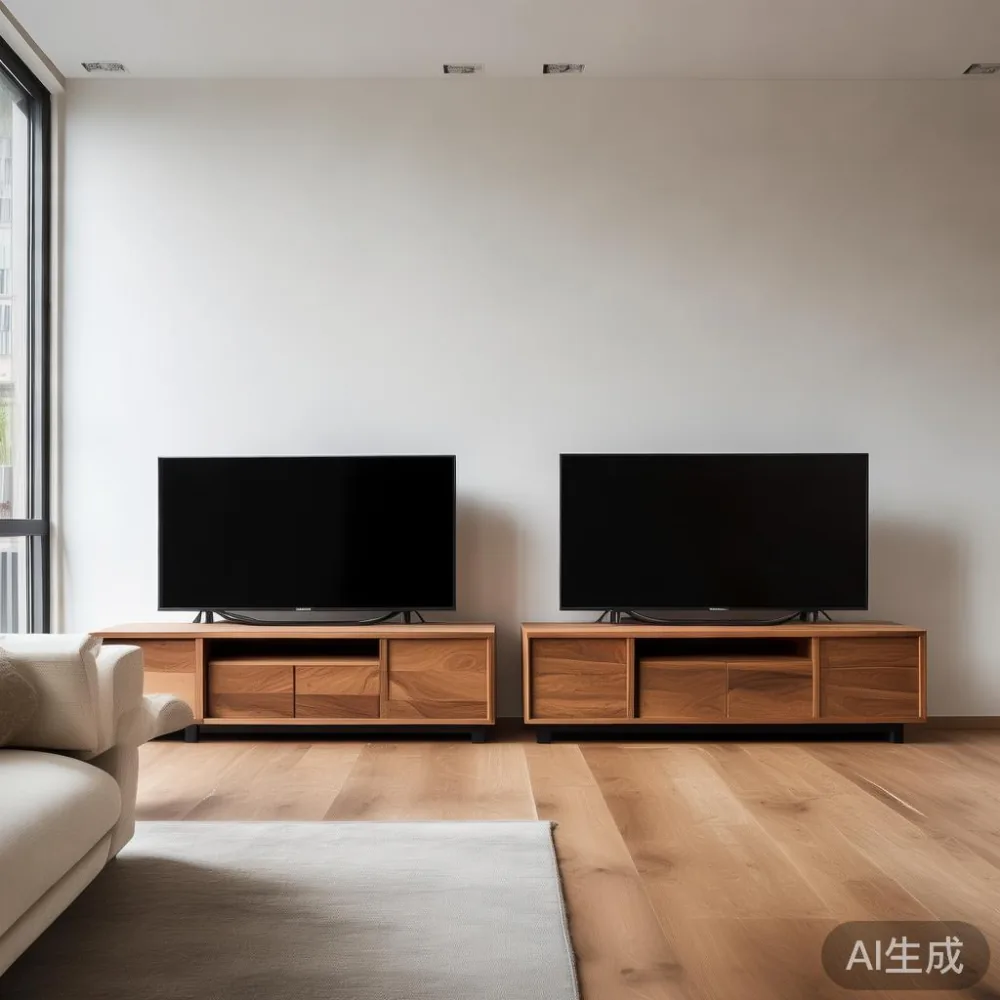
What does a TV cabinet actually cost you in the first 12 months?
For a standard 180 cm wide tv cabinet in a Tampines or Bedok living room, the opening-day maths is fairly straightforward. A mid-range MDF core with real-walnut or oak veneer sits between S$850 and S$1,300 delivered, depending on whether you add soft-close hinges and a cable-management cut-out. A solid oak, ash, or walnut tv cabinet of the same footprint from a Foshan factory such as MIDHILL lands between S$1,950 and S$2,650 CIF Singapore, door delivery, GST included. Add a 9% GST line on both, factor in S$60 to S$120 for door-courier bolting or a 2-man lift-team job, and you are looking at roughly S$1,000 for the veneer option and S$2,250 for the solid wood option on day one.
That is a S$1,250 gap before you have switched the TV on. The veneer unit looks 85% as warm as the solid wood unit under the living-room downlights on day one, and the weight difference is dramatic: a 180 cm veneer tv cabinet tips the scale around 32 to 38 kg, while the solid equivalent lands at 70 to 92 kg. That 92 kg matters in a Punggol HDB where the lift payload limit is 250 kg and the corridor turning radius is tight, because lighter cabinets are easier to position against the feature wall without scratching the vinyl flooring.
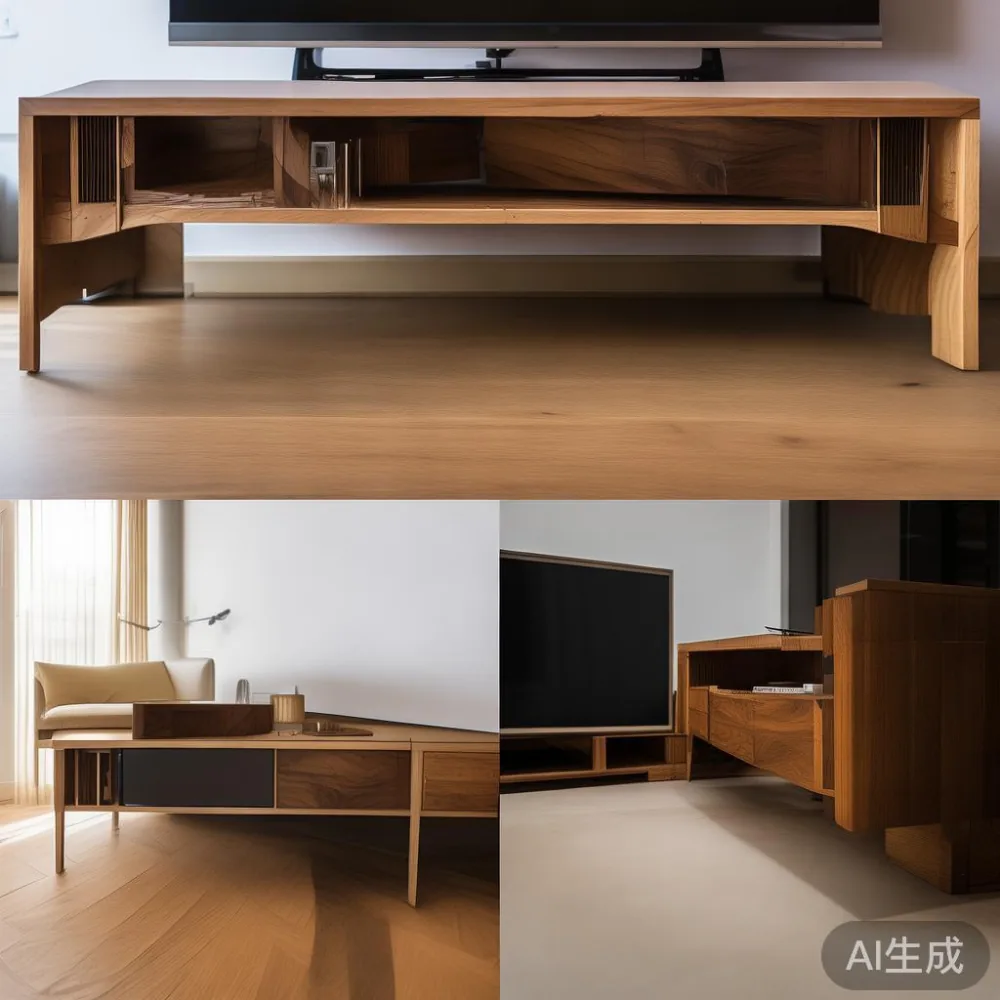
Is a Punggol condo corridor actually wide enough for a solid wood TV cabinet?
Yes, almost always, but it is worth measuring. The internal corridor of a typical Punggol condo block runs 1.2 m to 1.5 m wide, and the lift car is usually 1.1 m wide by 1.4 m deep with an 800 kg to 1,000 kg payload. A solid wood tv cabinet in the 180 cm to 200 cm size range ships in two cartons: the main body (around 55 to 65 kg) and the top panel (around 18 to 25 kg). Both fit comfortably through a 90 cm HDB door and a 1.1 m condo lift. I have personally pushed a 78 kg oak tv cabinet body through a 1.05 m corridor in a Punggol Build-to-Order block on a flat trolley without removing the door hinges, so the geometry is rarely the dealbreaker people assume.
The real constraint is the service lift on move-in day, which often caps at 180 kg per trip. Schedule your tv cabinet delivery outside the 9 a.m. to 11 a.m. owner-move-in window, and book the goods lift directly through the MCST. That single step saves the average homeowner around S$80 in courier waiting fees.
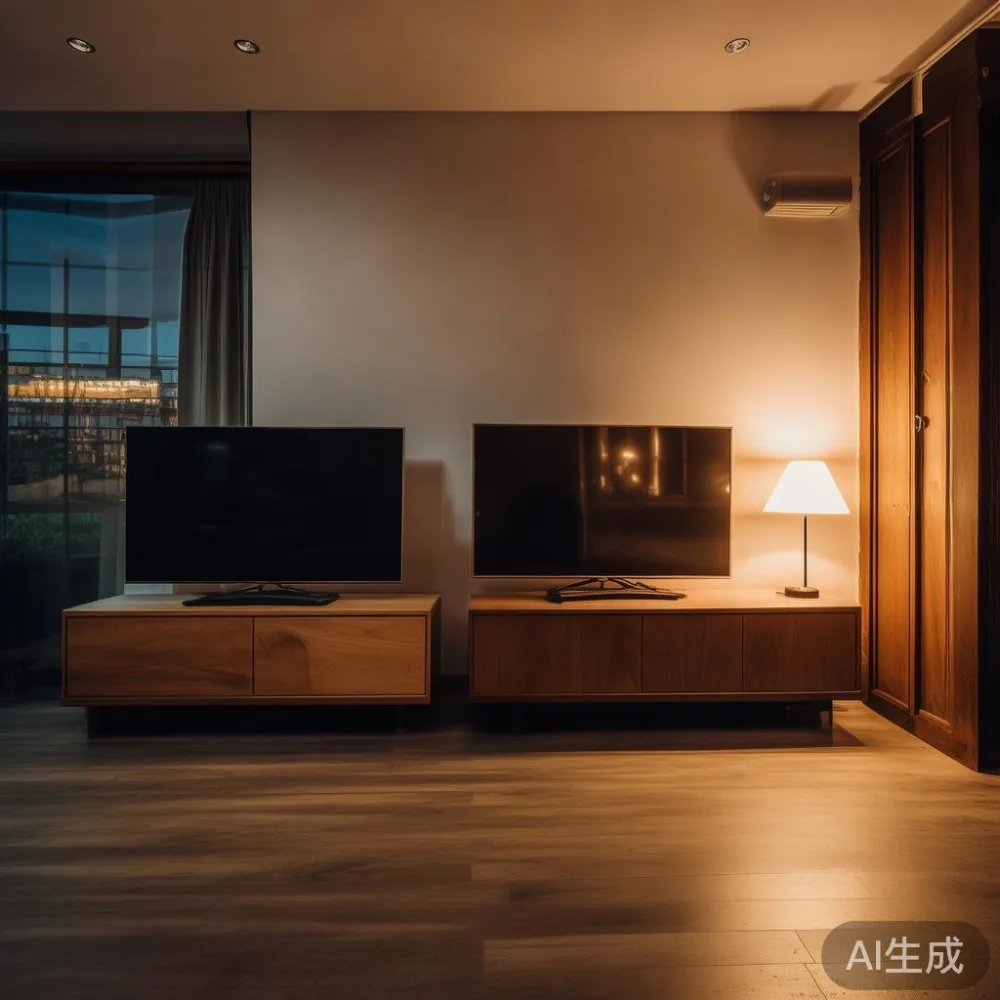
How does humidity damage each cabinet over 5 years in Singapore?
Singapore sits at 78% to 88% relative humidity for most of the year, and that figure jumps above 90% during the December to February monsoon phase and the June to September inter-monsoon period. A tv cabinet placed against a non-AC feature wall absorbs and releases moisture every day, and that is where veneer and solid wood behave very differently.
A real-wood veneer (0.6 mm to 0.9 mm of oak or walnut glued to a MDF or plywood substrate) holds its look for roughly 18 to 30 months before the first visible signs of stress: hairline cracks along the mitred corners, lifting at the cable-cut-out edge, or a dull line where the sun from the east-facing Tampines window dries the surface faster than the shaded back. By year three, the top panel of a typical MDF-core tv cabinet will have a 0.5 mm to 1.5 mm crown that catches the light, and by year four, expect a chipped corner near the toddler zone or a swollen back panel if a potted plant sits within 30 cm. Most owners replace the veneer unit somewhere between month 42 and month 60.
Solid hardwood — typically oak, ash, walnut, or rubberwood with a hardwax-oil finish — moves as one piece. You will see a slight seasonal expansion in the door gaps (1 mm to 2 mm in monsoon, tightening in dry February when the air-con runs 22°C for six hours a night), but the structural frame stays true. A solid wood tv cabinet from a maker like MIDHILL, which kiln-dries its oak to 8% to 10% moisture content before assembly, typically needs only a light refinishing — sanding back the top coat and re-oiling — at the seven to nine year mark. For a 5-year window, the only real cost is a S$120 to S$180 touch-up kit and 45 minutes of your time.
What is the real 5-year cost of owning each cabinet?
Let us line up the full ledger for that 180 cm tv cabinet in a Tampines HDB living room, including GST, delivery, refinishing, and a realistic resale-recovery estimate.
Veneer tv cabinet, 180 cm, MDF core with oak veneer:
• Day-one cost (unit + GST + delivery + installation): S$1,020
• Year 2 corner chip repair by a carpenter: S$80
• Year 3 top-panel sanding and re-lacquering: S$220
• Year 4 replacement of one swollen back panel: S$260
• Year 5 trade-in value if you replace it: S$60 to S$120
• Net 5-year cost: roughly S$1,460 to S$1,520, plus the hassle of one disposal trip.
Solid wood tv cabinet, 180 cm, kiln-dried oak or ash:
• Day-one cost (unit + GST + delivery + installation): S$2,250
• Year 3 minor hinge tune and oil re-coat: S$40 (DIY kit) or S$160 if a pro comes in
• Year 5 light refinishing of the top panel only: S$0 if you do it yourself, S$180 if outsourced
• Year 5 resale value on Carousell or through a relocation sale: S$1,000 to S$1,300, because solid hardwood retains its worth
• Net 5-year cost: roughly S$990 to S$1,250 if you refinish yourself, or S$1,170 to S$1,430 if a technician does the work.
The crossover point lands somewhere between month 38 and month 46. After that, every additional month of owning the solid wood cabinet is in effect free, while the veneer unit keeps accruing small repair bills. By month 60, a Singapore homeowner who chose solid wood has typically spent 15% to 25% less than the homeowner who chose veneer.
Does a solid wood TV cabinet fit a French light luxury or post-modern light luxury living room?
A solid oak tv cabinet with a 25 mm to 30 mm top, slim tapered legs, and brushed-brass cup pulls slips naturally into a French light luxury living room scheme — the kind I see regularly in newer condos at Punggol Waterway Terrace and Bedok Reservoir — where the palette is warm white, dusty taupe, and pale travertine. The same cabinet, finished in a smoked walnut with a subtle chamfer along the top edge, also fits a post-modern light luxury layout built around curved sofas, fluted wall panels, and a single marble table as the anchor piece. If you prefer American light luxury, choose quarter-sawn white oak with a matte black D-pull and a slightly chunkier 40 mm top so it reads as more substantial against a deep navy or charcoal feature wall.
Buyers often compare a light luxury sofa vs French provincial sofa when they are redoing the whole living room. The honest answer is that a French provincial sofa has carved cabriole legs, skirted hems, and ornate trims that demand a darker, more traditional tv cabinet — usually a 1800s-inspired mahogany console. A light luxury sofa is cleaner and more architectural, so a slim solid-wood tv cabinet pairs with it without competing for attention. Either a 220 cm to 260 cm four-seater works as a counterweight to a 180 cm cabinet, or a 200 cm loveseat gives you room for a console on each side.
One styling note from a Bedok condo I visited last month: the homeowner had paired a 200 cm ash tv cabinet against a fluted plaster wall, with an Italian light luxury with storage sideboard opposite it. The tv cabinet carried the open display, the sideboard carried the closed storage, and the room felt balanced without buying a single matched set.
How does the same logic apply to a matching dining set, wardrobe, or bed frame?
Once the tv cabinet is sorted, most Tampines and Punggol homeowners extend the same logic to the dining table, wardrobe, and bed frame. A 160 cm to 180 cm solid wood dining table for four costs S$1,800 to S$2,600, holds its finish for 8 to 12 years under daily use, and pairs naturally with either a Scandinavian for dining room palette (white oak, oatmeal linen chairs, a single matte-black pendant) or a warmer post-industrial reading where a black steel leg meets a reclaimed-wood top. For homeowners who entertain often, an Industrial for dining room look — exposed bolts, a 38 mm thick reclaimed-elm top, and a black-metal base — costs roughly S$2,400 for a 200 cm table and ages beautifully with use, picking up a patina that veneer simply cannot fake.
For the wardrobe, the choice is even more important because the interior is enclosed and humid. A 240 cm sliding-door MDF wardrobe starts at S$1,400, but the doors swell by year four and the runners grind by month 24. A solid wood wardrobe at S$3,200 to S$4,200 lasts 18 to 25 years and is genuinely the best Post-modern wardrobe for 2026 if you want a piece that survives at least two HDB renewals. The same goes for a MIDHILL bed frame in 180 cm king size at S$1,600 to S$2,200, which forms a quiet anchor in the master bedroom and survives two move-out cycles.
For the nightstand, a S$320 to S$480 solid oak two-drawer unit complements the same factory run and matches the grain character of the tv cabinet — something veneer cannot promise across two separate rooms.
How do you actually style a low-profile solid wood TV cabinet in an HDB living room?
Keep the depth between 38 cm and 42 cm so the unit sits flush against the wall without crowding the walkway between the sofa and the tv. Leave a 60 cm to 80 cm clearance on one side for a tall planter or a reading lamp so the eye does not treat the cabinet as a wall. A single 90 cm to 120 cm marble table in cream or grey next to the tv cabinet breaks up the wood volume and gives you a surface for a tray and a small vase. Above the cabinet, hang a 120 cm to 150 cm wide piece of framed textile or a horizontal canvas centred 15 cm to 20 cm above the top edge, not above the TV screen, otherwise the composition feels off-balance.
For lighting, run a 2,700 K warm-white LED strip along the back edge of the top panel. Solid wood reflects that colour temperature far better than veneer, which can read muddy under the same light. If you own a low platform sofa, leave 5 cm to 8 cm of negative space between the sofa back and the cabinet so you can run a cable channel without crushing it.
One last thought for HDB owners with a small second bedroom or a flexi-room: the same oak tv cabinet doubles as a media console in the bedroom, paired with a low futon on a Japanese-style frame. If you have ever wondered how to style Japanese sofa in bedroom, the trick is a 12 cm to 15 cm thick floor cushion, a 180 cm low platform bed frame in the same oak, and the tv cabinet placed perpendicular to the window so morning light rakes across the grain. It is a quietly Japanese-inspired setup which feels calm in a 9 sqm room without spending on a full renovation.
What about warranty, returns, and shipping for a heavy TV cabinet?
Solid wood furniture is heavier, which is why the after-sales terms matter as much as the wood itself. A factory with 15 or more years of export experience will kiln-dry, mortise-and-tenon the frames, and ship in foam-lined cartons with edge protectors, and they will back the structure for 10 years. MIDHILL, for example, kiln-dries its oak and ash to 8% to 10% moisture content, ships container-load to Singapore via Shenzhen-Yantian or Guangzhou ports with an average 12 to 18 day transit, and offers lifetime refinishing support on top of its 10-year structural warranty. Free shipping kicks in above US$350, which is roughly S$470, so a single tv cabinet qualifies and the landed price stays predictable.
Returns matter because a tv cabinet that does not fit the lift, the corridor, or the room is useless. A 14-day return window with the factory arranging reverse logistics takes most of the risk out of buying a heavy piece sight-unseen. Before you confirm, measure the lift door width, the lift depth, the corridor turning radius at the lift lobby, and the distance from the lift to your door in a straight line. Photograph each spot and send it to the supplier so they can confirm packaging dimensions before the cartons leave Foshan.
Is a solid wood TV cabinet actually worth it for a 5-year Singapore homeowner?
If you are staying in your Tampines, Bedok, or Punggol flat for at least five years, and you intend to run the air-con daily, the maths quietly favours solid wood. You spend about S$1,250 more on day one, save roughly S$400 to S$600 in repairs by year five, recover S$900 to S$1,200 on resale, and end up with a tv cabinet that looks better in year five than the day it arrived. If you are a tenant on a two-year lease, or you genuinely plan to renovate again before the 2027 or 2028 HDB resale wave, a mid-range MDF + veneer tv cabinet is a perfectly reasonable stop-gap — just budget S$150 to S$300 for end-of-lease disposal and treat it as a consumable rather than an asset.
Either way, measure your lift, photograph your corridor, check the kiln-drying spec, and confirm the warranty in writing. A tv cabinet is the visual centrepiece of your living room, and the piece you choose will quietly age with you for the next decade.