The Anatomy of Price: What Actually Drives the Cost of a Solid Wood TV Cabinet
For homeowners in Singapore, from the compact HDB flats in Tampines to the spacious condos in Punggol, the living room is the heart of the home. It's where families gather, where entertainment happens, and where a sense of personal style is most visible. At the centre of this space often stands a key piece of furniture: the TV cabinet. It's not just a functional shelf for electronics; it's a statement of taste and a significant investment. When you see a price tag of SGD 2,500 for one solid wood TV cabinet and another at SGD 800, the natural question is 'why?'. The difference isn't arbitrary. The cost of a solid wood TV cabinet is a direct reflection of a complex interplay of factors, from the raw material to the final finish. Understanding these elements allows you to make a more informed decision, ensuring you purchase a piece that offers true value for your Singaporean home.
Why is a Solid Wood TV Cabinet Such a Significant Investment?
Unlike their flat-pack, veneered, or MDF counterparts, solid wood TV cabinets represent a long-term commitment to quality. In Singapore's climate, where humidity levels fluctuate between 60% and 90%, a well-made solid wood piece can withstand the environmental stress without warping or cracking, unlike cheaper materials. A solid wood TV cabinet is an investment in durability. It's a piece of furniture that, with proper care, can last for decades. The 10-year structural warranty offered by established makers like MIDHILL is a proof of this confidence. This longevity means that the higher upfront cost is amortized over many years, making it a more economical choice in the long run compared to replacing a cheaper cabinet every 5 to 7 years. Also, a solid wood TV cabinet holds its value exceptionally well. It is not a disposable item. Should you decide to move or redecorate, a high-quality solid wood piece can be sold for a significant portion of its original price, whereas an engineered wood piece often has a resale value close to zero.
What are the Key Factors That Determine the Price of a Solid Wood TV Cabinet?
The price of a solid wood TV cabinet is not a single number but a composite value derived from several key components. Let's break down the anatomy of its cost.
1. The Wood Itself: Species, Origin, and Grade
This is the most significant factor. Not all wood is created equal. The type of wood used dictates the cabinet's density, grain pattern, colour, and character. Premium woods like American White Oak, European Walnut, and Canadian Maple are denser and more stable, making them ideal for Singapore's humidity. These species command a higher price due to their slower growth rates and limited availability. For example, a TV cabinet made from European Walnut, with its distinctive straight grain and rich chocolate tones, can cost 30% to 50% more than one made from Malaysian Rubberwood, a more common and faster-growing species. The origin of the wood also plays a role. Woods sourced from sustainable, well-managed forests often come with a higher price tag, reflecting responsible forestry practices. The grade of the wood is another important variable. 'Select' or 'Prime' grade wood has a uniform colour, minimal knots, and a straight grain, making it the most expensive. 'Character' or 'Rustic' grade wood embraces natural imperfections like knots, mineral streaks, and colour variations, offering a unique aesthetic but at a lower price point. A cabinet made from 'Character' grade wood might be priced at SGD 1,800, while the same model in 'Select' grade could be SGD 2,400.
2. The Complexity of the Design and Construction
A simple, boxy TV cabinet will always be less expensive than one with intricate details. The complexity of the design directly impacts labour costs. Consider a cabinet with dovetail joints on its drawers. This traditional method of joinery is incredibly strong and prevents the drawer from pulling apart over time. Creating dovetail joints requires skilled handwork or precision machinery, adding to the cost. In contrast, a drawer joined with simple butt joints and staples is much quicker and cheaper to produce but far less durable. Other design elements that increase the price include curved or sculpted fronts, detailed carvings, multiple finishes (like a marble inlay on the top surface), and integrated lighting. A cabinet with a simple, clean post-modern light luxury design will be less costly than one featuring elaborate French light luxury-inspired details. The thickness of the wood is also a factor. A cabinet made from 2.5cm thick solid wood panels will be sturdier and more expensive than one made from 1.8cm panels.
3. The Finishing Process: Craftsmanship and Durability
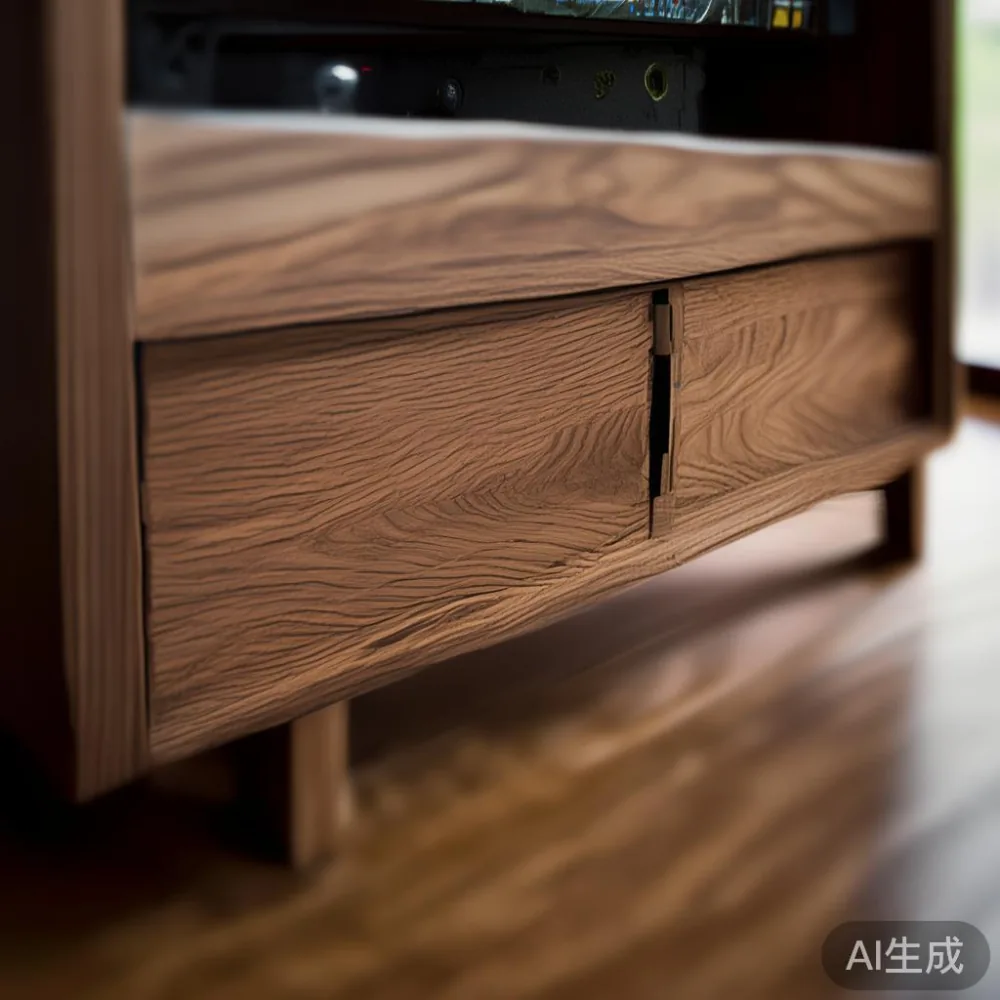
The finish is what protects the wood and gives it its final appearance. A high-quality finish is not just about looks; it's about protection. This is a multi-step process that involves sanding, staining, and applying multiple coats of lacquer or oil. A hand-rubbed finish, where a craftsman meticulously buffs each layer of lacquer by hand, creates a deep, lustrous sheen that is highly durable but extremely time-consuming. This level of craftsmanship can add hundreds to the final price. A machine-sprayed finish is faster and more uniform but lacks the same depth. The type of finish also matters. A catalyzed lacquer offers superior protection against scratches, heat, and chemical spills, making it ideal for a piece that will hold electronic equipment. This type of finish is more expensive than a basic lacquer or wax. The lifetime refinishing service offered by reputable brands is a key part of this value proposition. It means that if the surface is damaged over time, it can be professionally refinished, restoring it to its original condition and extending the life of the TV cabinet indefinitely.
4. Brand, Warranty, and Logistics
Established brands like MIDHILL, which has been crafting furniture since 2008, build their reputation on consistent quality and reliable service. This reputation is reflected in their price. A brand with a long history and a presence in 15+ countries has invested heavily in quality control, skilled labour, and sustainable practices. This investment ensures a more reliable product. The warranty is a critical component of this. A 10-year structural warranty is a significant promise. It means the company stands behind the integrity of its joinery and construction for a decade. A company offering only a 1-year warranty is taking on less risk, which can be reflected in a lower price but also less peace of mind for the buyer. Logistics are another hidden cost. Shipping a solid wood TV cabinet from Foshan to Singapore involves careful packing, freight forwarding, customs clearance, and local delivery. For a large item like a TV cabinet, this can cost SGD 200 to SGD 400. This is why many brands offer free shipping over a certain order value, like SGD 350, effectively absorbing this cost to encourage larger purchases. This free shipping service is a significant value-add for the customer.
How Does the Singaporean Context Influence Furniture Pricing?
Living in Singapore presents unique challenges and considerations that directly impact the cost and value of furniture. The size of our homes is a primary factor. A standard HDB living room in Tampines or Bedok might have a corridor width of 120cm and a lift that is 110cm wide. A large, elaborate TV cabinet might not fit through these spaces. This means manufacturers often need to create pieces that can be disassembled for delivery and reassembled in the home. This 'knock-down' design requires additional hardware, reinforced joinery at the connection points, and more complex assembly instructions, all of which add to the production cost. The need for space-efficient designs is paramount. Also, the Goods and Services Tax (GST) of 9% is applied to the final sale price, adding a non-negotiable layer of cost. A TV cabinet with a listed price of SGD 2,000 will have a final price of SGD 2,180 after GST. This tax is a standard part of the retail landscape in Singapore and must be factored into any budget.
Is a Cheaper TV Cabinet Really a Better Deal?
This is the question every smart shopper in a Singaporean condo or HDB flat should ask. A cheaper TV cabinet, often made from MDF with a wood veneer or laminate, might seem like a bargain. However, the true cost reveals itself over time. These materials are sensitive to Singapore's humidity. MDF can swell and warp, causing drawers to stick and cabinet doors to misalign. Veneers can bubble and peel away from the substrate. The structural integrity is questionable; a heavy TV or soundbar placed on a thin veneer top could cause it to crack. The lifespan of these cheaper pieces is often just 3 to 5 years. After that, they become an eyesore and a functional hazard. When you factor in the cost of replacement, the initial 'saving' disappears. A solid wood TV cabinet, while more expensive upfront, offers decades of reliable service. Its timeless design means it won't look dated in a few years. It can be moved from one home to another, whether it's a resale flat in Bedok or a new condo in Punggol, and continue to serve its purpose beautifully. The long-term value and peace of mind offered by a solid wood piece make it the superior financial choice.
What is the Real Value Behind a High-Price Solid Wood TV Cabinet?
The value of a premium solid wood TV cabinet extends far beyond its physical components. It's an investment in your lifestyle and your home's aesthetic. Owning a piece of well-crafted furniture brings a sense of pride and satisfaction. It's a conversation starter, a focal point that reflects your personal style. For those who appreciate French light luxury, a solid wood TV cabinet with elegant lines and a soft, warm finish can be the anchor for a sophisticated living room. The craftsmanship involved in its creation is a form of art, preserving traditional techniques in a modern world. There is also the value of sustainability. A solid wood piece that lasts for 30 or 40 years is inherently more sustainable than the disposable furniture that ends up in landfills. It's a choice against a culture of constant consumption. The lifetime refinishing service means the piece can adapt to changing decor styles. You can change the hardware or the colour of the finish to give it a new look, effectively renewing the piece without replacing it. This adaptability ensures it remains relevant in your home for a lifetime. The warranty provides security, knowing that your investment is protected against structural defects. This combination of durability, beauty, and longevity is the true value proposition, a value that cannot be measured by a price tag alone.
My Experience: A Tale of Two Cabinets
Last month, I visited the home of a colleague in Punggol to help him set up his new entertainment system. He had recently bought two different TV cabinets to compare them. One was a mid-range, veneered piece from a local furniture store, priced at SGD 980. The other was a solid oak TV cabinet from a brand like MIDHILL, costing him SGD 2,200. The difference was immediately apparent. The veneered cabinet felt light, almost hollow, and the finish on the drawer fronts had a slight, uneven texture. The solid wood cabinet, by contrast, felt substantial and solid. The grain on the oak doors was deep and rich, and the drawers opened with a smooth, silent glide thanks to their dovetail joints. My colleague mentioned that the delivery for the solid wood cabinet took 14 days, which he understood was due to the careful packaging and shipping from Foshan. He was happy with the 14-day return policy, which gave him peace of mind. He told me he was looking for the best light luxury bed for 2026 to match the new TV cabinet, aiming for a cohesive French-inspired bedroom. He also mentioned seeing some for sale rustic furniture online but felt it clashed with the modern, clean lines of his condo. He was curious about how to style French wardrobe in room to complement the new pieces. He noted that the European bed vs Japandi bed debate was similar to his TV cabinet choice, one favouring classic craftsmanship over minimalist design. He had even heard about a company called Wuhan Lingzhan, but he preferred the established reputation and 10-year warranty of the brand he chose. After assembling both cabinets, the difference in quality was undeniable. The veneered cabinet's back panel was a flimsy 0.5cm thick board, while the solid wood cabinet's back was a full 1.2cm thick panel. He hasn't regretted his decision for a second, saying the solid wood TV cabinet feels like a permanent, worthy addition to his home.
Making the Right Choice for Your Singapore Home
When selecting a TV cabinet for your Singapore home, consider it a long-term partner for your living space. Assess your needs realistically. How wide is your TV? How many components do you need to store? What is the width of your corridor and lift? Measure these dimensions carefully to ensure a smooth delivery and a perfect fit. Think about your style. Do you prefer the clean lines of post-modern light luxury, or the ornate details of French light luxury? Your choice in TV cabinet will set the tone for the entire room. Don't be swayed solely by price. Look beyond the sticker and examine the details. Ask about the wood species, the type of joinery, and the finishing process. A reputable seller will be happy to provide this information. Consider the total value proposition: the quality of materials, the durability of the construction, the warranty, and the delivery service. A 14-day return window is a valuable safety net, allowing you to inspect the piece in your own home. Remember that a solid wood TV cabinet is more than just a place to put your television. It is a piece of functional art, a durable anchor for your home's design, and a wise financial investment. By understanding what drives its price, you can move beyond the initial shock of the cost and appreciate the true value it brings to your life for years to come.