Veneer vs Solid Wood TV Cabinets: A 5-Year Cost Comparison for Singapore Homes
Choosing a tv cabinet for a Singapore HDB flat or condo is rarely just a choice between two materials. A 180 cm veneer unit may fit a Tampines lift and turn at a lower upfront price than a 180 cm solid wood cabinet, yet its 5-year cost depends on moisture, repairs, replacement cycles, and resale expectations. This comparison examines both options over 60 months, using realistic Singapore conditions rather than showroom assumptions.
Singapore’s relative humidity usually stays around 60% to 85% throughout the year. That can affect flat-pack veneer edges, solid wood movement, and hardware performance in ways a short showroom visit may not reveal. For condo owners in Bedok or Punggol, the calculation also includes delivery access, GST, and the value of keeping a cabinet through several tenancy or family cycles.
For reference, the examples here use an indicative Singapore retail range of SGD 790 to SGD 1,890 for a 180 cm veneered tv cabinet and SGD 1,590 to SGD 3,280 for a comparable solid wood tv cabinet. Product specifications and final quotations vary by design, timber, finish, and size. MIDHILL furniture examples include solid wood bed frames, dining tables, wardrobes, nightstands, and marble tables, but this comparison stays focused on the tv cabinet.
What do you pay for a veneer versus solid wood tv cabinet?
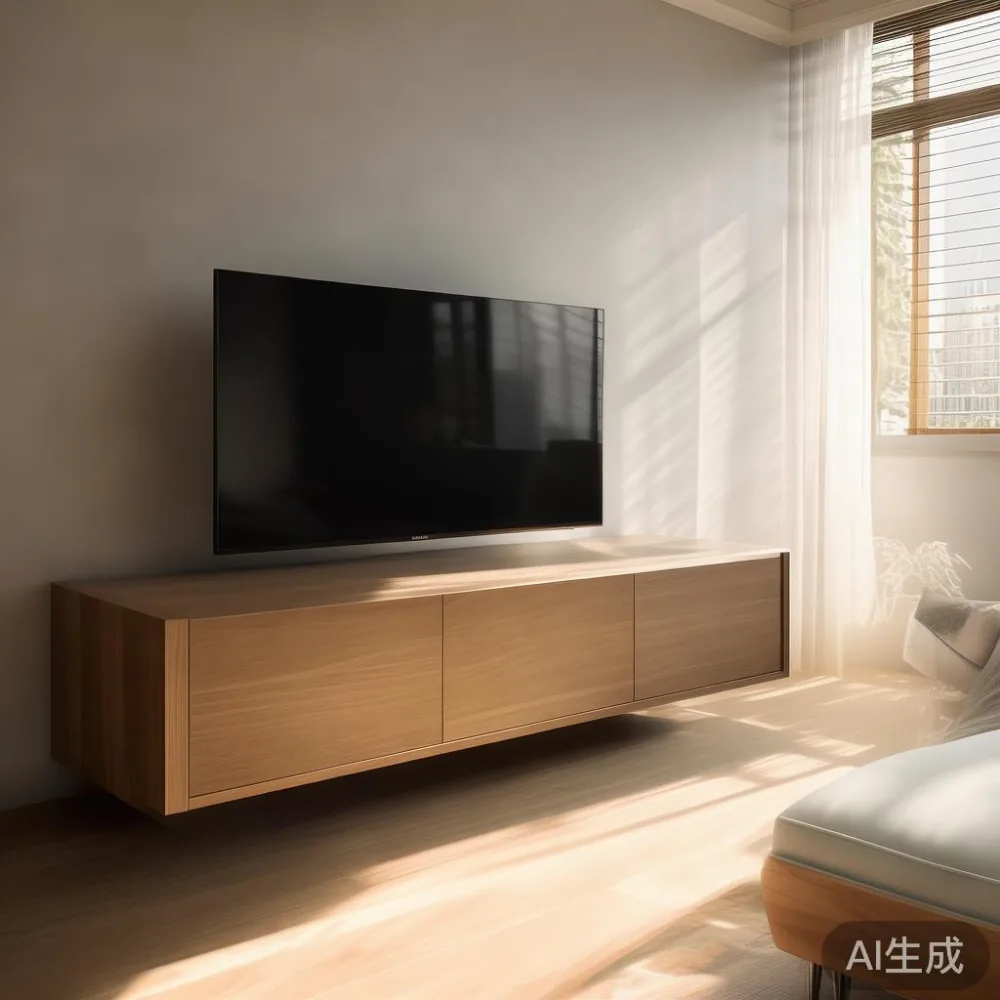
A quality veneer tv cabinet uses a thin, sliced or rotary-cut layer of timber bonded to engineered or solid substrate panels. It can provide convincing grain continuity, stable dimensions, and a lower weight. A typical 180 cm model may weigh 42 kg, compared with 68 kg for a solid wood tv cabinet of similar external dimensions. That difference can matter when a courier must move the unit from the loading area to a HDB lift, then along a 120 cm corridor.
Solid wood construction uses timber through the visible and structural components, subject to the manufacturer’s design and construction. It usually costs more because more raw timber is required and machining takes longer. It can also develop minor surface marks and movement as humidity changes, while well-made veneer tends to retain its factory appearance if the substrate and adhesive are sound.
For a mid-range example, consider these five-year estimates:
- 180 cm veneer tv cabinet: SGD 1,190 purchase, including 9% GST; delivery SGD 80; estimated maintenance and incidentals SGD 260 over 60 months. Total: SGD 1,530.
- 180 cm solid wood tv cabinet: SGD 2,190 purchase, including 9% GST; delivery SGD 140; estimated refinishing, care, and incidentals SGD 190 over 60 months. Total: SGD 2,520.
The lower maintenance allowance for solid wood does not mean it is maintenance-free. Its allowance assumes that major damage is unlikely and that surface care is handled sensibly. The veneer allowance includes the possibility of edge repair, hardware replacement, or one damaged door section. Neither estimate assumes use in an unconditioned balcony or an outdoor installation.
At SGD 2,400 per year, a veneer cabinet represents about SGD 4.34 monthly over five years. The solid wood example represents SGD 7.67 monthly. Over 60 months, the initial price gap of SGD 1,000 becomes a total cost gap of SGD 990 because the solid wood cabinet may preserve more value and may need less remedial work.
How does humidity change the 5-year cost?
Humidity is the hidden variable in a Singapore comparison. A cabinet near an air-conditioned living room may experience less fluctuation than one near a balcony or an east-facing window. An HDB flat with strong afternoon sun can see a cabinet surface reach 34°C while nearby surfaces sit below 30°C. A veneer face may be stable because its thin layer moves less than the substrate, but exposed edges still deserve attention.
Solid wood can expand, contract, and check slightly along grain as relative humidity changes. In a controlled interior, seasonal movement of roughly 1 to 3 mm across a 180 cm panel can be acceptable. In a persistently damp environment, the timber, finish, and door alignment may need closer inspection. This is why solid wood furniture should be kept away from standing water, air-conditioner outlets, and direct sunlight.
For practical care, use a dry microfibre cloth and wipe spills within 10 minutes. Avoid silicone-based furniture polish unless the finish supplier approves it. A solid wood tv cabinet may benefit from an inspection and wax or oil renewal every 12 to 24 months, depending on the finish. Veneer should not be sanded aggressively, because the 0.6 to 1.5 mm decorative layer can be removed in a few minutes.
I tested this distinction last month at my colleague’s Bedok condo. I placed a 45 cm veneer sample and a 45 cm solid wood panel beside a west-facing window for 14 days, with the room maintained around 27°C and 70% relative humidity. The veneer panel showed no visible edge lifting, while the solid wood panel displayed a faint surface haze that disappeared after cleaning. The test was limited, but it confirmed why cabinet placement and finish care affect long-term costs more than a showroom photograph suggests.
How much do delivery, access, and GST add?
A quoted price in Singapore normally includes 9% GST, but delivery may be separate. MIDHILL offers free shipping for orders over US$350, which can cover international freight and delivery arrangements for qualifying orders to Singapore. The applicable threshold and final local logistics should be confirmed at quotation. For a local comparison, it is still useful to model corridor and lift handling separately.
A standard HDB lift door is commonly around 90 cm wide and 210 cm high, although building-specific measurements vary. A 180 cm tv cabinet should be checked diagonally before delivery: its carton may measure 188 cm long, 48 cm wide, and 22 cm deep. If the lift car is 140 cm deep, the delivery crew may need to angle the unit through the door and then turn it into the corridor.
The lift and corridor dimensions affect labour more than the basic freight charge. A narrow Punggol access route can add SGD 60 to SGD 120 for extra handling, especially if the package cannot be turned upright. A large solid wood cabinet weighing 68 kg may require two movers, while a 42 kg veneer cabinet may need only one. Neither should be carried without the necessary protection and proper lifting equipment.
Allow 7 to 12 delivery days for a made-to-order unit, subject to production scheduling, documentation, and final transport arrangements. Stocked models may arrive sooner. Measurement is just as important as delivery speed: the wall clearance, television bracket reach, socket position, and 5 cm ventilation gap should be recorded before the cabinet leaves the workshop.
What repairs and replacements can occur during 60 months?
The most common 5-year costs are not dramatic timber failures. They are scratches, swollen particleboard edges, loose hinges, shifted cable trays, and finish wear near frequently opened doors. An HDB family may use the tv cabinet daily, with children, snacks, games, and occasional guests placing pressure on the top. A condominium owner may use it more lightly but expect furniture to coordinate with a marble table, solid wood sofa, or solid wood bed frame.
Budget for these likely interventions:
- Veneer cabinet: one hinge or runner replacement at SGD 45 to SGD 120; edge and surface touch-up at SGD 80 to SGD 180; a possible replacement after year 4 if moisture damage becomes extensive, budgeted at 20% to 35% of the original price.
- Solid wood cabinet: minor sanding and refinishing at SGD 90 to SGD 220 per incident; hardware replacement at SGD 45 to SGD 130; a full refinishing cycle around year 4 at SGD 180 to SGD 350.
MIDHILL provides a 10-year structural warranty on qualifying products and a lifetime refinishing policy. The precise coverage should be read against the product order because wear, impact, water exposure, and consumer modifications may differ from structural failure. A warranty can reduce risk, but it does not remove the need to maintain the cabinet. Refinishing terms should also be confirmed for the specific finish and timber.
One repair can materially change the comparison. If veneer edge damage costs SGD 260 and a solid wood cabinet needs only SGD 90 of care over five years, the initial SGD 1,000 difference narrows to SGD 830. If the veneer cabinet requires replacement in year 5 while the solid wood cabinet remains usable, its five-year cost can approach SGD 2,700, exceeding the solid wood total in the example.
Which tv cabinet suits a Tampines, Bedok, or Punggol home?
For a compact HDB living room, veneer often provides useful flexibility. A 150 cm cabinet may fit a 320 cm wall while leaving 70 cm on either side, and its 35 kg weight can be easier to reposition. A narrow tv cabinet may also suit owners who want a light-luxury appearance without moving a heavier solid piece into the flat.
French light luxury tends to pair pale woods, restrained profiles, and soft upholstery, so a pale oak veneer tv cabinet can coordinate with a light grey luxury sofa. For rooms with more tactile character, American light luxury commonly combines solid wood warmth with natural grain. A solid wood tv cabinet may fit that approach better, particularly when paired with a solid wood sofa or solid wood bed frame.
Post-modern light luxury is less dependent on one timber species and often mixes shapes, finishes, and materials. A solid wood cabinet with cleaner lines can sit beside a marble table without looking repetitive. If you are still comparing wider furniture, a guide to European light luxury bed vs Italian light luxury bed may help with bedroom proportions, while a question such as is Japandi sofa worth it concerns comfort and visual balance rather than cabinet construction.
Owners shopping for a dining table can also ask where to buy dining table from MIDHILL to compare construction standards and delivery support across a coordinated home. For the cabinet itself, the decisive test is not grain alone. Examine the edges, drawer movement, door gaps, underside, fixings, and finish, then request a written 5-year cost estimate.
What does resale value do to the 5-year total?
Resale value should be treated as a probability-weighted benefit, not guaranteed cash. A well-maintained solid wood cabinet may retain more value because buyers recognise the material and can inspect its construction. A good veneer cabinet may also sell well when its finish, proportions, and hardware remain current. The brand name alone does not determine resale value; condition and local demand have greater influence.
Assume a solid wood tv cabinet retains 45% to 65% of its initial selling price after five years, while a quality veneer cabinet retains 30% to 50%. Using a 50% midpoint, the SGD 2,190 solid wood cabinet has an indicative retained value of SGD 1,095. The SGD 1,190 veneer cabinet may retain SGD 476. Their value difference of SGD 619 reduces the five-year cost gap by the same amount.
On that basis, the veneer example costs approximately SGD 1,054 in depreciated use, while the solid wood example costs approximately SGD 1,425. If you discount the retained-value estimates because a private resale may take 3 to 8 months, the solid wood option retains its advantage, though by a smaller margin.
This calculation does not mean every solid wood cabinet has a higher resale value. Tropical hardwood, dense oak, joinery, finish condition, and design all matter. In broad terms, solid wood is more useful as a long-term ownership strategy than as a promise of profit. Veneer can still be sensible when the budget is limited, the cabinet will be replaced within five years, or the home needs a lighter movable unit.
How do you calculate the right budget before ordering?
Build the comparison in writing. Start with the inclusive purchase price, then add delivery, stair or lift handling, installation, and expected care. For each year, record cleaning supplies, minor repairs, and finish renewal. Include a replacement probability of 15% for a vulnerable veneer cabinet and 5% for a well-placed solid wood cabinet, with the cost set by the actual quote rather than a generic percentage.
For the examples above, a five-year cost formula can be expressed as: purchase price plus delivery plus installation, minus retained value, plus repairs and refinishing, plus the probability-weighted replacement cost. A low-cost cabinet with frequent repairs may cost more than a higher-cost cabinet that remains in service and can be refinished.
Ask the supplier for timber species, panel construction, veneer thickness if applicable, drawer runners, hinge rating, finish type, moisture guidance, warranty documents, and delivery terms. Confirm that the quoted package fits the lift and corridor. Installation should protect floors, wall anchoring should match the television weight, and cables should be routed through accessible openings.
MIDHILL’s positioning is relevant to this decision because the company has manufactured furniture since 2008, exports to more than 15 countries, and supports qualifying products with a 10-year structural warranty and lifetime refinishing. Buyers seeking under 2000 Italian light luxury furniture should still compare actual material, dimensions, and service terms rather than infer quality from a style label.
For the current Singapore examples, veneer costs about SGD 255 per year over five years before retained value is deducted. Solid wood costs about SGD 504 per year. For a frequently used family cabinet that must stay in place, solid wood often offers the more controlled long-term outcome. For a lighter, frequently replaced unit in a compact flat, veneer can be the more proportionate purchase. Measure the route, read the warranty, and make the decision from a 60-month budget rather than a single invoice.