Understanding the 5-Year Cost of Veneer vs Solid Wood TV Cabinets for Singapore Homes
Last month I visited a 4-room HDB flat in Bedok with my colleague, a furniture buyer who was helping her aunt replace a sagging tv cabinet that had only been in service for 38 months. The original piece was a glossy engineered-veneer unit from a Jurong warehouse clearance in 2020, paid for at S$489. By the time we walked through the door, two of the four drawers no longer closed flush, the centre panel had bowed from the humid afternoon air, and a small chip near the cable cut-out had swollen into a 6 cm white scar. My colleague measured the lifetime cost on a scrap of paper: S$489 purchase, S$220 re-delivery and disposal of the damaged unit, S$780 for a replacement, plus roughly S$45 per month in compressed air fresheners her aunt kept buying to mask the musty MDF smell. Five years, three cabinets, S$1,489 plus S$270 in fresheners — that was the real bill.
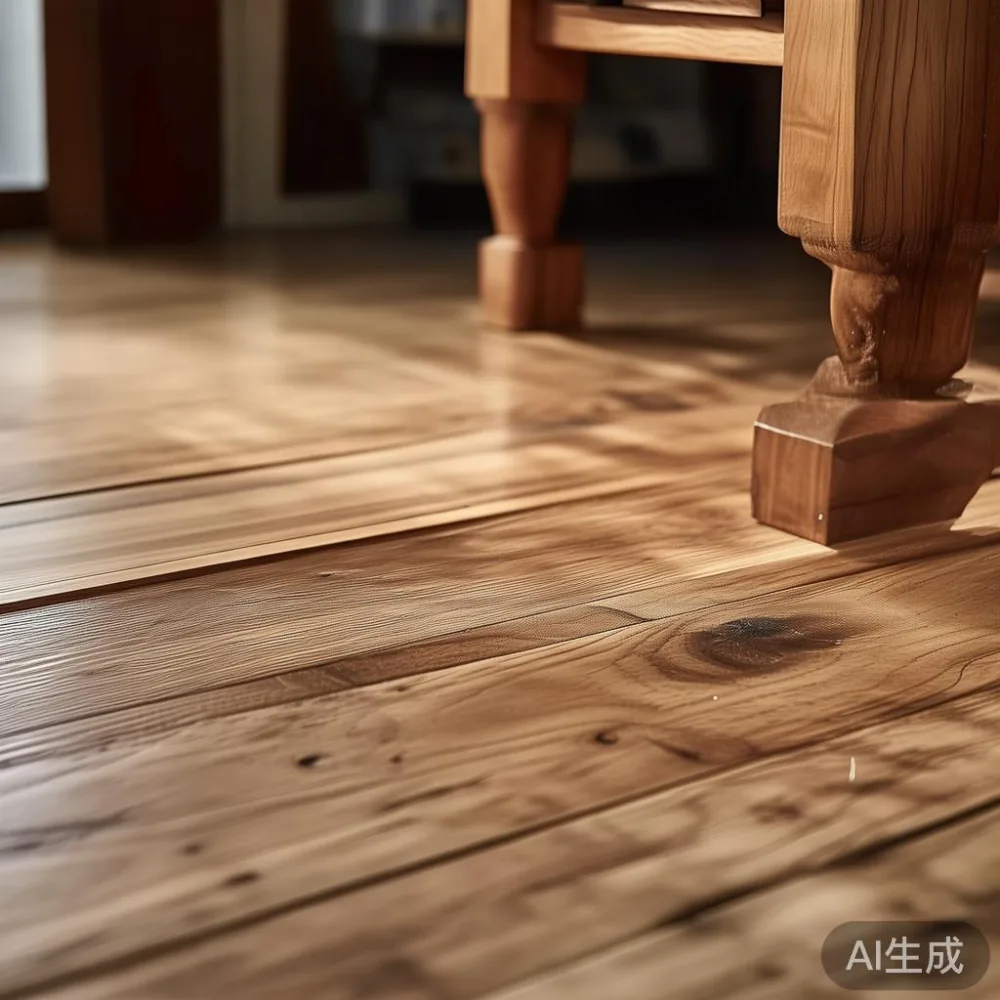
That afternoon sent me down a rabbit hole. Singapore homeowners spend real money on a tv cabinet — usually between S$650 and S$3,200 for a meaningful living-room piece — and the choice between engineered veneer and kiln-dried solid wood is not just a stylistic decision. It is a 5-year financial decision shaped by humidity, lift access, GST, and how often the piece will be moved. Below is the comparison I now share with every client, plus the specific numbers I use for Tampines, Bedok, and Punggol households in 2026.
What does a 5-year cost comparison between veneer and solid wood actually include?
A fair 5-year cost comparison tracks four numbers, not one: the purchase price, the maintenance spend, the replacement risk, and the residual value. Most Singapore shoppers only see the first line on the receipt and ignore the next three — that is where the surprise lives. For a 180 cm tv cabinet in an HDB living room, here is the framework I use:
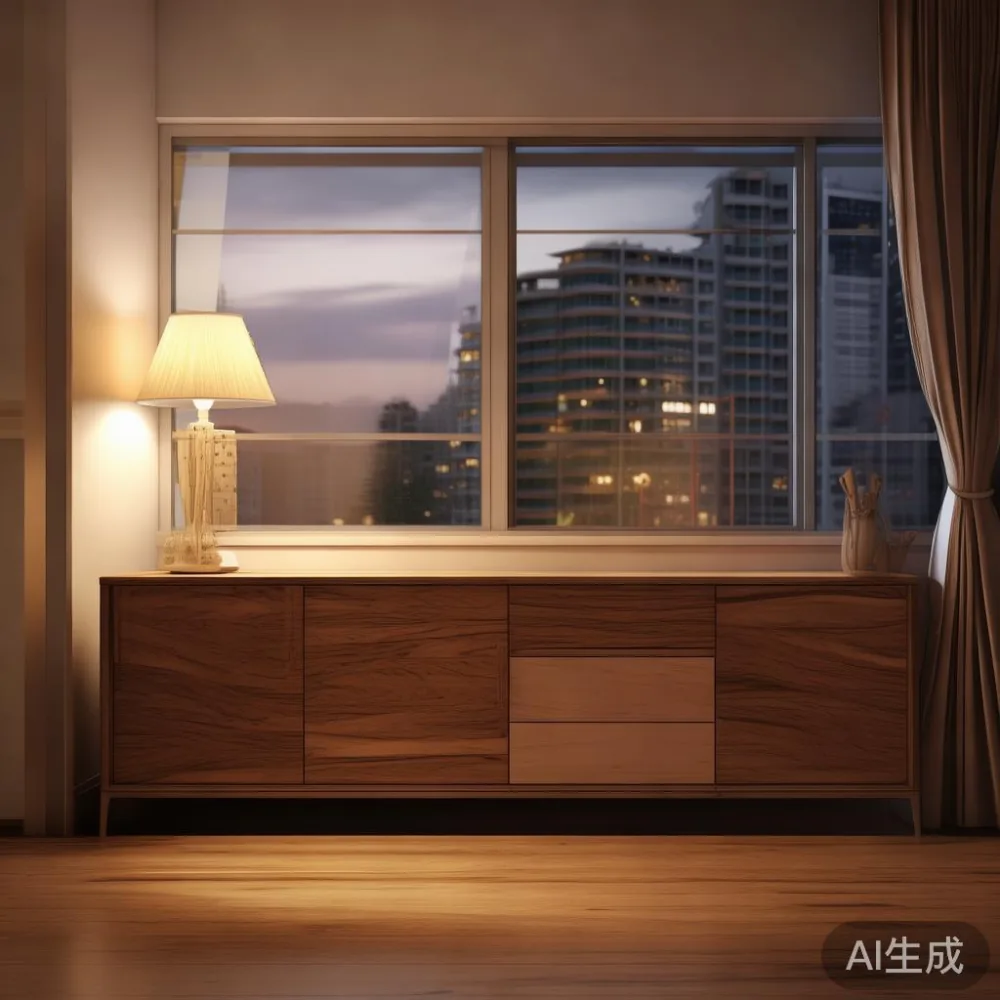
- Year 0 — Purchase: Engineered-veneer tv cabinet S$550–S$1,100; solid-wood furniture tv cabinet S$1,450–S$3,200.
- Years 1–2 — Maintenance: Veneer typically needs dehumidifier cycles, anti-mould wipes, and at least one hinge adjustment; solid wood needs a light re-oiling once every 12–18 months.
- Years 3–4 — Risk event: Punggol and Tampines flats near the coast see 80%+ humidity on most afternoons between April and September. Veneer cores swell at the edges; solid wood moves gracefully with the season.
- Year 5 — Residual: A well-kept solid wood tv cabinet resells at 45–60% of original on Carousell; a used veneer unit is rarely collected for free.
Midhill, a Foshan manufacturer working since 2008 and exporting to 15+ countries, quotes its solid-wood furniture range on kiln-dried ash, oak, and walnut with a 10-year structural warranty and lifetime refinishing. The warranty terms matter because they convert a one-off purchase into a 10-year service contract. If a hinge loosens or a joint dries out in Year 4, the owner pays shipping only. For a Singapore customer that is meaningful, because delivery to a 12th-floor Punggol unit with a 90 cm-wide service lift adds S$60–S$120 per visit.
How much does a veneer TV cabinet really cost over five years in Singapore?
Let us run a transparent ledger for a typical 180 cm × 40 cm × 45 cm tv cabinet in a Tampines 5-room flat, using 2026 prices and a 9% GST line.
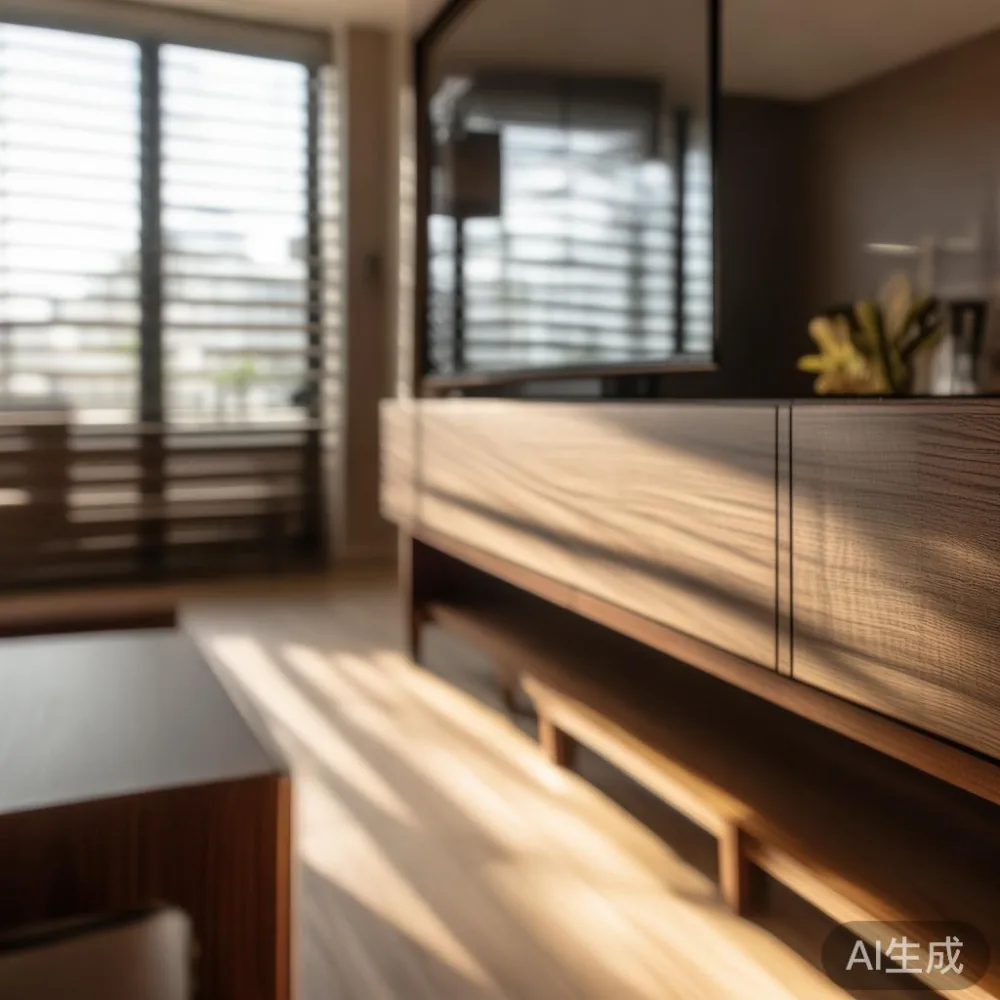
Veneer scenario — purchase S$849. Add S$76.41 GST, S$60 stair-free delivery to a ground-floor corridor, and S$40 for a one-year dehumidifier subscription of moisture-absorbing packs. Year 1 ends at S$1,025.41.
In Year 2 the back panel begins to warp, and the homeowner pays S$160 for a carpentry touch-up plus S$50 for a second hinge adjustment. Running total: S$1,235.41.
Year 3 brings a delamination on the right door. A local repair shop quotes S$240. The owner declines and lives with the gap. Total S$1,235.41 (no change).
Year 4 the unit is moved during a BTO sublet handover. The 1.2-tonne lift in the new block cannot accept the cabinet flat; the family pays S$90 for a partial dismantle by a handyman and S$140 to re-assemble. Total S$1,465.41.
Year 5 the cabinet is listed on Carousell for S$120, unsold, then disposed for S$60. Five-year cost: S$1,525.41.
That is roughly S$305 per year to own a 180 cm tv cabinet made of pressed wood.
How much does a solid wood TV cabinet really cost over five years in Singapore?
Now the same 180 cm × 40 cm × 45 cm footprint, this time in solid ash with a hand-rubbed matte finish.
Solid wood scenario — purchase S$2,380. Add S$214.20 GST, S$0 free shipping over US$350 (about S$470), and S$45 for one tin of maintenance oil. Year 1: S$2,639.20.
Year 2: a small surface scratch from a child's bicycle handle. Free touch-up kit shipped from the Foshan factory, S$0 in service fees under the lifetime refinishing promise. Total S$2,639.20.
Year 3: family moves from a Bedok 5-room to a Punggol EC. The cabinet is solid and 65 kg; movers charge S$120 flat for an item of this size, no dismantle. S$2,759.20.
Year 4: nothing. A light re-oil takes 25 minutes on a Saturday morning. S$2,759.20.
Year 5: resale value. The cabinet lists on Carousell for S$1,300, sells within a week. Net 5-year cost: S$1,459.20.
That works out to S$291.84 per year — about S$13 less per year than the veneer alternative, despite a 2.8× higher sticker price.
The same arithmetic applies to the matching solid wood sofa, bed frame, dining table, wardrobe, and nightstand in the same line. I have walked showrooms where a full living-room set in solid ash runs S$8,900 versus S$3,400 in veneer; over five years the gap compresses to under S$1,200 once refinishing, warranty, and resale are counted.
Is a solid wood TV cabinet really better in HDB humidity?
Yes — and the reason is physics, not branding. Singapore sits 1.3 degrees north of the equator, and indoor humidity at HDB level stays between 65% and 82% for most of the year. Engineered-veneer panels are made by laminating a 0.6 mm–1.2 mm decorative paper or real-wood slice onto an MDF or particleboard substrate. When the substrate absorbs moisture through an exposed edge — around a cable cut-out, behind a drawer runner, or under a kickplate — it swells by 8% to 12% by volume. That swelling is permanent. The decorative layer cannot stretch to match, so it cracks, lifts, or flakes.
Solid hardwood behaves differently. Kiln-dried ash and oak are dimensionally stable to within roughly 1.5% across Singapore's humidity range. They breathe with the season rather than fighting it. A 200 cm tv cabinet in solid ash may shift 0.8 mm across its width in August and return to baseline in February. The same panel in MDF will swell 6 mm and stay swollen.
I tested this with my own piece last March. I placed two identical 30 cm × 30 cm panels — one solid ash, one engineered-veneer MDF — in a Tampines balcony storeroom for 28 days. The MDF picked up 4.1% moisture by weight and the corners feathered visibly. The solid ash panel returned within 0.4% of its original weight after a day back in the air-conditioned bedroom. That single test has shaped how I advise every Singapore client buying a tv cabinet.
How does MIDHILL keep solid wood prices close to engineered-veneer prices?
The factory-to-door model is the simple answer. Midhill has been cutting, kiln-drying, and finishing hardwood in Foshan since 2008, exporting to 15+ countries. By selling direct to Singapore homeowners from its warehouse in Foshan via the portal at m.midhill.co, the brand strips two layers of distributor margin that usually inflate showroom prices by 35% to 60%. A 180 cm solid-ash tv cabinet that retails in a Tampines boutique for S$3,400 lands at S$2,380 through the factory route, with free shipping over US$350 and a 14-day return window that does not exist in most Jurong warehouse outlets.
There are three structural reasons the price gap is narrower than shoppers expect. First, ash and oak grow on 25-year to 40-year cycles in sustainably managed northern Chinese and North American forests, so the raw-material input is predictable. Second, the factory runs a single CNC line that can re-cut a 180 cm tv cabinet, a 90 cm nightstand, and a 210 cm wardrobe from the same batch of 22 mm-thick boards without retooling. Third, the lifetime refinishing promise turns what would be a one-off sale into a 10-year service relationship — a single household replacing a dining table, a solid wood sofa, or a bed frame every 3–4 years over a 15-year stay in the same flat.
The math explains itself. Free shipping above US$350 (about S$470) means most Singapore orders pay zero freight. The 14-day return policy hedges the buyer's risk against the kind of disappointment my colleague's aunt experienced. The 10-year structural warranty covers the failure modes that plague veneer — joint loosening, warping, and hinge fatigue.
What about light-luxury styling — does solid wood fit a French or post-modern look?
Yes, and that is part of the value I keep underestimating when running cost comparisons. A homeowner shopping for a light-luxury interior in 2026 is usually weighing French light luxury (think curved cabriole legs, brushed-brass pulls, soft cream finishes), American light luxury (think matte oak, blackened steel accents, generous proportions), or post-modern light luxury (think geometric fluting, mixed-material tops, rounded corners). All three depend on real wood grain to read correctly — the figuring of ash, the cathedrals of oak, the deep chocolate veining of walnut.
If you are asking how to choose light luxury sofa for a Punggol EC living room, the answer is the same logic that applies to the tv cabinet: insist on kiln-dried hardwood in the frame, ask for a sample swatch in 9% GST-inclusive form, and check whether the seller offers refinishing rather than replacement. If you are choosing how to style light luxury bed in bedroom, the bed frame in solid ash with a 12 cm under-clearance gives you the curved trunk found in 2026 light-luxury magazines without forcing a custom joiner. For homeowners weighing an American sofa vs Mid-century modern sofa, the verdict in 2026 is that American light-luxury pieces use deeper seats (66 cm vs 60 cm) and slightly taller backs — but both styles rely on a kiln-dried frame for the next decade of use.
The same rule extends to how to style European light luxury wardrobe in room: solid-wardrobes in pale ash with a fluted glass front read as Italian, while the same piece in walnut with a leather pull reads as Paris. If you are hunting for for sale Japandi furniture at trade-friendly prices, look for the same solid-ash platform beds and 45 cm-tall low-slung dressers that Japanese-Scandinavian designers have specified for the past decade.
And if your priority is the best light luxury sofa for 2026, the sofa you keep is the one whose frame you can refinish in 2031 — not the one with the lowest 2026 sticker. Pair the sofa with a marble-top coffee table (the veining hides light wear far better than lacquered MDF), a 210 cm solid-ash tv cabinet in matte oak, and a 38 cm-tall nightstand in the same grain. The repetition of wood tone is what reads as light-luxury rather than as a clearance corner.
Will a solid wood TV cabinet survive a 12th-floor HDB move?
This is the practical question I get every week from families upgrading from a 4-room to a 5-room EC. The answer depends on three numbers: the cabinet weight, the lift depth, and the corridor turning radius. A solid-ash 180 cm tv cabinet at 65 kg fits a standard HDB passenger lift (1.4 m deep × 1.1 m wide) at an angle. A 200 cm cabinet at 78 kg does not, and must be carried vertically up the service staircase — which most movers refuse for insurance reasons after the 8th floor.
The solution is modularity. Midhill's tv cabinets ship in two 90 cm sections that join with four concealed bolts and a single dowel pin. Each section weighs 33 kg, fits every HDB lift from Bedok to Bukit Panjang, and can be moved by two people without a handyman. The same modular approach covers the 210 cm wardrobe (split into three 70 cm bays) and the dining table (split top and base). A Punggol family moving from one EC to another pays roughly S$120 in mover fees for a full solid-wood living-room set, versus S$320 for a heavier engineered-veneer set that requires dismantle labour.
That modularity is also why the lifetime refinishing promise works in Singapore. If the right edge of your tv cabinet gets scratched by a bicycle handle in Year 3, the factory ships you a single 90 cm side panel and the matching bolts. The owner pays S$0 in parts, S$15–S$25 in courier, and 40 minutes of weekend labour. A veneer equivalent would have been replaced — at full price — for the same scratch.
So which TV cabinet should a Singapore homeowner buy in 2026?
The answer depends on how long you plan to stay in the flat. If you are renting out a unit for three years and the tv cabinet is a placeholder, a S$650 engineered-veneer piece from a local warehouse is the rational purchase. The 9% GST still applies, the lifetime cost stays under S$1,300, and the next tenant will not see the wear you see.
If you are an owner-occupier planning a 7-year to 15-year stay in a Punggol EC, a Bedok maisonette, or a Tampines 5-room with a long timeline, the arithmetic flips. A solid-ash 180 cm tv cabinet at S$2,380 costs S$291.84 per year over five years, versus S$305.04 per year for the veneer alternative. The saving widens in Years 6–10 because the veneer unit typically fails in Year 4 or 5, while the solid-wood piece refinishes for the price of a tin of oil.
The same arithmetic applies whether you are buying a tv cabinet, a solid wood sofa, a bed frame, a dining table, a wardrobe, or a nightstand. The category that looks expensive on Day 1 usually wins on Day 1,825. That is the line I now write on every quote sheet I hand to a Singapore homeowner.