What Really Drives the Price of Solid Wood Furniture?
A solid wood TV cabinet can look deceptively simple: a long timber case, two doors, a few shelves, and a surface for the television. Behind that restrained appearance sits a network of decisions involving timber species, moisture control, joinery, finishes, hardware, dimensions, and logistics. Once these variables are separated, the price becomes much easier to understand—and much easier to compare across suppliers.
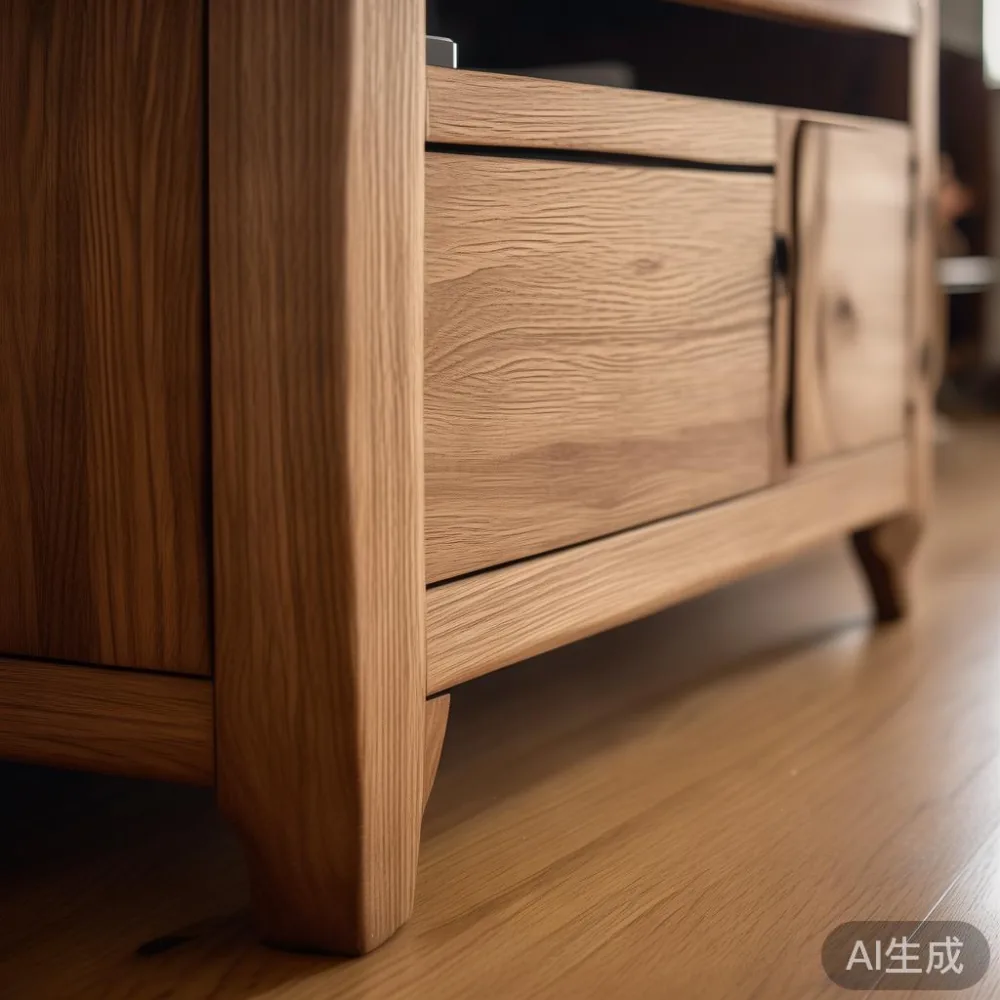
This guide uses Singapore homes as the practical setting. An HDB flat in Tampines presents different delivery constraints from a landed property in Bedok, while a Punggol condo may have a private loading bay or require a corridor carry. A narrow HDB lift measuring 80 cm by 110 cm, for example, can rule out a cabinet that would have fitted easily through a private entrance in a landed house. GST, installation, and access charges also need to sit beside the quoted furniture price.
Because television furniture must handle weight, vibration, cable management, and daily use, it is a revealing case study. It can show why a solid wood bed frame, dining table, wardrobe, nightstand, or marble table should not be judged by its material label alone.
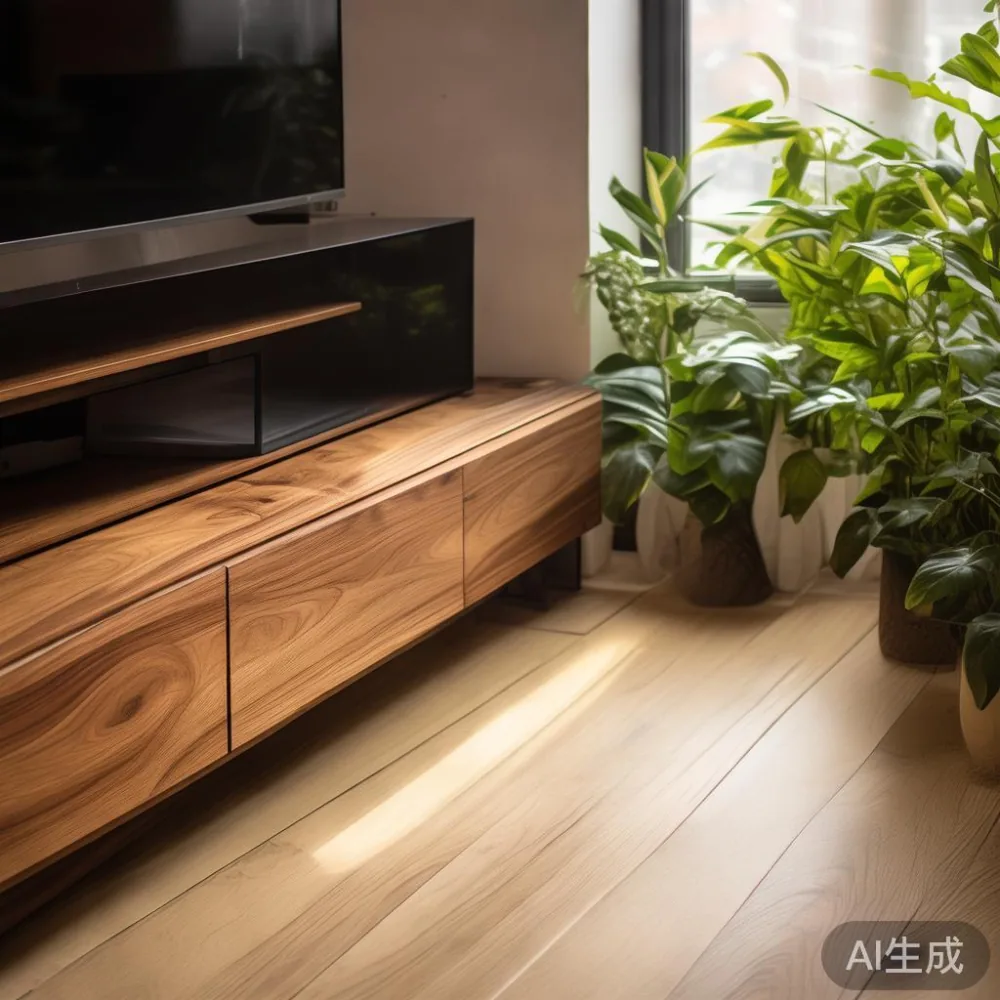
What actually drives the price of solid wood furniture?
The starting point is the timber itself. Solid wood furniture uses real timber components rather than a thin veneer over particleboard or MDF. That distinction affects material cost, machining time, weight, consistency, and the way a piece ages. However, “solid wood” does not identify one board or one species. A cabinet made from rubberwood may cost less than one made from American white oak, while teak, walnut, and other timbers occupy different price bands according to availability, grade, and processing requirements.
Grade matters too. Furniture makers commonly work from selected, premium, or other grade classifications, although the exact terms vary by mill. Within the same species, a board with more knots, grain variation, sapwood, or minor defects may require larger cutting plans. That waste raises the material consumed per finished panel. A maker using 65% of a purchased board for visible parts may need 100 board units for 65 finished units once defects are excluded. The finished TV cabinet may conceal these losses, but they are built into its price.
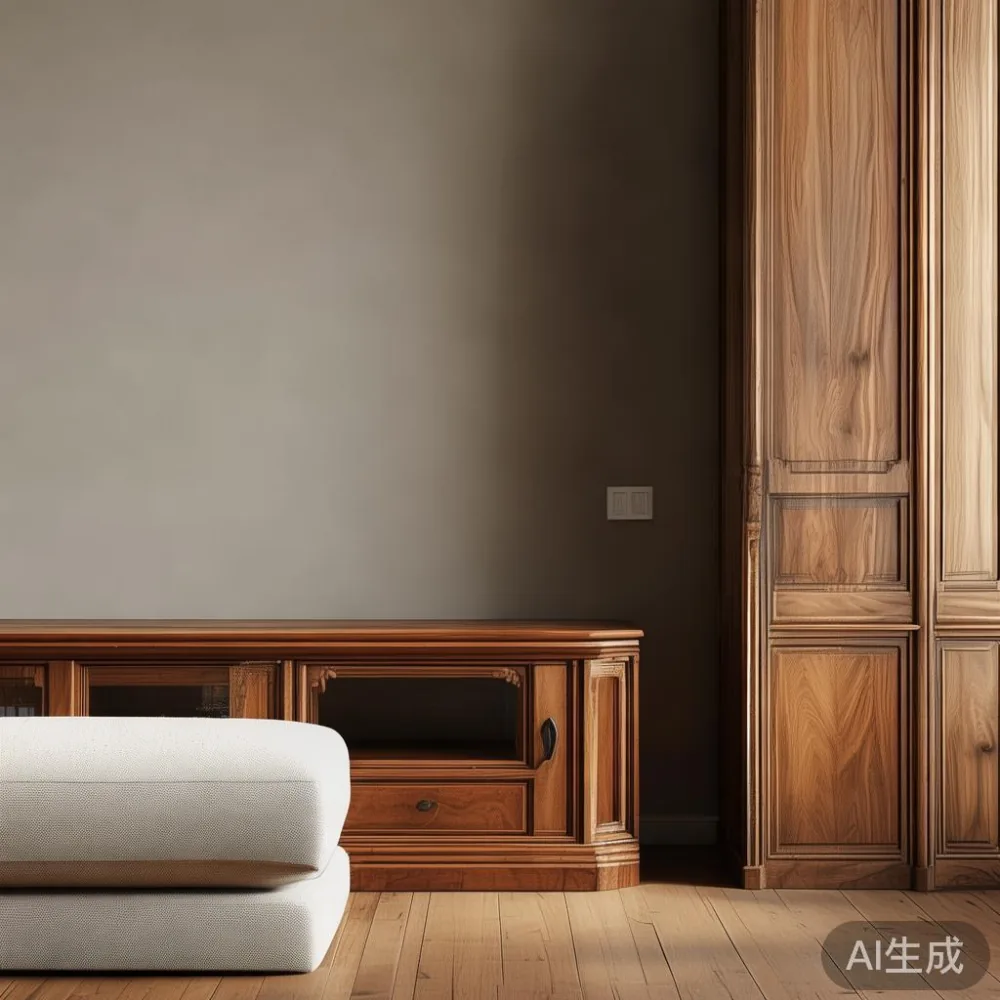
Dimensions amplify the arithmetic. A 180 cm-wide TV cabinet with a 42 cm depth needs substantially more surface area than a 120 cm model with a 38 cm depth. A wall-mounted cabinet also requires better moisture control and stronger concealed fixings than a low freestanding unit. Before comparing quotations, measure the television, the wall, the skirting board, and the intended viewing distance.
Last month I visited a Foshan workshop where a production manager showed me two stacks of boards for the same TV cabinet. Both were labelled suitable hardwood, but one had narrower widths and more small defects. The less consistent timber produced fewer acceptable side panels and back rails. The team had to buy more boards, while the finished cabinets still met the design brief. That visit made the gap between “wood cost” and “furniture cost” unusually clear.
Is a solid wood TV cabinet always more expensive than an engineered-wood one?
No. A high-quality engineered-wood TV cabinet can sometimes cost less because sheet goods are efficient to cut, transport, and assemble. Solid timber becomes more expensive where the design requires thick visible parts, shaped edges, wide boards, or a construction that benefits from the stability of solid wood. A small bedside TV cabinet, for example, may be price-competitive in timber, whereas a 220 cm sideboard using solid hardwood doors can carry a substantial premium.
The comparison should include longevity and repairability. A well-made MDF cabinet can be stable if its panels, edges, back, and moisture exposure are properly controlled. A solid wood TV cabinet, however, can often be sanded and refinished, and visible timber may develop character over time. MIDHILL describes a 10-year structural warranty and lifetime refinishing for its qualifying furniture, but warranty terms should always be confirmed in writing for the specific product rather than inferred from a general policy.
Price is also affected by the cabinet’s engineering. Long spans need reinforcement against sagging, especially when heavy televisions sit at the centre. Adjustable shelves require correctly positioned drilling, concealed hinges need precise machining, and cable openings need clean edges. These details are more demanding than a flat-pack box assembled from uniform panels. A soft-close hinge, for instance, may add around S$8 to S$25 to a cabinet’s component cost, while premium full-extension runners can cost S$30 to S$90 per pair.
For shoppers comparing delivery quotations, ask whether the price includes GST. Singapore’s current GST rate is 9%, and a business selling to consumers should show the tax treatment clearly. Low advertised prices can become misleading once GST, delivery, lift booking, installation, and removal of packaging are added.
How much do timber species, thickness, and finishes change the final cost?
Timber species set the broad range, but thickness and finish can move the final amount significantly. A cabinet using 18 mm cabinet-grade panels may cost less than one with 25 mm solid timber doors and 30 mm framed sides. Increasing a visible front from 18 mm to 30 mm does more than add material: it demands slower cutting, more precise joints, heavier hardware, and often a different finishing sequence.
Finishing can be a large hidden variable. A clear water-based lacquer may offer a clean modern appearance and easier maintenance, but multiple coats, sanding, and controlled drying still add labour. A smoked or fumed finish can require additional processes. Solid wood sofa frames, bed frames, dining tables, wardrobes, and nightstands may use different sealers because their surfaces receive different levels of heat, moisture, and contact.
One finish should not be judged solely by its sheen. Look for a clear description of the coating, expected care, resistance to water rings, and whether edge sealing is included. A tactile matte surface may require more careful preparation than a high-gloss finish. Ask for a physical sample, not merely a photograph, and test it with water and a damp cloth if the supplier permits.
The drawer and door hardware also affect price. Soft-close hinges, full-extension runners, recessed finger pulls, and brushed metal handles each contribute to both material and assembly time. The supplier’s margin matters as well. A direct factory relationship, a local reseller, and a marketplace seller carry different overheads, service obligations, and warranty administration costs. The lowest factory price is not necessarily the lowest landed price in Singapore.
Does French, American, or post-modern light luxury justify a higher price?
Style can add value when it requires extra material, labour, or precise fabrication, but a label alone does not guarantee better construction. French light luxury often combines pale tones, curved profiles, moulded details, and subtle metallic accents. American light luxury frequently uses generous proportions, deep upholstery, and substantial timber or stone elements. Post-modern light luxury may mix shapes, finishes, and references with more deliberate visual contrast.
These approaches can support a higher price, especially when a TV cabinet has profiled doors, bevelled edges, tambour sections, or a stone top. A marble table may be priced for the slab selection, thickness, edge treatment, reinforcement, and careful packing—not simply for the word “marble.” A solid wood sofa and bed frame can command more in an upholstered or sculpted design because frame machining, padding, fabric, and assembly must work together.
For a Singapore interior, modern light luxury furniture must still function within the room. A full-height TV cabinet may look generous in a 28 m² HDB living room, yet it can crowd a 3.2 m sofa and restrict natural circulation. The cabinet’s width, visual weight, and storage efficiency matter as much as the style name. French provincial bed worth it, for example, is a personal question involving room dimensions, maintenance, and comfort; a decorative bed frame does not automatically create a better night’s sleep.
Buyers searching for sale Post-modern furniture should compare construction details, finish quality, and dimensions rather than relying on a trend label. The same principle applies to European light luxury for hotel projects, where durability, replacement parts, cleaning, and repeatable sizing matter more than a decorative signature. Hospitality furniture must withstand heavier use than a residential piece.
What hidden Singapore delivery costs should be included in a TV cabinet quote?
A quoted furniture price is only the beginning. The route from workshop to living room affects the final invoice. Most Singapore suppliers should provide a written delivery scope that states the delivery date, vehicle type, floor or loading restrictions, and whether stairs, lift reservation, assembly, and packaging removal are included.
For a Tampines HDB flat, check the lift dimensions and turning radius before ordering. A common HDB lift interior is approximately 80 cm wide and 110 cm deep, but buildings vary. A packaged TV cabinet wider than 80 cm may need to be turned on its side, split into sections, or carried through the staircase. None of those methods should be attempted without confirming the package dimensions and the supplier’s approval.
Corridor width is equally important. A 180 cm cabinet may be shorter than the corridor but awkward around a 90 cm bend. A Bedok landed home may have a 120 cm gate and a 110 cm staircase, while a Punggol condo could have a larger lift but require a loading-area booking. A supplier offering delivery in 7 to 14 days may still need a 2- or 3-day buffer if the building requires a loading permit or a service elevator reservation.
Typical access charges should be quoted rather than guessed. Some suppliers include standard ground-floor delivery; others charge around S$20-S$50 for additional floor carries, S$30-S$80 for a lift booking, or S$50-S$150 for a difficult access job. These ranges are not universal; the purpose is to make the customer ask for a complete price.
Assembly is another line item. Installing a 180 cm TV cabinet may take 45-90 minutes, but levelling, wall fixing, cable routing, and removal of the old unit can take longer. If the television weighs 35 kg, the wall bracket and cabinet load should be checked together. Ask whether the team removes packaging, disposes of the old cabinet, and provides a basic cable tidy-up.
MIDHILL’s free-shipping threshold over US$350 appears on the brand’s stated offer, yet buyers should still confirm whether the threshold is assessed before or after GST, whether standard Singapore delivery is included, and what exclusions apply to bulky items or special access. It is more useful to compare the final delivered total than to focus on a shipping threshold.
What should I compare before choosing a solid wood TV cabinet?
Begin with the actual space and the television. Measure the wall, note the height of the power and network outlets, and leave ventilation space where the screen requires it. A cabinet that is 180 cm wide may suit a 55-inch television, while a 65-inch model may need at least 200 cm for a balanced composition. Those are starting points, not fixed rules.
Then request a construction sheet. It should state the timber species or approved alternatives, visible panel thickness, back-panel construction, shelf material, joint method, hinge and runner brands, finish type, maximum shelf load, and dimensions. A useful cabinet might have shelves rated to 25-40 kg, but the supplier must verify that figure for the actual design. The unit should also have adequate stiffness and anti-tip provisions for the household setting.
For example, a buyer looking for sale Japandi furniture may want quiet proportions, pale timber, and restrained hardware. A practical checklist still applies: drawer travel, shelf access, cable openings, door alignment, finish samples, and the supplier’s repair support. A restrained appearance should not conceal inaccessible storage or weak hardware.
For luxury light luxury furniture, the same checklist becomes more detailed because the material and workmanship claims may be more ambitious. Inspect the grain continuity, edge transitions, door gaps, underside finish, and movement of drawers. A cabinet with uneven 3-4 mm gaps may look expensive in a photograph yet signal poor setup. Consistent gaps, flush transitions, and square shelves usually require more careful machining.
Price comparisons should use the same specification. One quotation may describe solid timber drawer boxes, while another uses plywood boxes under timber fronts. One may include wall anchoring and installation; the other may not. Normalise the scope before deciding which quote offers the greater value.
How can you tell if a higher price reflects quality or just presentation?
Ask for evidence that can be inspected. Request the timber specification, finish sample, hardware model, warranty document, dimensions, and a photograph of the underside. A reputable seller should be comfortable explaining why a design uses a particular joint, how moisture is controlled, and what can be repaired. Vague claims about heritage craftsmanship or premium materials are less useful than measurable details.
Pay attention to the order of operations. Timber should acclimatise to the local environment before final finishing. Sealed edges, finished undersides, and properly aligned cabinet hardware indicate attention to use. A piece that looks beautiful from the front but has raw boards underneath may have been designed for display rather than daily family use.
MOQ and production methods also affect the quote, especially for custom work. A one-off cabinet can be costlier than a repeatable model because the workshop must set up tooling and make individual adjustments. A made-to-order finish may add 2-4 weeks, and a custom size can add 1-3 weeks. A standard programme may ship in 14-30 days, depending on availability and production schedules. The stated delivery period should refer to dispatch or arrival, not just the two terms.
Singapore buyers also have a 14-day return framework in some purchase arrangements, but the product condition, assembly, and custom-order rules should be checked. A return policy can make an unfamiliar solid wood TV cabinet easier to assess, provided the original packaging, finish, and hardware can be restored. Keep photographs, retain the written specification, and measure the cabinet before assembly.
What is a sensible way to budget for solid wood furniture?
For a mid-sized residential TV cabinet in solid timber, a broad working range might be S$1,200-S$3,500 before any premium stone, highly figured timber, or extensive custom work. A smaller 90-120 cm cabinet may fall around S$700-S$1,600, while a 200-260 cm cabinet with more demanding joinery and premium hardware may reach S$2,500-S$6,000. Prices vary by species, design, and supplier, so these figures are budgeting guides rather than fixed market rates.
A 3-door TV cabinet might consume 4-7% more timber than a 2-door version of the same size because of the additional framing, and a stone top can add several hundred Singapore dollars. Soft-close hardware, wall anchoring, a shaped plinth, and a hand-applied finish each need to be visible in the quotation. If the price rises by S$400, the buyer should be able to identify where that S$400 went.
The strongest value comes from matching construction to use. A family room with a 45 kg television needs a properly engineered cabinet and secure fixing. A low-use rental home may need a smaller unit with straightforward disassembly. A hotel suite may require durable finish, coordinated dimensions, and maintenance documentation. European light luxury for hotel procurement is not simply a residential design moved into a public space; traffic, cleaning chemicals, and service access change the specification.
Ultimately, the price of solid wood furniture is driven by the sum of the timber, the yield, the design complexity, the hardware, the finish, the engineering, and the delivery journey. A label can suggest a visual direction—French light luxury, American light luxury, or post-modern light luxury—but measured construction and complete delivered cost reveal the real proposition. That is how a solid wood TV cabinet, bed frame, dining table, wardrobe, nightstand, or marble table earns its price: through details that remain useful long after the showroom impression fades.