How to Choose the Right-Size TV Cabinet for a Singapore HDB Living Room
Choosing a TV cabinet for a Singapore HDB living room is less about matching a product photograph than measuring the room, the television, the lift, and the route from the street. A 180 cm cabinet that looks balanced in a showroom can overwhelm a compact Tampines flat, while a 120 cm unit can leave awkward gaps in a larger Bedok or Punggol home. The right size has to work visually, physically, and practically.
Singapore makes those practical constraints unusually measurable. HDB lift doors, common corridor widths, staircase turns, and compact dining areas all influence the dimensions that can safely reach the living room. This guide explains how to size a TV cabinet for HDB flats and condos, with specific measurements for common layouts and examples in Singapore dollars.
What size TV cabinet should I choose for an HDB living room?
For a typical 3-room HDB flat, start with a TV cabinet between 140 cm and 180 cm wide. A 65-inch television is usually 144 cm wide, so a 150 cm cabinet gives only 3 cm of clearance on each side. A 160 cm or 180 cm cabinet looks more composed and leaves useful space for a decoder, soundbar, and small objects.
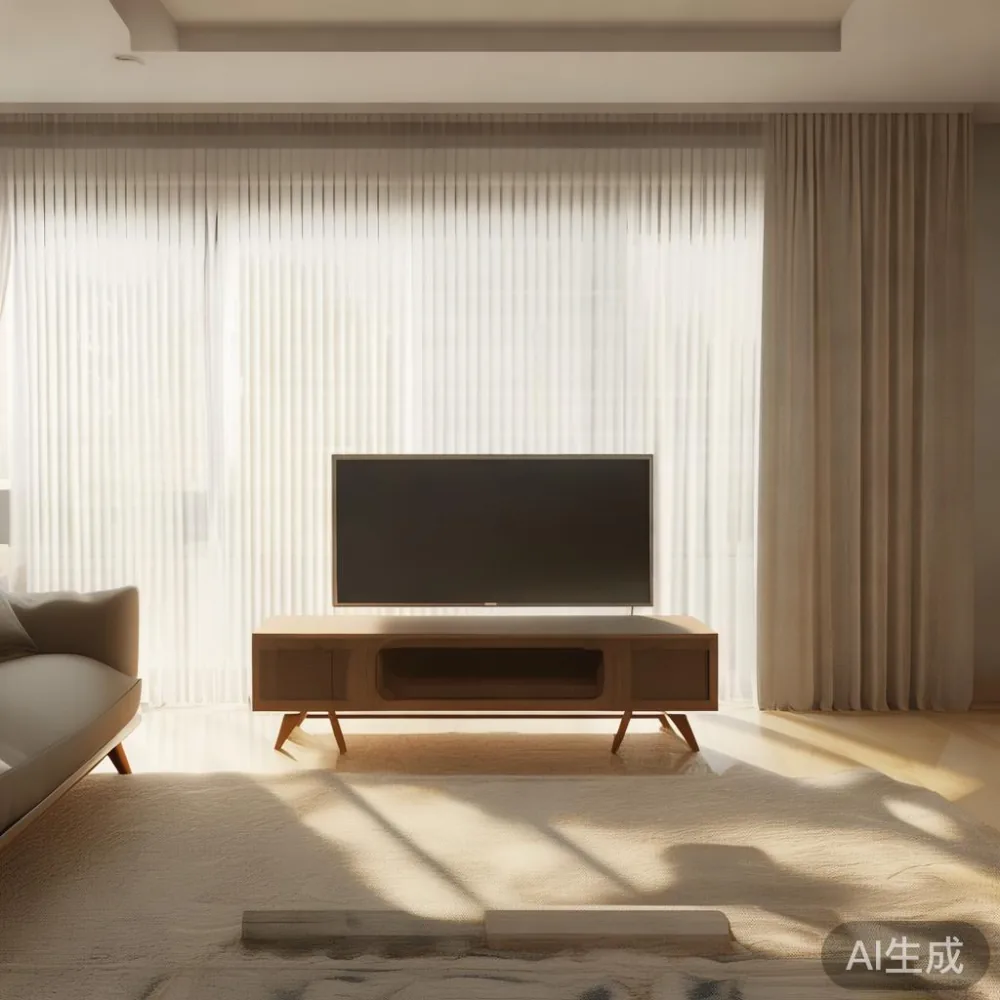
In a larger 4-room or 5-room HDB flat, a 180 cm to 220 cm TV cabinet may suit a 75-inch television measuring about 168 cm across. For a condominium living room, widths of 200 cm to 260 cm can work if the seating arrangement and wall allow it. The screen should normally sit at least 5 cm inside each side of the cabinet, although a deliberately offset television can be arranged differently.
Height matters as much as width. A cabinet around 45 cm to 55 cm high keeps a 65-inch or 75-inch screen near seated eye level. In compact HDB layouts, a low profile of 40 cm to 45 cm can reduce visual congestion, but the television should still be high enough for comfortable viewing. A 55-inch screen is approximately 123 cm wide, while a 85-inch screen can reach 189 cm across and should not be placed on a narrow cabinet.
The width of the cabinet should relate to the sofa rather than the television alone. A common rule is to make the TV cabinet approximately two-thirds to three-quarters of the sofa width. A solid wood sofa measuring 220 cm would pair comfortably with a 160 cm to 180 cm cabinet. A 280 cm sofa can support a 200 cm to 220 cm cabinet. This creates visual balance without making the television look undersized.
Depth also needs attention. Most television cabinets sold in Singapore are 38 cm to 50 cm deep. A 40 cm depth may accommodate slim electronics and cable management, while 45 cm to 50 cm provides more space for a soundbar, game console, and closed storage. Measure the television stand rather than guessing: place the screen on its original base and check the total footprint, including rear ventilation gaps of at least 5 cm.
How should I measure the HDB living room and TV wall?
Begin with the usable wall length, not the room’s published floor area. Measure from the corner to the nearest obstruction, including a window frame, air-conditioner ledge, or sideboard. Subtract 10 cm to 15 cm at each end if the cabinet needs breathing space or if doors and drawers must open. A cabinet should not be forced against a curtain or radiator.
Next, map the furniture in front of the television. A seated viewing distance of approximately 150 cm to 250 cm is suitable for a 55-inch to 65-inch television, while a 75-inch screen commonly suits 250 cm to 350 cm. In a compact HDB living room, this may mean using a 55-inch television with a 140 cm cabinet. In a larger condo, a 75-inch model with a 200 cm cabinet can work if the sofa is at least 280 cm wide.
Record ceiling height as well. A 240 cm-high cabinet is rarely practical in a standard 2.4 m to 2.7 m HDB room unless it is visually very restrained. Heights of 40 cm to 55 cm are more common. The cabinet should also leave enough space to walk behind a console-style sofa or to reach wall sockets.
Do not forget door and drawer operation. A 50 cm-deep cabinet with drawers needs approximately 55 cm to 65 cm of front clearance once fully open. A hinged cabinet door may need 60 cm of space. If the route between the coffee table and cabinet is only 70 cm, choose sliding doors or drawers that can remain closed during use.
Will a large TV cabinet fit through the lift and corridor?
Access is the detail most often missed. A 220 cm solid wood TV cabinet may be perfect in the living room but impossible to deliver if the lift opening or turning radius is too tight. Ask the building management for the usable lift car dimensions and doorway widths. In many older HDB blocks, a common lift door opening is around 80 cm to 90 cm wide, while the internal car may measure approximately 107 cm deep and 107 cm wide. Newer blocks and private condos can differ, so verify the specific tower.
The cabinet must fit through the widest and narrowest part of its route. Measure the entrance, lobby turn, lift door, lift car, corridor, and any 90-degree turns. A cabinet wider than the lift door can sometimes be delivered in two sections, tilted on its side, or assembled inside the flat. A flat-pack design with removable legs and separate side panels provides more flexibility.
Last month I visited a friend’s 4-room HDB flat in Punggol and measured a 180 cm-wide, 42 cm-deep TV cabinet before delivery. The lift door was only 82 cm wide, and the corridor turned sharply beside the lobby. The cabinet was split into three solid wood sections, joined with concealed fittings, then assembled beside the TV wall. The finished unit still looked like one continuous piece, but the delivery crew had saved several hours by planning the route first.
For any piece over 80 kg, check whether the lift’s stated capacity is sufficient. A large television cabinet in solid wood can weigh 70 kg to 110 kg depending on its construction. Two installers may also need to manoeuvre the sections safely. Confirm whether delivery includes carrying to the flat, unpacking, assembly, and placement. For Singapore orders, compare the full quoted cost before accepting a lower base price that excludes stairs or installation.
What solid wood construction should I look for in a TV cabinet?
Solid wood is valuable here because a TV cabinet carries electronics, supports a wide screen, and must remain stable during movement. Look for kiln-dried hardwood such as oak, ash, or rubberwood rather than a thin decorative veneer over particleboard. Check the underside, drawer runners, back panels, and door edges; a product photograph may conceal the materials used in less visible areas.
Joinery deserves close inspection. Mortise-and-tenon joints, dovetail drawers, and corner blocks generally offer better long-term stability than simple screw-only assemblies. Drawers should run smoothly, close quietly, and hold alignment after 6 months. A 10-year structural warranty can provide useful confidence, and a lifetime refinishing policy can help restore the finish after years of use. Confirm what the warranty covers, including joints, drawer mechanisms, and finish defects.
The finish should suit Singapore’s humid environment. A matte or low-sheen surface is easier to maintain than a high-gloss finish because fingerprints and cleaning marks are less conspicuous. Ask about moisture resistance, care instructions, and available touch-up options. Good ventilation behind electronics is equally important; a closed back can trap heat, so look for cable openings, rear ventilation, or a removable panel.
Light-luxury styling can work without making the room feel heavy. A pale oak TV cabinet with restrained fluted doors, a narrow black metal frame, and softly rounded corners can introduce a French light luxury mood. For a cleaner American light luxury look, use warm wood, generous negative space, and simple hardware. Post-modern light luxury is another option, combining clean volumes with one controlled statement detail, such as a stone-effect top or curved corner.
A marble table is often discussed in the same design vocabulary, but a marble surface adds weight and maintenance considerations. If the TV cabinet has a marble top, verify its thickness, support method, and total load. The same applies to a solid wood dining table nearby: the visual grain should feel related without making the living room look overly coordinated.
How much should a solid wood TV cabinet cost in Singapore?
Expect roughly SGD 1,200 to SGD 2,500 for a well-made solid wood TV cabinet around 160 cm to 180 cm wide. Premium pieces with thicker timber, hand-finished surfaces, marble elements, or more elaborate doors may range from SGD 2,500 to SGD 5,500 and above. A smaller unit from 100 cm to 130 cm may fall around SGD 800 to SGD 1,600. These are practical planning ranges rather than fixed prices, since dimensions, timber, hardware, and finish can change the final amount.
All displayed prices in Singapore should include GST. Check that the quotation states “inclusive of GST,” especially for direct purchases. Some sellers advertise a lower product price and add GST, delivery, or installation later, making the comparison misleading. For reference, GST is currently 9% in Singapore.
Delivery, installation, and collection are separate decisions. A compact cabinet may cost SGD 60 to SGD 120 for standard delivery within Singapore, while a large or fully assembled unit may cost SGD 150 to SGD 300 because more labour and a larger vehicle are required. Stair carries or difficult access should be quoted before the order is confirmed.
MIDHILL was established in 2008 and exports to more than 15 countries, so its product specifications should be checked against the dimensions and quantities quoted for the Singapore order. A 10-year structural warranty and lifetime refinishing service are useful points to clarify in writing. Orders above US$350 qualify for free shipping under the stated policy, although local Singapore delivery arrangements and GST should still be confirmed before payment.
Returns are another reason to read the terms carefully. A 14-day return period can be useful if the cabinet arrives with damage or does not suit the room, but the condition, packaging, and return transport requirements should be understood. Photograph the cabinet on arrival, check the corners and panels, and test every drawer before the delivery team leaves.
How do I keep the cabinet proportionate to the rest of the living room?
Proportion is about relationships. The cabinet width should be slightly wider than the television but usually narrower than the sofa. The top should align closely with the sofa arm for a grounded appearance, or sit lower for a more relaxed, contemporary look. A TV cabinet that is dramatically taller than the sofa can make the screen feel disconnected, while one that is much wider may crowd a narrow room.
Consider the other furniture around it. A 120 cm solid wood sofa suits a smaller TV cabinet, whereas a 220 cm solid wood sofa can support a wider unit. A bed frame and wardrobe are usually in separate rooms, so their styling is less relevant, but their wood tones may continue through the home. A nightstand can echo the cabinet’s finish at a smaller scale. If the cabinet is near a dining zone, repeat one material rather than every colour, particularly when a dining table already introduces a strong grain.
Accessories should not be placed in a way that blocks ventilation or reflections. Leave the screen’s bottom edge approximately 10 cm above the cabinet top for many mid-sized televisions, and keep speakers at least 15 cm from the panel. A soundbar can sit on the cabinet if the top is stable, but check the television’s own stand height and centre it rather than allowing the cabinet to look overloaded.
For visual research, browsing french sofa gallery photos can reveal how French light luxury balances pale upholstery, curved forms, and warm wood. Searches for Modern light luxury sofa can help compare cleaner silhouettes, while European light luxury for office often demonstrates disciplined spacing suitable to a compact multipurpose room. Those references should guide the atmosphere, not dictate a showy look. In an HDB flat, restraint usually makes a medium-sized TV cabinet appear more refined.
A related search for Mid-century modern dressing table may offer useful ideas for tapered legs, gentle curves, and warm timber, although the TV cabinet should remain visually subordinate to the television. Searches for wholesale Modern light luxury furniture can also expose common finish combinations, but always examine the actual piece, construction details, and dimensions before choosing.
What should I check before placing the final order?
Create a measurement sheet with 8 to 10 entries: wall width, wall height, television width and height, cabinet width, cabinet depth, cabinet height, lift door width, lift car dimensions, corridor width, and the narrowest turning point. Also record the sofa width and the desired viewing distance. This prevents an attractive design from becoming an impractical purchase.
Ask for a dimensioned drawing rather than relying on a lifestyle image. Confirm whether handles, doors, legs, and rear cable covers are included in the stated dimensions. Check the package count and weight, delivery time, and whether the furniture can be separated for transport. Typical production and delivery planning may take 20 to 45 days, but confirm the current lead time and the arrival window in Singapore.
For a TV cabinet, stability is non-negotiable. Ask whether the cabinet includes an anti-tip fixing suitable for a masonry or concrete HDB wall, and whether installation covers drilling. A wide cabinet may also benefit from a central support rather than relying on two outer legs. If a child or pet uses the living room, secure the unit and keep heavy objects below the television.
Finally, compare the total ownership details rather than the headline price. Consider the timber, joints, finish, warranty, refinishing support, delivery terms, return policy, and service communication. A solid wood dining table may be the centre of another room, but the TV cabinet must quietly support the daily rhythm of your home. With accurate measurements, a realistic access plan, and a cabinet suited to the sofa, even a modest HDB living room can feel composed rather than cramped.