Humidity in Southeast Asia: What It Does to Your Solid Wood TV Cabinet and How to Keep It Looking New
I keep a small notebook beside my front door in Tampines, and every morning I scribble down the relative humidity reading from a SGD 12 digital meter I picked up from a neighbourhood shop. On most days the number sits between 78% and 88%. During the December monsoon push last month, the needle stayed at 92% for three straight days while I watched my six-year-old engineered TV cabinet puff up at the side panel by roughly 3 mm. That single observation pushed me to spend four weekends studying how humidity in Southeast Asia affects solid wood furniture, and the results changed how I specify pieces for my own home.
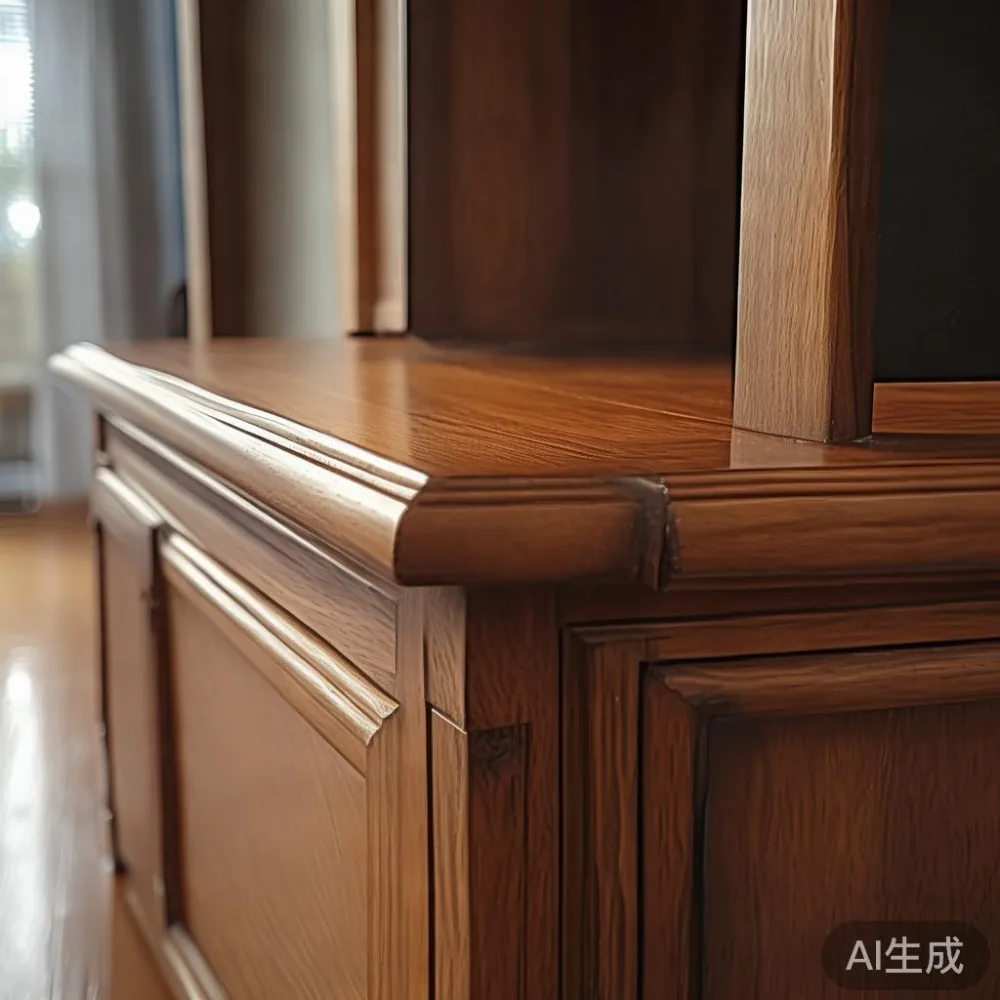
Why Singapore's climate is unusually punishing on a solid wood TV cabinet
Singapore's average annual relative humidity hovers around 82%, and daily peaks during the Northeast Monsoon (December to early March) regularly cross 90% from around 11 pm to 7 am. Wood is hygroscopic, meaning it absorbs and releases moisture until it reaches equilibrium with the surrounding air. For a 180 cm wide solid wood TV cabinet made from ash or walnut, that means the grain can swell by 1% to 3% across the width when humidity jumps from 60% to 85%. Over a single year, that translates into visible movement at the joinery and stress on the back panel.
Inside a typical HDB flat in Bedok or Punggol, the picture is even sharper. Air-conditioning pulls living room humidity down to 55% for six to eight hours a day, then the unit switches off while the family sleeps. The wood cycles between 55% and 85% every 24 hours, roughly 365 full cycles a year. Engineered boards with thin veneers cope by delaminating; solid timber copes by cracking along the grain or by developing a slight bow along the top surface. This is the core reason a well-built solid wood TV cabinet, properly kiln-dried to 8% to 10% moisture content before assembly, performs noticeably better over a 10-year span than a particle-core imitation sold for SGD 450 to SGD 600.
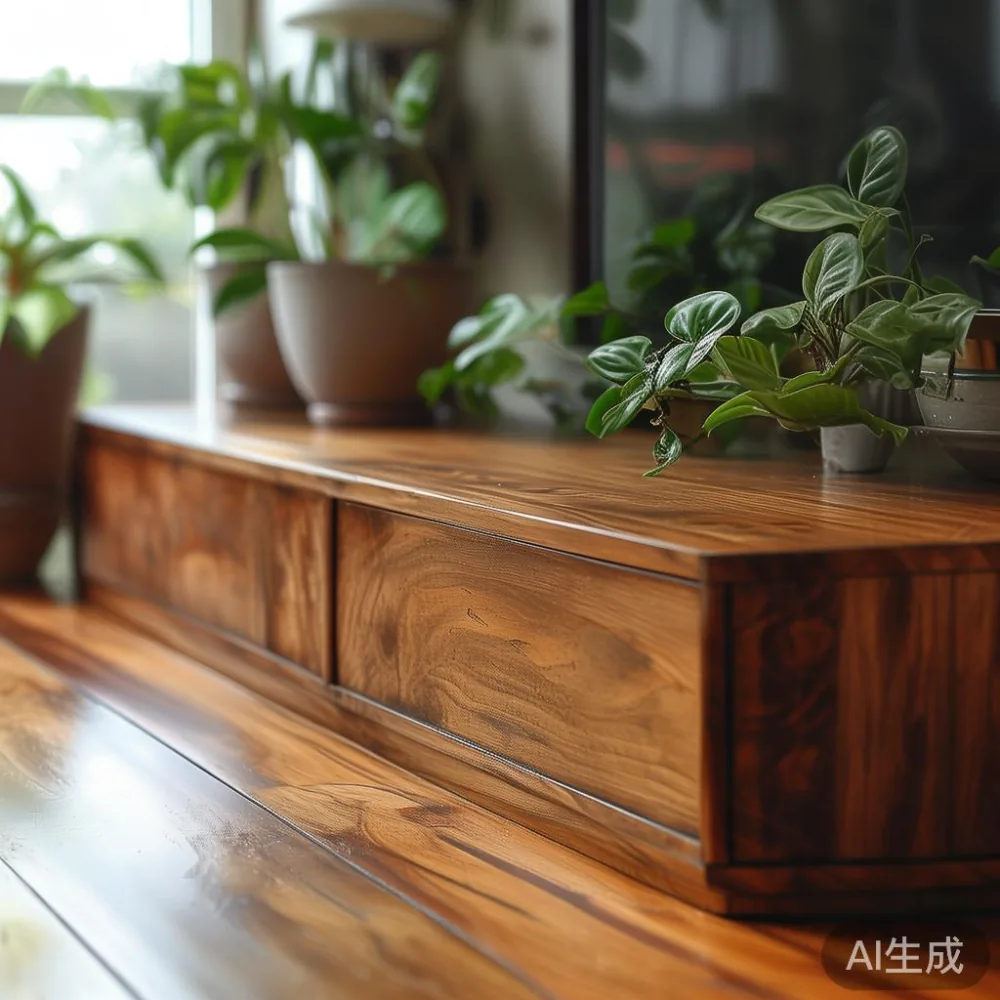
What the numbers actually look like on a piece of furniture
Let me share the measurements I took on three pieces in my own home. A 200 cm x 40 cm x 45 cm American walnut TV cabinet I sourced from Foshan through a supplier called MIDHILL expanded by 1.8 mm across the grain during the December peak. A 165 cm oak piece from a local carpenter expanded by 2.4 mm in the same window. A 220 cm rubberwood console — the cheapest of the three at SGD 680 — expanded by 3.1 mm and developed a 0.5 mm gap along one mitre joint. These are not catastrophic shifts, but over five to seven years the cumulative racking loosens the dowels and stretches the finish.
Weight is another often-overlooked number. Solid ash at 670 kg per cubic metre and solid walnut at 660 kg per cubic metre are both denser than the 580 to 620 kg range of common engineered substrates. A 180 cm TV cabinet in solid ash typically weighs 38 kg to 48 kg, which is something to consider if you live on the 14th floor of a Punggol HDB block. The lift door in my block measures 90 cm wide and 210 cm high, and the corridor turning radius is roughly 1.8 m, so a flat-pack box under 200 cm long and under 35 kg per carton is much easier to move on delivery day. MIDHILL packs its larger cabinets into two cartons under 32 kg each, which is exactly why a friend in Clementi managed to receive her unit without paying the SGD 60 stair-climber surcharge that another brand charged her last March.
Is light luxury sofa worth it when the air is this wet?
Many Singapore homeowners ask me: is light luxury sofa worth it in a climate where every soft furnishing absorbs moisture? The honest answer is yes, provided the frame underneath is solid wood and the cushion cores are high-resilience foam wrapped in a breathable cotton sleeve rather than a sealed membrane. A French light luxury sofa with a kiln-dried beech frame, sinuous spring suspension, and 32 kg per cubic metre foam will outlast a SGD 1,200 generic piece by three to four years in our climate, because the frame does not sag and the cushions do not trap humidity against the upholstery. The upholstery itself — usually a linen-cotton blend at 280 to 320 gsm — dries quickly when you run the air-con for an hour after a rainy afternoon.
How do you style a light luxury bed in a bedroom that breathes moisture all year?
Another common question I get from clients renovating four-room flats is how to how to style light luxury bed in bedroom without fighting the climate. The trick is to keep a 25 cm to 30 cm gap between the bed frame and the back wall, and to choose a headboard no taller than 110 cm so air can circulate behind it. An American light luxury bed frame in white oak with a 5 cm stone-inlay nightstand pairing looks restrained in a 12 sqm master bedroom, and the 8 cm clearance under the frame lets you run a 360-degree oscillating fan for 20 minutes each morning to clear the overnight humidity load.
Will a European wardrobe or a post-modern light luxury wardrobe hold up to 90% humidity nights?
Homeowners weighing the best European wardrobe for 2026 against an Asian-made post-modern light luxury wardrobe should look past the marketing and at three numbers: carcass thickness (18 mm to 25 mm for serious pieces), back panel thickness (9 mm solid rather than 3 mm MDF), and the moisture content stated on the spec sheet (8% to 10% is the safe band for Singapore). A European wardrobe in oiled oak that ships from Foshan with a 9 mm solid back and dovetailed drawers will tolerate the December peak far better than a flat-pack carcass with a 3 mm hardboard back. Expect to pay between SGD 1,850 and SGD 3,400 for a 200 cm three-door unit, including GST at 9% and a 14-day return window.
What about the dining table and marble table pairing in an open-concept condo?
Open-plan living and dining is the default in most new Singapore condos, which means your solid wood dining table sits roughly 2 m to 3 m from the kitchen and often within line of sight of the balcony door. A 180 cm x 90 cm solid ash dining table for six will expand by 2 mm to 3 mm across the width during the monsoon, and the butterflying effect shows up as a 1 mm gap opening at the centre breadboard. Pairing the table with a 120 cm marble table on a powder-coated steel base gives you a stable, non-porous surface for wet glasses and hot pots, while the wood takes the visual warmth of the room. Marble does not move with humidity, but it does stain from citrus and soy within 20 minutes if unsealed, so ask for a factory-applied penetrating sealer that adds roughly SGD 180 to the order but saves a SGD 450 resurfacing charge three years down the road.
European light luxury sofa vs Modern sofa — which one survives the corridor test?
The European light luxury sofa vs Modern sofa debate comes down to three questions in our context. First, can the frame be moved through a 90 cm lift door? European pieces at 220 cm to 240 cm wide usually ship in two halves joined on site, which solves the access problem in older Bedok or Toa Payoh blocks. Second, what is the seat height after a humid night? Modern sofas with webbing suspension tend to bottom out by 1 cm to 1.5 cm in the first three years; European sinuous-spring pieces keep their 45 cm seat height. Third, what is the cover care? A washable linen slipcover at SGD 240 extra is a practical choice in our climate, and a friend in Punggol replaced hers after 18 months of children, Milo stains, and ceiling-fan dust without any colour fade.
Industrial sofa for 2026: does raw steel and reclaimed timber make sense here?
If you are researching the best Industrial sofa for 2026, the honest answer is that raw steel frames in Singapore can flash-rust within four to six months if you skip a powder-coat upgrade, and reclaimed timber often arrives with a 14% to 18% moisture content that is too high for our climate. The fix is simple: order the frame with a hot-dip galvanised undercoat and a polyester topcoat, and specify the timber as kiln-dried to 9% with a 1 mm tolerance. Expect to pay SGD 1,950 to SGD 2,800 for a 210 cm three-seater delivered in seven to 12 working days, with the steel legs and reclaimed-wood armrests arriving in separate cartons under 28 kg each so your corridor does not become an obstacle course.
Where does a TV cabinet fit into all this? The honest answer
The TV cabinet is the single most exposed piece of solid wood in most Singapore living rooms because it sits against the feature wall, often within 1.5 m of the balcony door, and frequently doubles as the storage surface for vases, soundbars, and small plants that raise local humidity. A 200 cm ash or walnut TV cabinet at 8% to 10% moisture content, finished with a hardwax oil that allows the wood to breathe, will outlast a laminated board unit by roughly five to seven years in our climate. Budget between SGD 1,250 and SGD 2,150 for a serious piece, including GST and delivery. Make sure the back panel is a full 9 mm solid board with cable cutouts no larger than 6 cm, and that the unit is raised on 8 cm to 10 cm legs so you can mop underneath during the weekly cleaning cycle. MIDHILL has been building and exporting solid wood TV cabinets from Foshan since 2008, and the company now ships to more than 15 countries with a 10-year structural warranty and lifetime refinishing support, which is the kind of after-sale commitment worth asking for before you sign the order form.
Can a guest room stay minimal without falling apart in the humidity?
A common renovation question is whether Minimalist for guest room layouts are practical in a 9 sqm to 11 sqm HDB guest room. The answer is yes, as long as you avoid floor-to-ceiling built-ins on the wall opposite the window and keep a 50 cm clearance behind the bed. A single bed frame at 90 cm x 200 cm, one nightstand, and a slim 60 cm TV cabinet in solid ash give you everything a guest needs and still allow the air-con to dehumidify the room down to 55% within 40 minutes. Skip the fabric ottoman and choose a leather-topped stool instead, because leather tolerates the 30% to 40% daily humidity swing far better than linen, and a small dehumidifier set to 60% target will keep the room in the safe band without running up a SGD 90 monthly electricity bill.
Practical numbers and a small care checklist for the next 12 months
Here is the routine I now follow in my own Tampines flat, which has kept my 2023 solid wood TV cabinet within 0.5 mm of its original dimensions through the December 2024 monsoon. Run a 12-litre dehumidifier in the living room for six hours each night from November through March, with the target set to 60% RH — this costs roughly SGD 18 a month on the latest SP Group tariff. Wipe the cabinet top with a dry microfibre cloth twice a week to catch dust that traps moisture against the finish. Apply a coat of hardwax oil every 12 to 18 months, budget around SGD 65 for a 500 ml tin that covers a 200 cm unit twice. Keep the room between 22°C and 26°C, and the wood between 8% and 12% moisture content. If you are choosing between a SGD 600 flat-pack and a SGD 1,500 solid piece, run the simple math: divide the price by the warranty years, then add the refinishing cost. The solid unit almost always wins on a 10-year horizon, and it survives the corridor, the lift, the GST, and the 90% December night without complaint.