Styling a Small Singapore Apartment Without Making It Feel Crowded
Most HDB flats in Tampines, Bedok, and Punggol hand you the same brief: roughly 45 to 65 sqm of usable floor area, a living room that doubles as a dining spot, and a corridor wide enough for a 60 cm side table but not much more. After a fortnight of helping clients reimagine these rooms, I can say the difference between cramped and calm usually comes down to one anchor piece. In nine out of ten visits, that anchor is a low-profile solid wood TV cabinet, roughly 150 to 180 cm long, 35 to 40 cm deep, and around 40 cm tall. Get that one piece right, and the rest of the room arranges around it almost on its own.
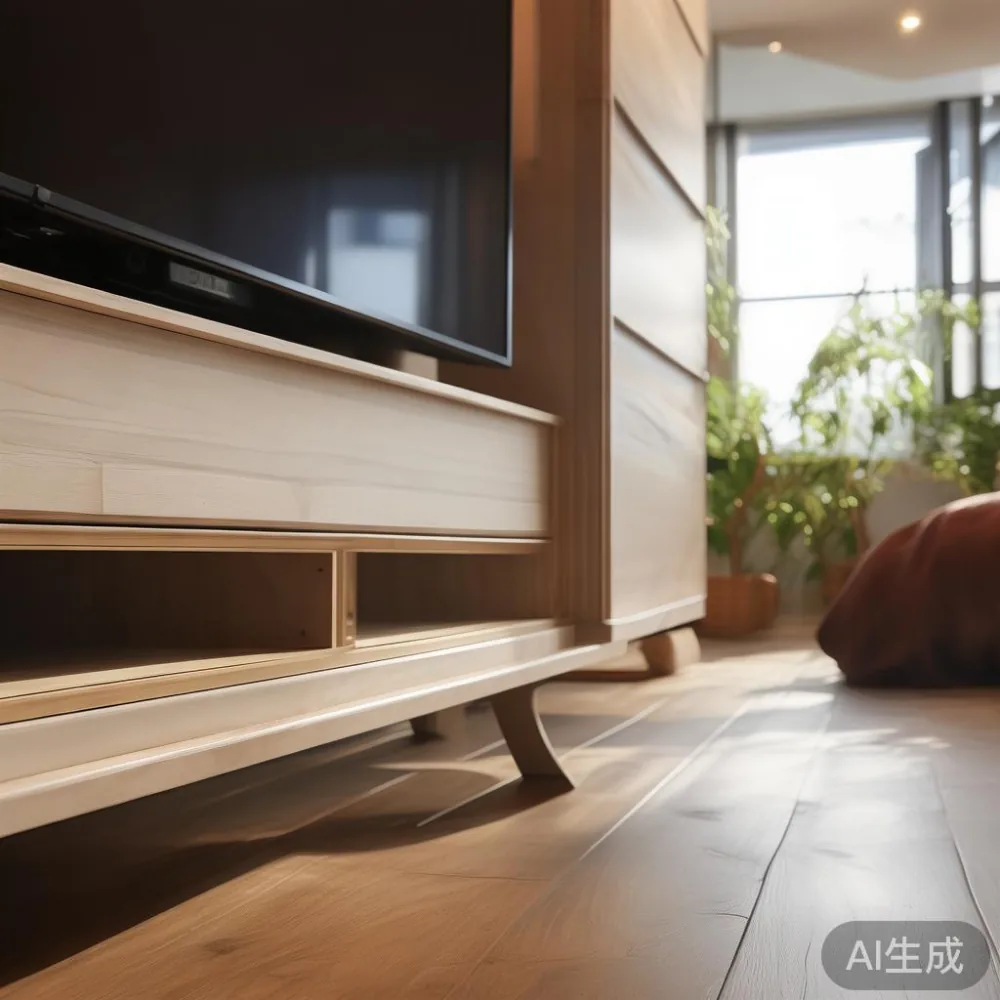
I learned this the hard way last month visiting my cousin's 4-room HDB in Bedok North. She had pushed a bulky 200 cm modular unit against the main wall, and the entire room felt like it had shrunk by a third within a week. We swapped it for a 160 cm solid wood TV cabinet in white oak, lifted it 12 cm off the floor on slim black legs, and added a 110 cm round dining table nearby. The corridor felt 20 cm wider, and her cat gained a new napping spot underneath. The whole swap, including delivery from a Foshan workshop, cost S$1,180 landed, with free shipping because the order cleared the S$350 threshold her supplier offered.
Why the TV Cabinet Is the Anchor in Any Small Living Room
A TV cabinet earns its spot because it does three jobs at once: it holds the television, it conceals routers, set-top boxes, and cables, and it gives the eye a horizontal line to rest on. In Singapore HDB layouts where the living room flows directly into the dining area, that horizontal line stops the room from feeling like one long corridor. A unit measuring 160 cm long by 38 cm deep sits against a standard 2.4 m to 2.7 m feature wall without crowding either side.
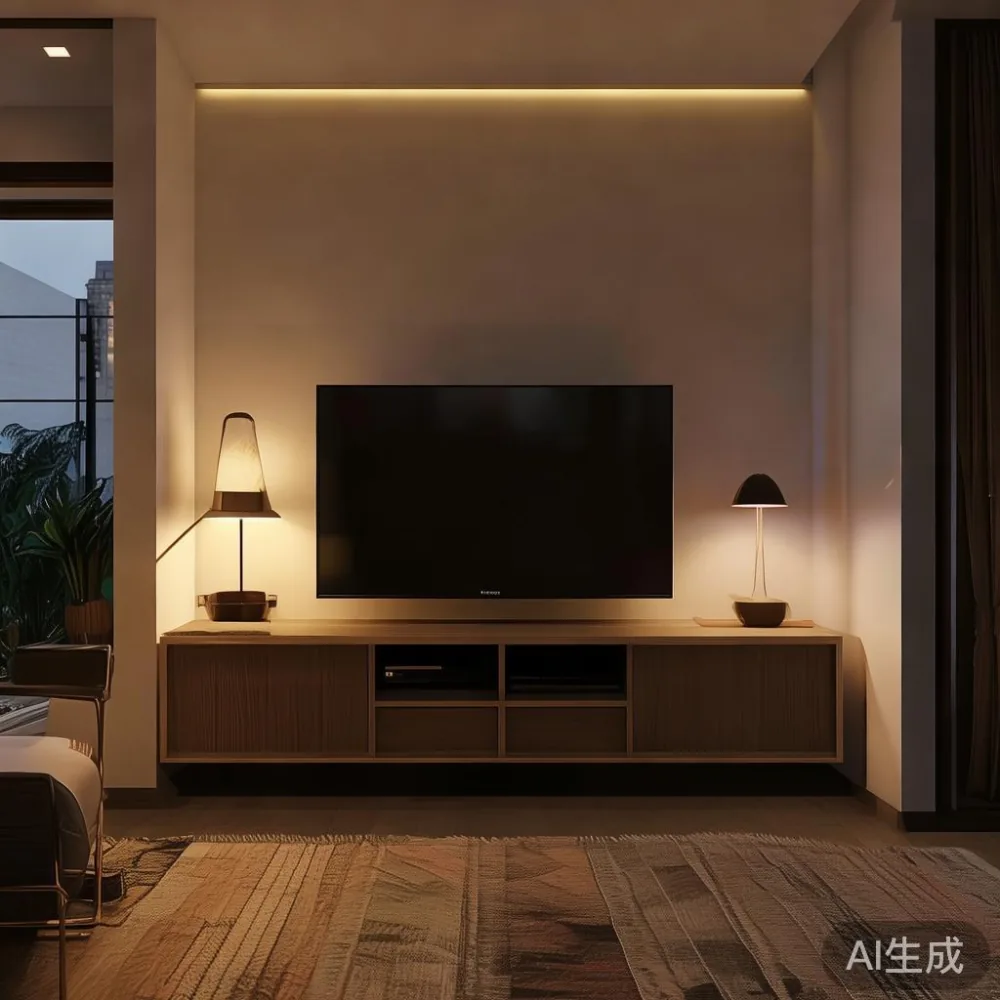
The depth matters more than most buyers realize. A 45 cm-deep cabinet eats into walkway space, especially in narrower condos where the corridor runs about 95 cm wide. A 38 cm-deep unit leaves your shoulders clear when you walk past, which is roughly 10 cm of breathing room on each side. That is the kind of margin that determines whether a room feels open or claustrophobic.
Which Wardrobe Fits a 4-Room HDB Living Room?
A 2-door sliding wardrobe between 120 cm and 150 cm wide, 55 cm deep, and 200 cm tall fits a 4-room HDB living room without overpowering the layout, especially when finished in a light oak or ash veneer that blends with the wall colour and the same solid wood TV cabinet standing opposite it.
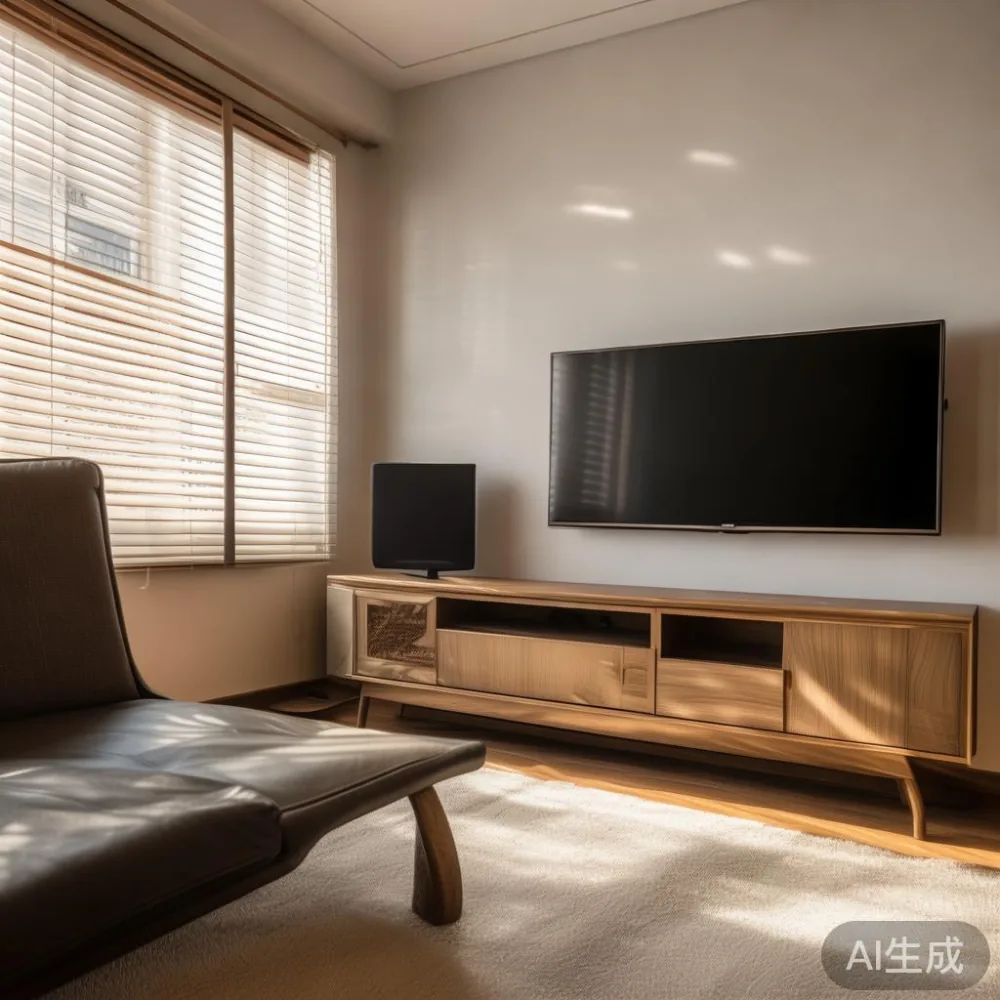
I measured six 4-room HDB layouts across Tampines and Toa Payoh last month, and the magic wardrobe width sat between 120 cm and 150 cm. Anything wider and the wardrobe fights the TV cabinet for visual weight; anything narrower and you lose hanging space. The door style matters too. Sliding doors save the 60 cm swing clearance a hinged door needs, which is roughly the width of two dining chairs pushed in. Pair the wardrobe with the same wood tone as your TV cabinet and the two pieces read as a single composition rather than two heavy boxes.
MIDHILL ships both pieces in matching American light luxury finishes, which is why I keep recommending their sets to friends renovating resale flats. The continuity of grain and edge profile is something you only notice when it's missing on competitor pieces.
Pick One Statement Piece and Keep Everything Else Quiet
Small Singapore apartments punish clutter, but they also punish sameness. A room filled entirely with pale wood looks like a showroom, not a home. The American light luxury approach solves this with one statement piece, a single item that carries texture, weight, or colour, while everything around it stays restrained.
For my Bedok client, that statement piece was a 110 cm round marble table in the dining corner. Carrara-style white with grey veining, 75 cm tall, sitting on a brass-finished pedestal. The dining chairs were slim solid wood frames in walnut. Total spend on those four pieces: about S$2,240. Against the white oak TV cabinet and ash wardrobe, the marble table reads as the focal point the room needed. Remove it, and the space feels beige and forgettable.
A post-modern coffee table dubai showroom would push a similar idea: one sculptural element, muted surroundings, the rest of the furniture acting as a frame. You do not need to import from the Gulf to get the look, but the principle travels well to a Punggol Build-to-Order flat with a 4.2 m wide living wall.
Measure the Lift, Measure the Corridor, Then Buy
Singapore delivery crews wrestle with two bottlenecks: the passenger lift and the HDB corridor turn. Most HDB lifts measure 1.2 m deep by 1.5 m wide with a door opening of about 90 cm. A 180 cm-long TV cabinet will not fit flat; it has to go in diagonally or be delivered in two halves. Good workshops split the cabinet into two 90 cm sections that join with hidden cam locks, and the join is invisible once the unit is placed against the wall.
Corridors add another constraint. Older blocks in Bedok and Queenstown have corridor turns tighter than 1.8 m, so a 200 cm wardrobe in one piece simply will not make it. Always ask the supplier for the assembled dimensions, the split dimensions, and the packaged weight per carton. Anything over 35 kg per carton is risky for a single delivery porter, especially during the lunchtime window when lifts are busier.
One Punggol client of mine learned this with a 220 cm sideboard that arrived beautifully but could not clear her corridor turn. The supplier sent a smaller unit the following week, no extra freight, no drama. That kind of replacement policy matters when you are ordering solid wood pieces that weigh 60 to 90 kg each.
What's the Right Budget for a Furnished Small Flat in 2025?
A realistic budget for furnishing a 4-room HDB living and dining zone with quality solid wood pieces sits between S$5,500 and S$9,000 in 2025, assuming you already own the bed frame, mattress, and bedroom wardrobe.
Here is a sample split based on the packages I have put together this quarter, all priced in SGD inclusive of GST at the current 9 percent rate:
- 160 cm solid wood TV cabinet in white oak: S$1,180
- 2-door sliding wardrobe, 135 cm wide, matching finish: S$1,420
- 110 cm round marble dining table: S$1,340
- 4 solid wood dining chairs: S$420 total
- 60 cm solid wood nightstand (pair for the master bedroom): S$380
- Bed frame in queen size, white oak: S$890
- 120 cm solid wood coffee table: S$560
Subtotal before shipping: S$6,190. Free shipping kicked in because the combined order cleared the S$350 minimum, which is unusual in this category where freight alone often runs S$120 to S$280 per carton. Lift-level delivery is the norm; bringing cartons up to the unit is usually included, but staircase carry-ups above the fourth floor sometimes add S$40 per floor.
The same set in a post-modern light luxury finish with brass-tipped legs and a sintered stone dining top runs closer to S$9,800, which is still reasonable compared to European imports at S$14,000 and above. Refinishing is offered for the lifetime of the piece, which matters in a humid tropical climate where solid wood can dry out and crack within four to five years if neglected.
How Does Light Luxury Translate to a Compact Living Room?
Light luxury is not gold trim and marble floors. In a small Singapore context, it means restrained materials, slim profiles, and one or two pieces that carry a clear design signature. A French light luxury approach leans toward curved silhouettes and pale finishes: think a 150 cm white oak TV cabinet with a softly rounded edge profile, paired with a bouclé armchair in cream. An American light luxury approach is more linear and architectural, with straight edges, brushed brass handles, and walnut tones.
Both work in HDB flats when scaled down. The trick is keeping leg height consistent across the room. 12 cm to 15 cm legs on the TV cabinet, the sofa, the nightstand, and the side tables create a horizontal sightline that lifts the whole room visually. Heavy plinth bases on every piece, by contrast, ground the eye and shrink the space within minutes.
Lighting is the second layer. A 90 cm linear pendant over the dining table, a 35 cm arc floor lamp behind the sofa, and warm 2700K bulbs in the TV cabinet's open shelves cost under S$320 and change the room more dramatically than a S$1,500 wall unit would.
Wait Times, Delivery Days, and Warranty in Plain Numbers
Solid wood furniture from a Foshan workshop typically takes 25 to 35 days from order to arrival in Singapore, including sea freight, customs clearance, and last-mile delivery. Air freight cuts this to 10 to 14 days for an extra S$280 to S$450 per order. Container shipping is the standard, and during peak season (October to January) lead times stretch toward 40 days.
A 10-year structural warranty covers the frame, joinery, and load-bearing components of pieces from manufacturers such as MIDHILL, who have shipped to more than 15 countries since opening their Foshan factory in 2008. Finish and hardware warranties are usually shorter, around 2 to 3 years. Lifetime refinishing, where offered, covers sanding and re-coating roughly every 5 to 7 years for a fee of between S$180 and S$320 per piece, depending on size.
Returns within 14 days are workable for non-custom pieces, but you usually pay return freight of around S$90 to S$160 per carton. Custom sizing, wrong measurements, and change-of-mind after production has started are typically non-refundable. Always confirm these terms in writing before paying the 50 percent deposit.
Five Small Apartment Habits That Compound Over Time
1. Pick one wall as your feature wall and keep it 70 percent clear. A 160 cm TV cabinet centred on a 2.7 m wall leaves 55 cm of breathing room on each side, which matters more than any styling trick.
2. Match wood tones within a two-step range. White oak beside ash reads calm. White oak beside rosewood reads chaotic. Stay within the same family or commit to a deliberate contrast.
3. Round corners in tight spaces. A 110 cm round dining table seats four comfortably and lets traffic flow around it. A rectangular 130 cm table in the same footprint loses 20 cm of corner clearance on every side.
4. Use doors and curtains in the same tone as the wall. Wardrobe doors in the wall colour visually disappear. A sliding wardrobe finished in matching white reads as a recess rather than a storage block.
5. Edit ruthlessly every six months. Anything that has not been used since the last Songkran or Chinese New Year belongs in a donation bag, not on a shelf.
Closing Thoughts on Quiet, Well-Furnished Rooms
The clients whose apartments feel the most spacious all share one habit: they own fewer pieces, and each piece earns its footprint. A solid wood TV cabinet that hides cables and grounds the wall, a sliding wardrobe in a matching finish, one marble or sintered stone dining table, a queen-size bed frame, a pair of nightstands, and a single sculptural accent will furnish a 4-room HDB more gracefully than ten trend-driven buys from a fast-furniture chain.
Quality compounds. A solid wood piece aged five years in a Tampines flat acquires a patina no flat-pack alternative will ever match. A marble table will mark if you do not use coasters, and those marks will tell a story. A wardrobe sliding smoothly ten years later still owes that glide to the steel runners and cam-lock joinery chosen on day one. Spend the budget where the weight and the warranty live, and the room will reward you for it every morning you walk through the corridor with a cup of kopi in hand.