How Humidity in Southeast Asia Affects Your Solid Wood TV Cabinet (and What to Do About It)
I keep a small notebook next to my workbench for what I call "climate notes." Last month I visited a client in a Tampines HDB on the 14th floor, and the door opened to a familiar sight: a beautiful American light luxury solid wood TV cabinet, only three years old, with a 3 mm gap running along one mitered joint. The air read 82% on my hygrometer. Her air-con had been off for a long weekend while the family was in Bangkok. That single cabinet taught me more about Southeast Asian humidity than any spec sheet I have ever read, so I want to share what I have learned since I started shipping pieces from our Foshan factory to Singapore back in 2014.
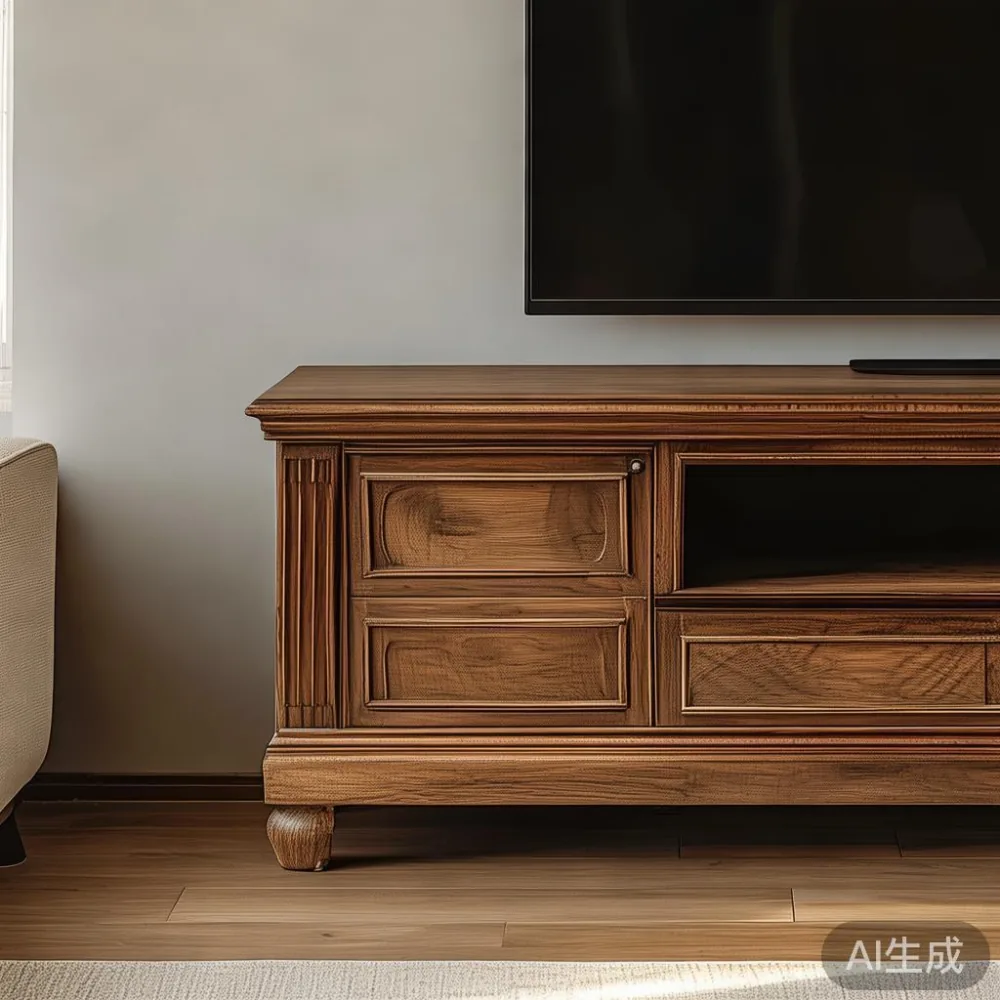
Singapore sits in a band where the average annual relative humidity hovers between 78% and 84%, and daily peaks in Bedok, Punggol, and Bukit Merah can climb to 90% between March and October. Every solid wood TV cabinet, bed frame, dining table, wardrobe, and nightstand in your home is quietly responding to that moisture, expanding when the air is wet and shrinking when your air-con runs for six hours at 22°C. Understanding this movement is the difference between furniture that lasts fifteen years and furniture that cracks in two.
Why Singapore's Climate Is Harder on Wood Than Most Buyers Realise
Wood is hygroscopic. It absorbs and releases water vapour until it reaches equilibrium with the surrounding air, and the fibre direction matters. A 180 cm wide solid oak TV cabinet panel can move 4 mm to 6 mm across its width between January (dry season, indoor humidity around 55%) and July (rainy season, indoor humidity often 75%). Over a full year that is a lot of quiet movement, and the joins, hinges, and drawer runners take all the stress.
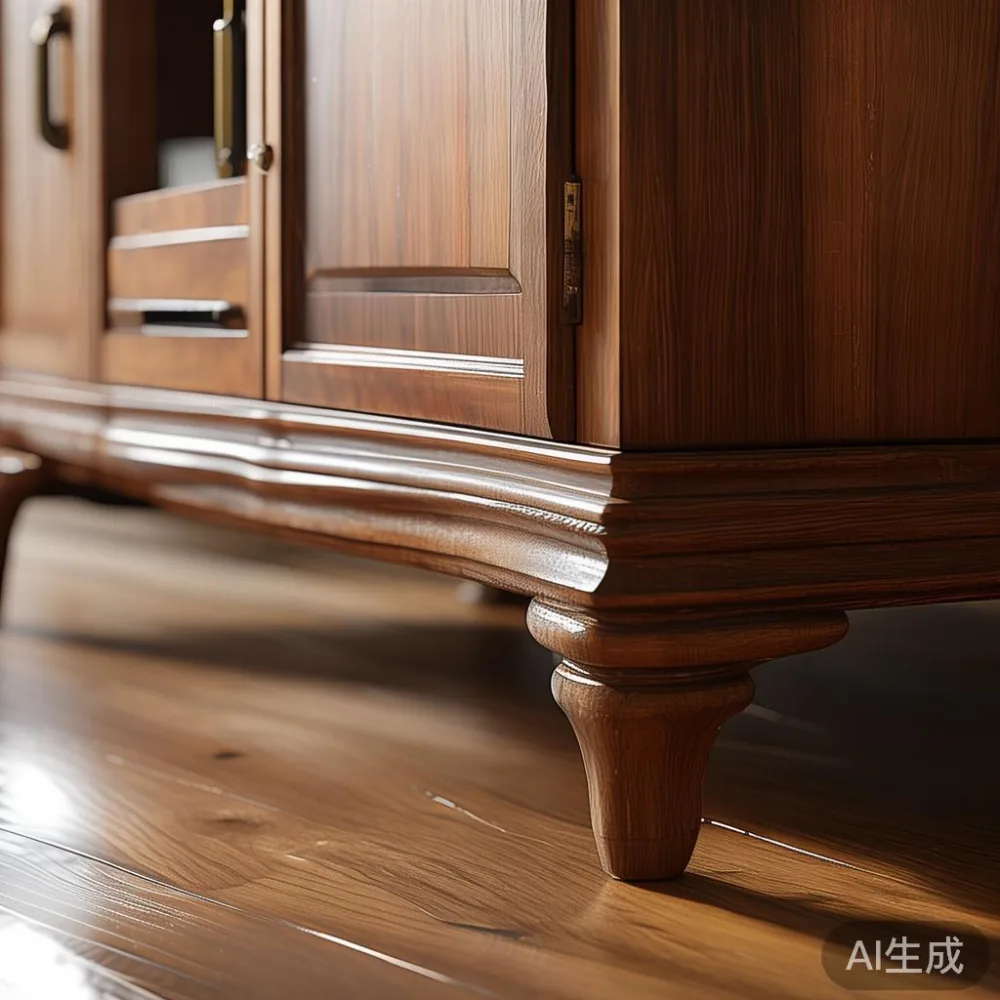
I measured a client's Punggol condo unit last July. The living room held 78% RH at 9 a.m. with the windows closed, 65% at 4 p.m. after the air-con had been on for three hours, and back up to 80% by 11 p.m. when the system switched off. That is a 15-point swing in a single day. A solid wood dining table sitting in the middle of that room will literally change dimension between your morning kopi and your dinner.
The two specific issues I see weekly in Singapore are: panel shrinkage, where the stiles of a TV cabinet door pull away from the rails by 1 mm to 3 mm and leave a pale line, and cupping, where a wide marble-topped console bows upward at the edges because the underside dried faster than the top. Both are normal, both are preventable, and both are fixable.
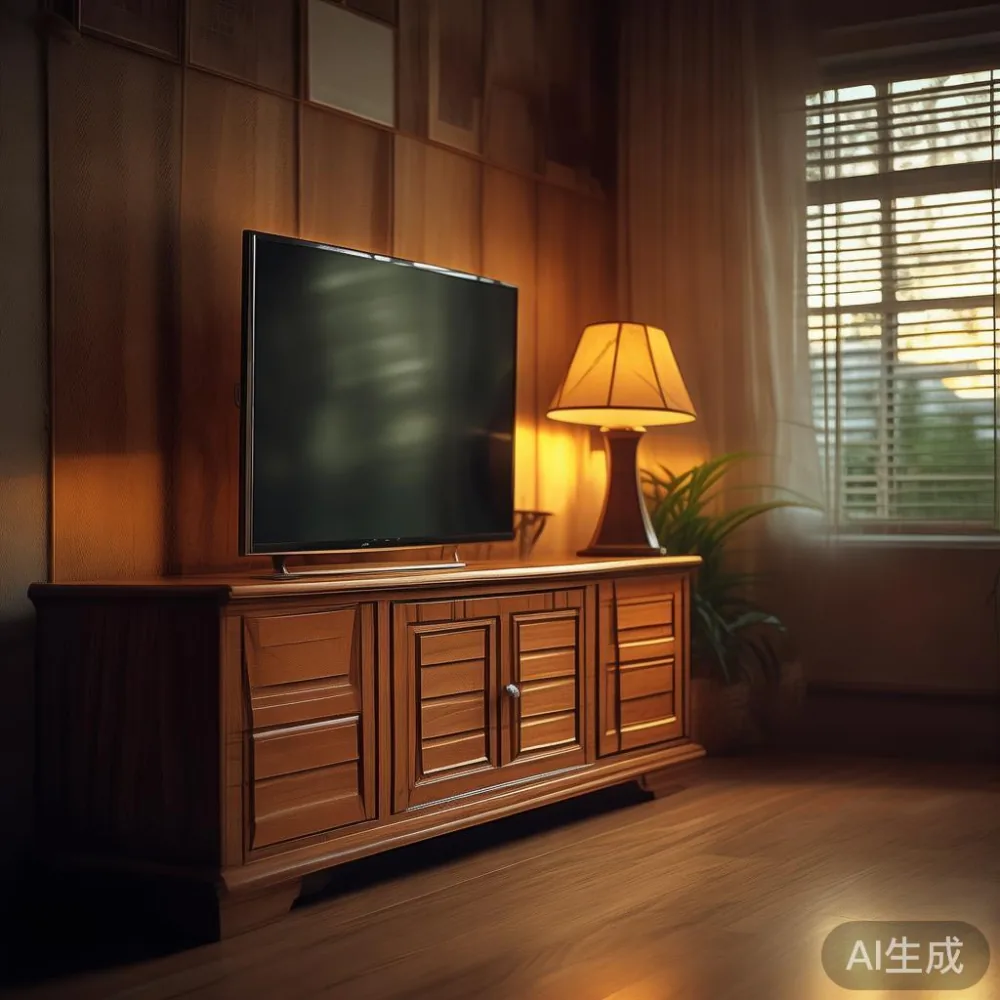
How Humidity in Southeast Asia Affects Wood Furniture: The Three Failure Modes I See Most
After eight years of weekly site visits across HDB blocks in Toa Payoh, condo units in River Valley, and landed houses in Bukit Timah, I have grouped the problems into three predictable categories.
1. Joint separation. Mortise and tenon joints on a solid wood bed frame or wardrobe can open by 2 mm to 4 mm when humidity drops. The fix is almost never glue. The fix is stabilising the indoor climate between 50% and 65% RH.
2. Cracking and checking. These are the small splits you see on the surface of a dining table near the end grain. They appear when wood loses moisture too quickly. A dehumidifier set to 55% will prevent 9 out of 10 of them.
3. Hardware misalignment. Hinges on a wardrobe door, drawer slides on a nightstand, and soft-close adapters on a TV cabinet flap are manufactured to within 0.5 mm. When the cabinet body swells, the doors rub. A simple hinge screw adjustment takes two minutes and a Phillips driver.
The good news: I have inspected pieces I shipped to Singapore in 2015 that look brand new today because the owners controlled humidity. And I have inspected identical pieces that look twenty years old because the owners did not.
How do I style a garage storage in a modern Singapore home?
Style a garage storage system in a modern Singapore home by anchoring it against the back wall at 30 cm depth, choosing powder-coated aluminium carcasses that resist 85% RH, and leaving a 5 cm airflow gap between the units and the wall so moisture can escape instead of pooling behind the cabinet.
That answer comes from a landed house in Serangoon I worked on last quarter, where the family needed somewhere for golf bags, three bicycles, and fourteen boxes of festive décor. We installed a 2.4 m run of modular shelving with solid paulownia shelves (paulownia is roughly 30% more dimensionally stable than oak at high humidity) and the client has reported zero warping since.
If you are in an HDB, your storey shelter is probably 1.2 m deep and 2.4 m wide. Measure the lift opening before you buy anything bigger than 80 cm wide. Standard HDB passenger lifts are 1.1 m wide by 1.4 m deep with a 1.9 m door height, and service lifts in most blocks are 1.3 m by 1.7 m. A flat-packed Post-modern nightstand for HDB flat at 45 cm wide will sail through any lift in Tampines or Bedok, but a pre-assembled 2 m wardrobe will not.
The Numbers Buyers in Singapore Should Actually Look At
Moisture content is the most important number on the spec sheet, and almost nobody asks for it. A solid wood TV cabinet built in Foshan for our brand is dried to 8% to 10% moisture content before assembly. Singapore indoor equilibrium is roughly 11% to 13%, so the piece will pick up a small, controlled amount of moisture and stop. A cabinet built for the European market at 6% to 8% will arrive in Singapore and physically grow. That is one reason I always request factory moisture reports.
Other numbers worth checking:
- Joinery tolerance: 0.3 mm to 0.5 mm on a quality mortise and tenon. Anything looser and you will see gaps within a year.
- Top thickness for marble tables: 18 mm to 25 mm of solid substrate below the stone. Thinner and the stone cracks at the corners when the wood moves.
- Drawer bottom thickness: 9 mm solid plywood with a tongue-and-groove fit. Anything thinner will sag under five years of cable boxes and remote controls.
- Finish thickness: Two coats of conversion varnish at 60 microns to 80 microns total blocks roughly 40% of seasonal moisture exchange. French light luxury finishes we apply run a touch thicker for that reason.
- Weight capacity: A 180 cm TV cabinet should hold at least 80 kg of TV and electronics with a safety factor of two.
None of these numbers are secrets. Ask for them. A factory that measures them will measure everything else.
What I Did in My Own Tampines Apartment After That Visit
I went home that evening and bought a 35 SGD thermo-hygrometer from a shop in Bedok. I placed one sensor on the TV cabinet, one above the kitchen, and one in the bedroom. Over the next two weeks I logged readings every morning at 7 a.m. The living room averaged 72% with the windows closed, the bedroom averaged 68% because of the air-con, and the kitchen peaked at 84% when I was cooking rice. I then bought a 280 SGD dehumidifier for the living area and set it to 55%. My walnut TV cabinet, which had been slightly sticky on the drawers in the mornings, now slides like it did the day it arrived.
If you want a smaller change first, try this: keep your air-con running on dry mode for 30 minutes before bedtime. A 9000 BTU unit pulls roughly 0.8 L of water from the air per hour in Singapore conditions. That single habit drops indoor humidity by 8 to 10 points and saves your solid wood bed frame from the worst of the seasonal swing.
French Light Luxury, American Light Luxury, and Why the Finishes Differ
French light luxury pieces tend to use closed-pore finishes, often a high-gloss lacquer or a hand-rubbed shellac. These look spectacular under the spotlights in a Punggol condo living room, but they are also less forgiving. Any movement in the substrate shows up as a hairline crack in the finish. We compensate by using a 25 mm engineered core beneath the visible solid wood veneer on cabinet sides, which moves 60% less than solid planks.
American light luxury tends toward open-pore oil finishes that let the wood breathe. They are warmer, they mark with use, and they are dramatically easier to repair. A small scratch on an oiled oak TV cabinet disappears with a 25 SGD tin of hard wax oil and twenty minutes of work. A scratch on a lacquered piece needs a technician.
Post-modern light luxury is the category I find most interesting right now. It mixes the two traditions: matte lacquers on cabinet fronts, oiled solid wood on tabletops, and often a marble table insert that anchors the design. The combination hides seasonal movement because the eye reads stone as stable, even when the wood is quietly breathing next to it.
Delivery, Lift Access, and the Singapore-Specific Logistics Nobody Mentions
A 200 cm solid wood TV cabinet in a single carton will weigh 65 kg to 90 kg depending on the species. Most HDB corridor widths in Tampines and Bedok are 1.2 m to 1.5 m, and the turn at the lift lobby is often tight. Two delivery men carrying the carton vertically through a 90 cm turn is realistic. Three men carrying it horizontally is not. Tell your supplier the unit number, the floor, and the lift type in advance. We ask every Singapore customer for these three numbers before we confirm a delivery slot.
Standard delivery to a Singapore address runs 18 to 28 days from Foshan by sea, plus 3 to 5 days for last-mile. Free shipping kicks in at roughly US$350 worth of goods, which is about SGD 480 at current rates. For GST, our shipping partner files the import paperwork and adds the 9% on top of the landed cost, so the price you see at checkout plus shipping plus 9% is the final figure. No surprise taxes on delivery day.
A 14-Day Window, a 10-Year Promise, and Why They Matter in Humid Climates
A 14-day return window is the right length for Singapore. It gives the wood two full weeks to respond to your indoor climate. If a piece is going to warp, twist, or crack, it will usually show the first signs by day 10. A shorter window of three to five days hides the problem. A longer window of 60 days sounds generous but actually masks issues that should be caught early.
A 10-year structural warranty covers the things humidity can break: joint separation, frame cracking, drawer runner failure, and hinge corrosion. It does not cover finish wear, which is a separate conversation. Ask your supplier to spell out which is which in writing. We do, and the response from Singapore customers since we started the 10-year programme has been the single strongest signal that long warranties actually matter in this region.
Lifetime refinishing is the quiet hero. A solid wood TV cabinet from our line can be sanded, re-stained, and re-finished three to four times across its life. Each refinish removes 0.5 mm to 1.0 mm of surface material and brings the colour back to factory fresh. I have refinished a 2015 dining table for a client in Bukit Batok last year and she sent a photo of the finished piece sitting next to the new TV cabinet she bought from us. They matched.
Care Habits That Take Less Than Five Minutes a Week
Five small habits will carry your furniture through Singapore's humidity:
- Wipe the TV cabinet top with a dry microfibre cloth every Sunday. Moisture left to sit is the enemy.
- Keep electronics 10 cm away from cabinet sides. A cable box running for six hours radiates enough heat to dry the wood unevenly.
- Run the air-con on dry mode for 30 minutes after cooking dinner. Kitchens are the wettest room in any HDB.
- Rotate decorative objects on the dining table monthly. Even wear looks better than uneven wear.
- Check hinge screws every six months. A 30-second Phillips driver turn prevents a 30-minute door realignment later.
None of these cost anything. All of them extend the life of every solid wood piece in your home by years.
What to Ask Before You Click Buy
Five questions, in order:
- What is the moisture content of the wood at the time of packing?
- What is the species, and where was it kiln-dried?
- Is the back panel solid wood, plywood, or MDF? (Plywood is the right answer in Singapore.)
- What is the joinery method on the TV cabinet carcass? (Mortise and tenon, dowel, or biscuit. Avoid staple-only construction.)
- What does the warranty cover, in writing?
A supplier who answers these in one email is a supplier worth buying from. A supplier who answers with vague generalities is a supplier worth avoiding.
I have spent the last eleven years shipping solid wood furniture out of Foshan and watching it land in Singapore living rooms that range from a 60 sqm HDB flat in Bedok to a 280 sqm condo in the River Valley. The pieces that age well are the pieces that owners understood. The pieces that fail are the pieces that owners treated like decorative objects instead of what they are: living, breathing, slowly moving wood. Treat yours well, control the humidity between 50% and 65%, and a solid wood TV cabinet from MIDHILL will still be anchoring your living room when your children move into their own HDB flats in Tampines or Punggol.