TV Cabinets, Open Space, and the Art of Designing Small Singapore Homes Without the Clutter
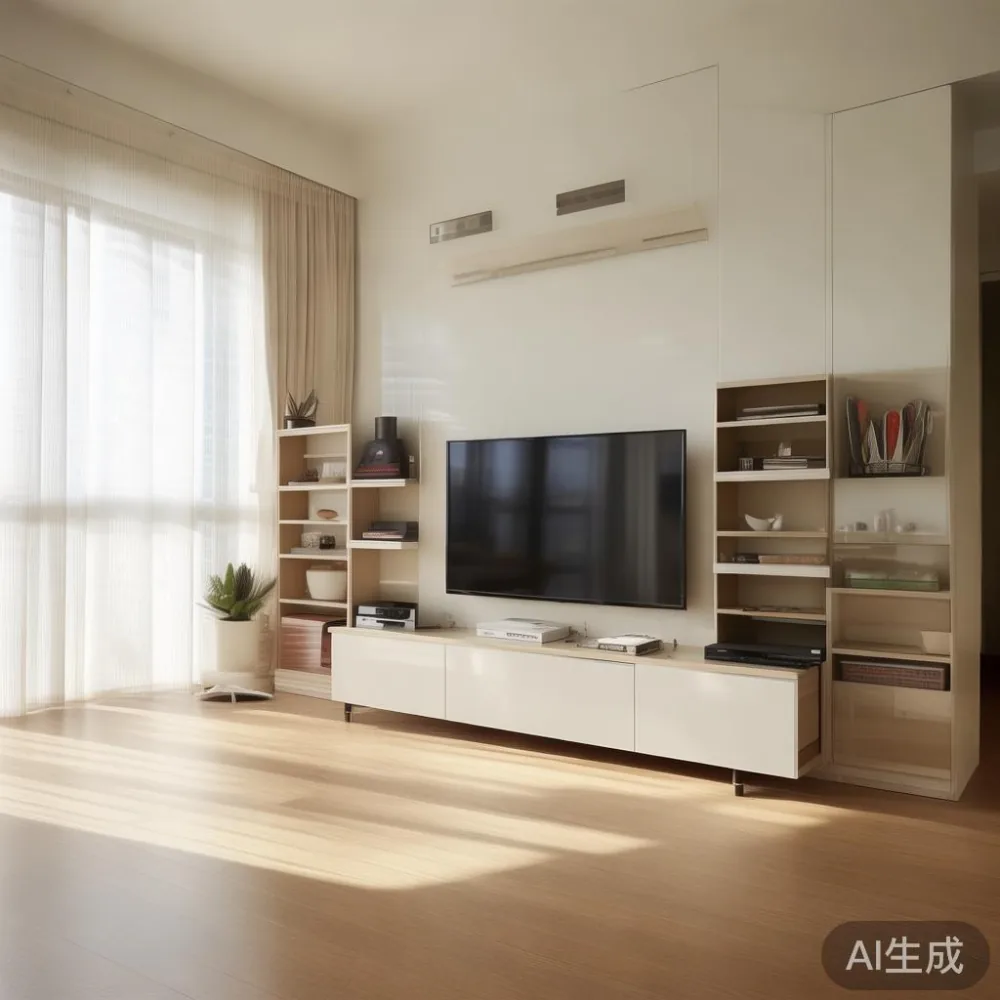
Last month I visited a colleague's four-room HDB flat in Tampines that she had finally, after three years, gotten around to furnishing. The corridor outside her unit is exactly 1.2 m wide, the lift opening is 0.9 m, and her living-dining area runs roughly 4.2 m by 3.1 m. She had somehow squeezed in a 2.4 m sofa, a six-seater dining table, two wardrobes, and a king-size bed frame, and the result looked like a warehouse after a stocktake. The single piece of furniture that pulled the room back from the edge was her tv cabinet — a slim 180 cm solid-wood unit with sliding doors, painted off-white, that stored everything from games controllers to her collection of 38 books. That piece taught me something I now repeat to every client: in a small Singapore home, the tv cabinet is not a media accessory. It is the wall, the storage wall, and the visual anchor, all in one. Get it right and the rest of the room behaves. Get it wrong and every other piece you buy will look like it is fighting for air.
Why Small Singapore Flats Struggle More Than Hong Kong or Tokyo Studios
Singapore's public and private housing has unusual constraints that make furniture selection harder than in most cities. A typical four-room HDB flat offers about 90 sqm of floor area, but the usable living space is closer to 65 sqm once the kitchen, two bathrooms, and three bedrooms each averaging 9 to 11 sqm are subtracted. Ceiling height under the HDB standard is 2.8 m, which sounds generous until you compare it to the 3.6 m ceilings common in Punggol's newer condo developments — and your wardrobe still has to be 2.4 m tall to clear the aircon ledge.
Delivery is the second constraint. The bedok HDB lift on most 1970s and 1980s blocks measures 1.5 m deep by 1.3 m wide with a door opening of 0.9 m. A flat-pack queen bed frame usually arrives in a box of 205 cm by 35 cm by 20 cm, which fits diagonally, but a solid-wood headboard wider than 1.6 m will not. I watched two movers last quarter dismantle a customer's dining table on the corridor floor because the lift simply could not accept it. That customer later switched to a 140 cm round table and gained 2 sqm of circulation space. The lesson: measure your lift opening before you fall in love with a 1.8 m solid-wood dining table.
The third constraint is cost-of-living tax, literally. With Singapore's 9% GST applied to imported furniture from China, the landed price of a 6,000 yuan sofa rises from a clean 8,200 yuan to roughly 8,940 yuan before freight and duty. A locally stocked solid-wood sofa from a Foshan factory that quotes in USD and ships consolidated freight through a Malaysian port can land cheaper than a similar piece bought off a Jurong warehouse shelf.
The First Rule of Small-Apartment Styling: Pick the TV Cabinet Before You Pick Anything Else
This sounds counter-intuitive. Everyone wants to start with the sofa, the bed frame, or the dining table, because those are the pieces we sleep on, sit on, or gather around. But in a small flat, the tv cabinet dictates sightlines, cable runs, storage volume, and the visual weight of the longest wall in the room. Choose it first and everything downstream gets easier.
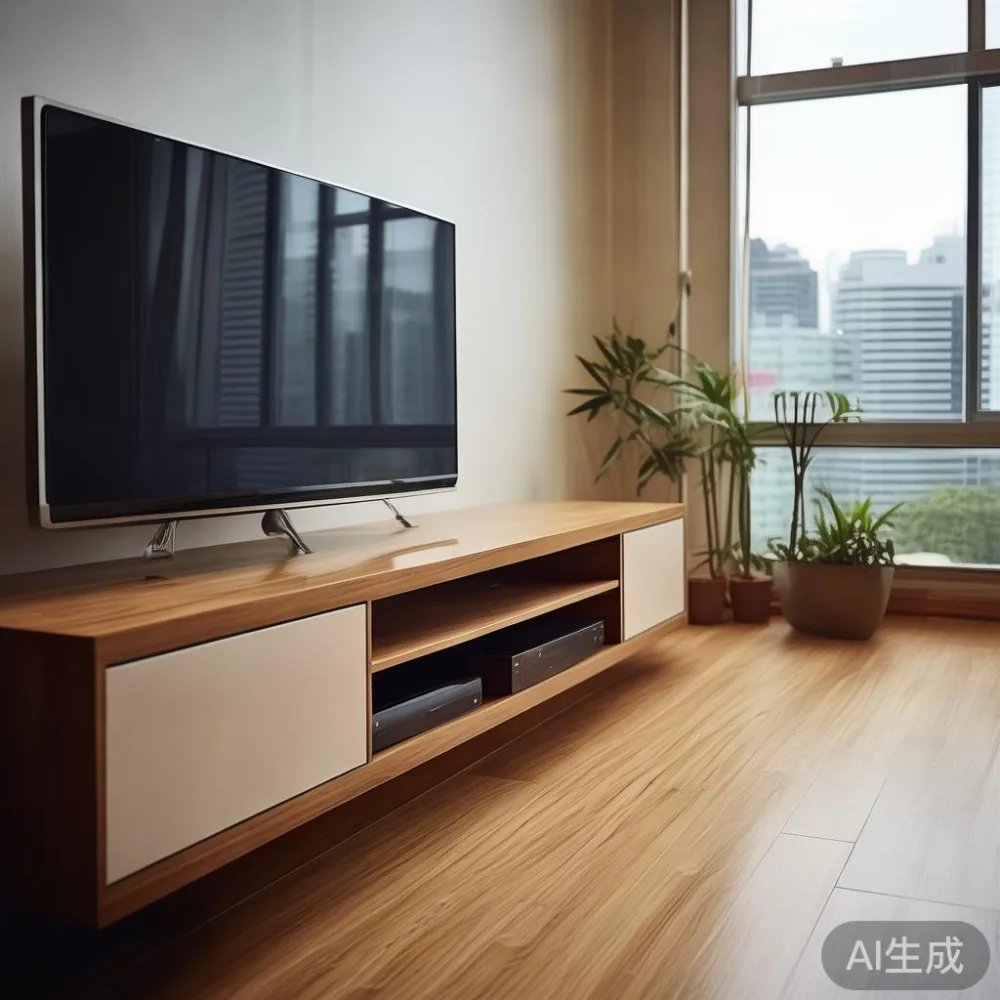
Three numbers drive the choice. Cabinet height should sit 5 to 10 cm below the bottom of the wall-mounted TV, so for a 55-inch TV mounted with the screen center at 110 cm the top of the cabinet should not exceed 60 cm. Cabinet depth in a small flat should not exceed 38 cm, because anything deeper pushes the TV set forward of the seating plane and forces neck tilt. Cabinet length depends on wall width: in a typical 3.1 m HDB living wall a 160 to 180 cm unit works, while a 2.6 m Punggol condo wall suits a 130 to 150 cm unit.
Storage volume is where the real win lives. A two-door solid-wood TV cabinet measuring 150 cm wide by 40 cm deep by 50 cm tall holds roughly 0.3 cubic meters of concealed storage, which is enough for two set-top boxes, a soundbar, 40 board games, and a stack of magazines. If you are tempted by a model with open shelving instead, calculate the visual noise: each open shelf displays roughly 6 to 8 items, and the human eye reads clutter starting at item five. Closed doors hide the noise and let the eye rest.
What About the Rest of the Room? A Room-By-Room Sizing Map
Once the tv cabinet is specified, the other pieces fall into a measured rhythm. In the living area, an armless or low-arm solid-wood sofa at 78 to 85 cm seat depth saves 25 to 30 cm of floor length versus a traditional rolled-arm sofa. A three-seater at 200 cm instead of 240 cm preserves a 60 cm walkway between sofa and tv cabinet, which is the minimum the Building and Construction Authority recommends for residential circulation.
The dining area in a small flat usually sits 60 to 80 cm from the sofa back or against a window. A four-seater round dining table of 100 to 110 cm diameter seats four adults comfortably with 55 cm of elbow room each, while a rectangular 120 cm by 70 cm table saves floor area when pushed against a wall. Marble tops are tempting, but a 120 cm solid-marble dining table weighs between 78 and 95 kg, which complicates delivery on the narrow corridor of a Bedok walk-up and increases the shipping fee by roughly 80 to 120 SGD versus an equivalent wood-top table. A sintered-stone or quartz composite at 22 mm thickness cuts that weight in half.
The bedroom requires the most precise calculations. A queen bed frame at 152 cm by 198 cm plus a 6 cm clearance on three sides needs a wall of at least 240 cm in length, and the door swing adds another 60 cm. A wardrobe 180 cm wide by 60 cm deep by 220 cm tall consumes 1.08 sqm of floor area and stores roughly 2.4 cubic meters. In the narrowest rooms a 120 cm-wide two-door wardrobe paired with a wall of 8 to 10 drawers under the bed frame covers the same volume at half the visual mass. A nightstand 45 cm wide by 40 cm deep fits beside the bed only if the bed-to-wall gap is at least 50 cm; anything tighter and you should select wall-mounted sconces instead.
Is a French Provincial Sofa Worth It in a 700-Sqft Condo?
The question comes up constantly because the look is everywhere on Pinterest, and the answer is conditional. A French provincial sofa carries curved arms, cabriole legs in beech or walnut, and linen-blend upholstery in ivory, dusty rose, or pale celadon. The aesthetic rewards space and light. In a compact Singapore condo the style works only if three conditions are met: the ceiling height is at least 2.9 m, the wall behind the sofa is unbroken for at least 2.6 m, and the room receives at least four hours of direct or reflected daylight. If your unit is on a low floor of a Bedok block hemmed in by the next block 18 m away, the curves will read as fussy rather than graceful.
Knowing how to choose French provincial sofa pieces that suit small rooms comes down to scale. Look for seat depths under 60 cm, arm heights of 18 cm or less, and leg clearances of at least 15 cm so the eye sees floor beneath the piece. Ask the supplier to confirm the inner frame is solid rubberwood or ash rather than plywood-and-foam, because a poorly built frame will twist at the joins within 18 months in Singapore's 80% year-round humidity. For customers who want the look without the volume, an American light luxury sofa with mid-century lines, a 78 cm seat depth, and tapered legs at 22 cm height reads as leaner and uses 0.4 sqm less floor area. For customers pulled between European curves and Italian restraint — the classic European light luxury bed vs Italian light luxury bed question — the Italian version typically uses cleaner silhouettes and 4 to 6 cm thinner headboards, which suits a 2.8 m ceiling where a provincial headboard would dominate.
How Do You Keep a Guest Room From Looking Like a Storage Overflow?
Small Singapore households often keep a second bedroom as a dual-purpose space, and the room ends up holding the spare bed, a stack of boxes, and a treadmill. The fix is a discipline, not a piece of furniture, and the discipline is to give that room one identity, not three. Pick one of three modes: a guest room, a study, or a hobby room — and dress it for that. If you are leaning toward Boho for guest room styling, choose a low solid-wood daybed 90 cm wide that doubles as a single sofa, pair it with a rattan nightstand in place of a side table, and ground it with a 160 cm by 230 cm jute rug. The Boho palette of cream, terracotta, and aged brass hides the visual weight of folded luggage tucked under the daybed.
When my cousin converted her Punggol condo's third bedroom into a guest room last October she spent 1,150 SGD on a solid-wood daybed with a trundle, two linen-blend cushions, a small wall-mounted reading lamp, and a 110 SGD rattan mirror from a local maker. The room, which had been storing 14 boxes of baby clothes plus an exercise bike, now reads as a deliberate, calm space that guests actually want to sleep in. Total floor mass reduced by an estimated 35 kg once the trundle was deployed.
Which Light Luxury Direction Suits a Small Singapore Home?
Three styles compete for the small-space customer, and each has trade-offs. French light luxury leans into curves, carved aprons, and brass hardware; it wants at least 16 sqm of clear living area to breathe. Post-modern light luxury does the opposite, leaning into flat planes, high-gloss lacquer, and geometric handles; it suits the tightest 12 sqm because the eye reads it as one block rather than six details. American light luxury sits between, pairing solid walnut or ash frames with low, generous cushions and brushed-nickel hardware — the silhouette is forgiving in rooms as small as 14 sqm.
Customers comparing an American bed vs Italian light luxury bed often settle on the American build for everyday durability, because a hardwood American frame with mortise-and-tenon joints tolerates the daily fold of a duvet without creak, while an Italian frame often prioritises a thinner headboard panel that looks better but flexes over years. The Italian win comes back through freight efficiency: a stripped-down Italian bed frame in flat-pack weighs 38 to 45 kg versus 60 to 70 kg for an American equivalent, which matters when the freight quote is roughly 18 SGD per kilogram from a Foshan factory to a Jurong container yard.
For shoppers browsing for sale Italian light luxury furniture online, the practical filters are: (1) confirm the factory offers a structural warranty of at least 10 years, (2) ask for the kiln-dried moisture content of the main timber — anything above 12% will move in Singapore, (3) request a CAD drawing of the disassembled crate dimensions before paying the 30% deposit, and (4) confirm whether refinishing is included, because lifetime refinishing is rare and saves roughly 280 to 420 SGD per piece over a 15-year ownership.
Where Does MIDHILL Fit Into This Picture?
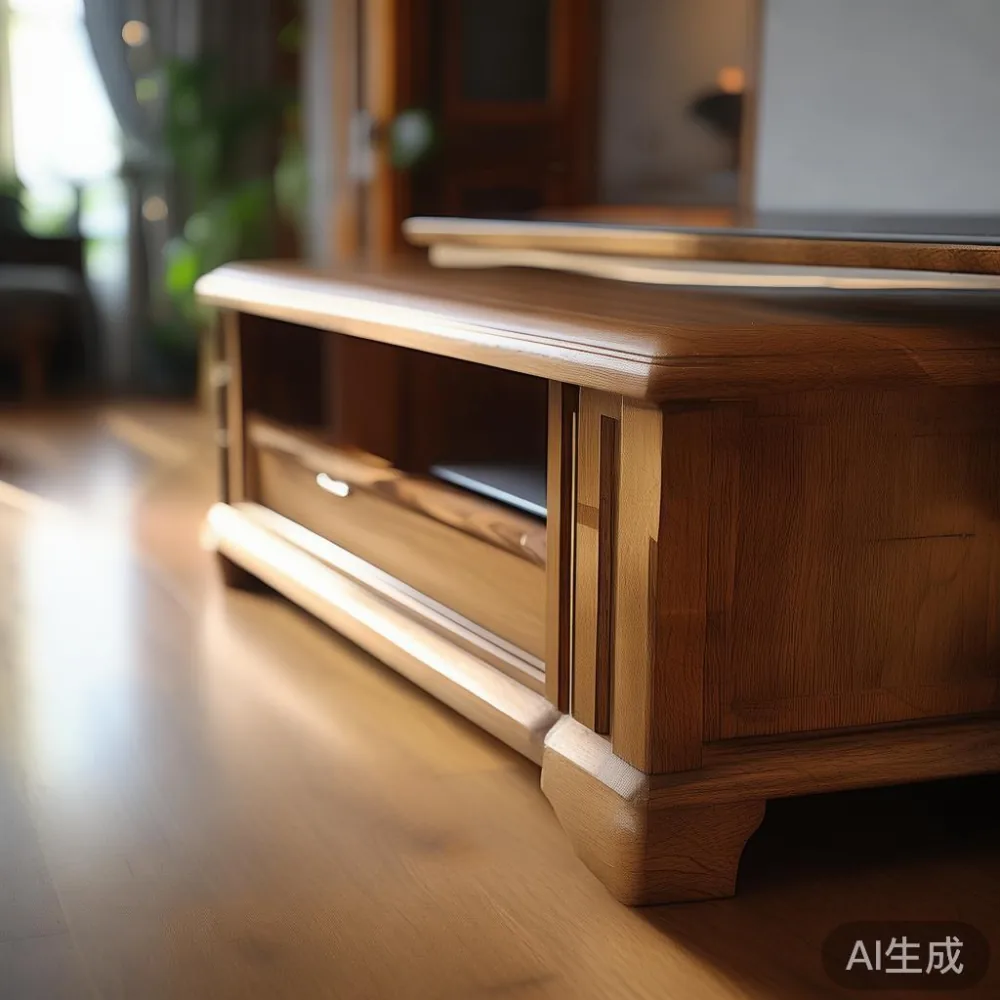
MIDHILL is one of the Foshan makers I tend to recommend to friends because the company has shipped solid-wood furniture to buyers in Tampines, Bukit Batok, and Tuas since at least 2012, and the consistent feedback I hear is that the crates arrive with the timber still under 11% moisture content. Their MIDHILL coffee table in 110 cm solid ash, which I saw in a friend's Yishun condo three weeks ago, came crated in a 117 cm by 80 cm by 18 cm box that sailed through the lift without disassembly. The same friend had bought a TV cabinet from them two months earlier — a 165 cm white-oak unit with two drawers and two sliding doors — and reported that the freight from the Shenzhen consolidation warehouse to her door ran 380 SGD including GST and that the lead time was 28 days from order to delivery, with an additional 30 SGD charged for a Punggol condo's narrow service road. The 10-year structural warranty document arrived in the same envelope as the invoice, and the lifetime refinishing clause is offered on the dining table and bed frame she bought alongside.
For anyone measuring a 90 sqm flat and wondering which pieces to spend on, the rough budget allocation I talk customers through is 25% on the bed frame, 20% on the TV cabinet and storage wall combined, 18% on the sofa, 15% on the dining table and four chairs, 10% on wardrobes, 7% on nightstands and side tables, and the remaining 5% on rugs, lamps, and a coat of refinishing reserve. A 700 sqft condo furnished to that template with a 4,500 SGD bed frame, a 3,600 SGD TV cabinet, a 3,200 SGD solid-wood sofa, a 2,700 SGD dining set, and 4,000 SGD of supporting pieces lands at roughly 18,000 SGD before GST — a realistic mid-market number for a small Singapore home in 2025, and one that leaves headroom for delivery surcharges of 200 to 450 SGD when the lift opening is below 1 m or the corridor turn is sharp.
Frequently Asked Questions
Does a TV Cabinet Really Belong at the Top of the Furniture List?
Yes, for three reasons specific to small flats. It sets the longest sightline in the room, it absorbs more clutter per square foot than any other piece because of its low shelf and tall cabinet volume, and it ties together the wall finish, the TV size, and the seating distance. Start here, then build around it.
What Is the Smallest TV Cabinet Depth That Still Works?
35 to 38 cm is workable for soundbars up to 1 m wide. Anything shallower than 32 cm cannot house a subwoofer or gaming console without ventilation issues.
How Do I Know If a Solid-Wood Piece Will Survive Singapore's Humidity?
Ask the supplier for the kiln-dried moisture content and look for 8 to 12%. Anything higher will expand when the aircon turns off overnight. A 10-year structural warranty from the manufacturer is also a reasonable proxy for confidence in the drying process.
Can I Order Made-to-Measure Without Doubling the Price?
Customisation adds roughly 18 to 30% to the unit price for a Foshan workshop, which translates to roughly 320 to 540 SGD on a TV cabinet. For pieces that fit a non-standard niche or a lift that cannot accept stock widths, the premium is usually worth paying.
How Long Does Shipping Take From Foshan to Singapore?
Sea freight via a Shenzhen or Hong Kong consolidation warehouse typically takes 18 to 28 days door-to-door, plus 3 to 5 days for customs clearance and the 9% GST settlement. Air freight cuts the transit to 5 to 9 days but adds 12 to 16 SGD per kilogram.
Styling a small apartment is less about buying less and more about deciding what each piece must do. The TV cabinet is the workhorse, the sofa is the gathering point, the bed frame is the silent centrepiece, and the dining table is the daily office. Measure the lift, measure the corridor, measure the wall, and let the numbers — not the catalogues — set the agenda.