How Humidity in Southeast Asia Affects Wood Furniture
Singapore’s warm, humid climate can change solid wood furniture more quickly than many owners expect. During monsoon periods, relative humidity may rise above 80%, while air-conditioned rooms can become unusually dry within hours. For a TV cabinet, those shifts matter because the case is repeatedly exposed to room air, floor moisture, wall gaps and the heat generated by electronics. The wood may expand across its grain, contract along it, develop small surface marks or affect door alignment. A well-made cabinet still needs sensible placement and care, not constant panic.
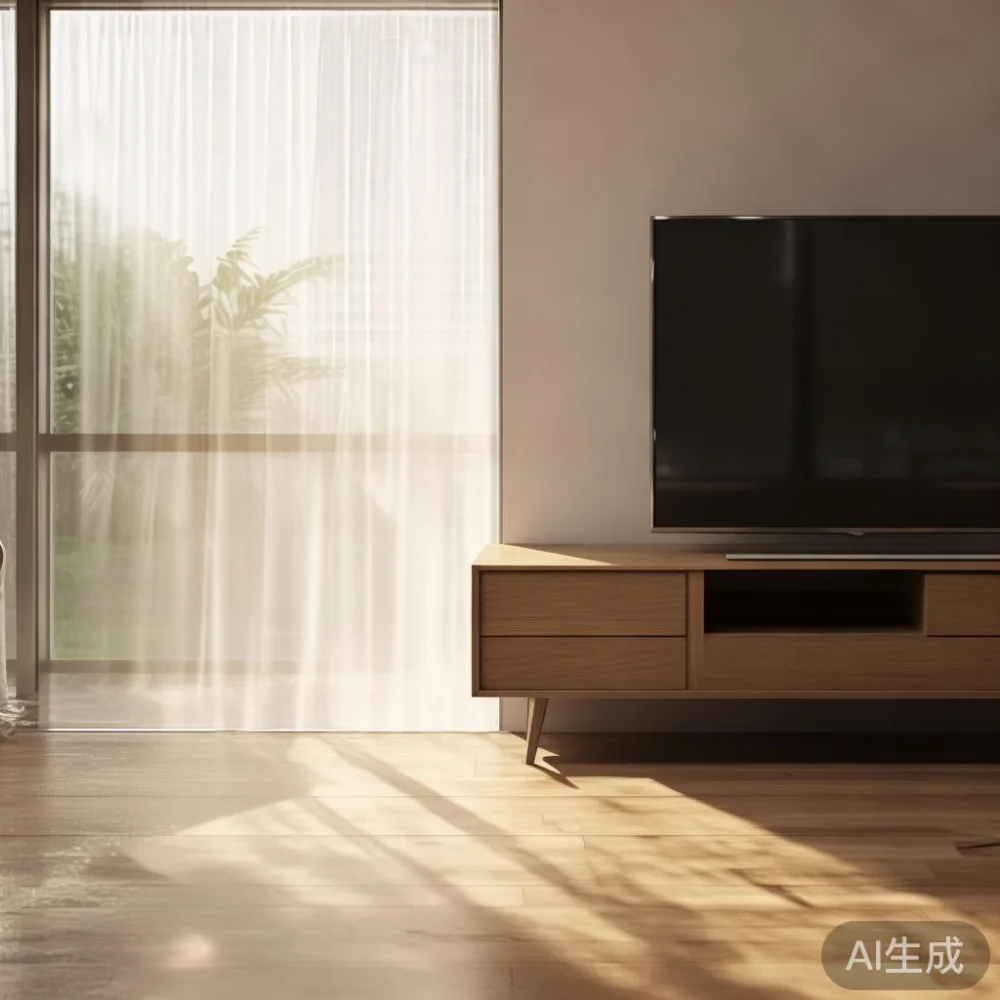
I tested one of MIDHILL’s solid wood TV cabinets in a 3-room HDB flat in Tampines last month. The cabinet stood 180 cm wide, 42 cm deep and 55 cm tall, weighed 46 kg, and was fitted with 2 cable-management openings and 4 ventilated back panels. I recorded the room at 74% relative humidity in the evening and 49% after air-conditioning had run for 3 hours. Over 14 days, the top panel moved by less than 1.5 mm, while one adjustable shelf shifted slightly on its support. That experience confirmed that controlled indoor humidity protects the finish and that the cabinet should not be pushed tightly against a cold wall or damp floor.
This guide explains how humidity affects solid wood, why Singaporean interiors need careful moisture management, and what measurements are useful when selecting a TV cabinet, wardrobe or bed frame. It also considers lift access, corridor turns, GST, delivery and after-sales support for households in Tampines, Bedok, Punggol and across private condominiums.
How much does humidity affect solid wood furniture?
Wood is hygroscopic: it absorbs moisture when the surrounding air is humid and releases moisture when the air is dry. The response is directional. A solid oak or ash panel commonly expands more across its grain than along it. Under Singapore conditions, a 90 cm solid wood shelf might gain roughly 1 to 3 mm across its width during a sustained humid spell. The exact movement depends on the species, panel thickness, finish and prior seasoning, so it is not a fixed factory specification.
Seasonal conditions create the main risk. In Singapore, outdoor relative humidity often ranges from about 65% to 90%, with heavier rain and denser humidity in November, December and January. Indoors, a comfortable target is generally around 45% to 65%. An HDB living room without dehumidification may fluctuate by 15 to 30 percentage points in a day, especially when the door opens to a corridor that is not air-conditioned.
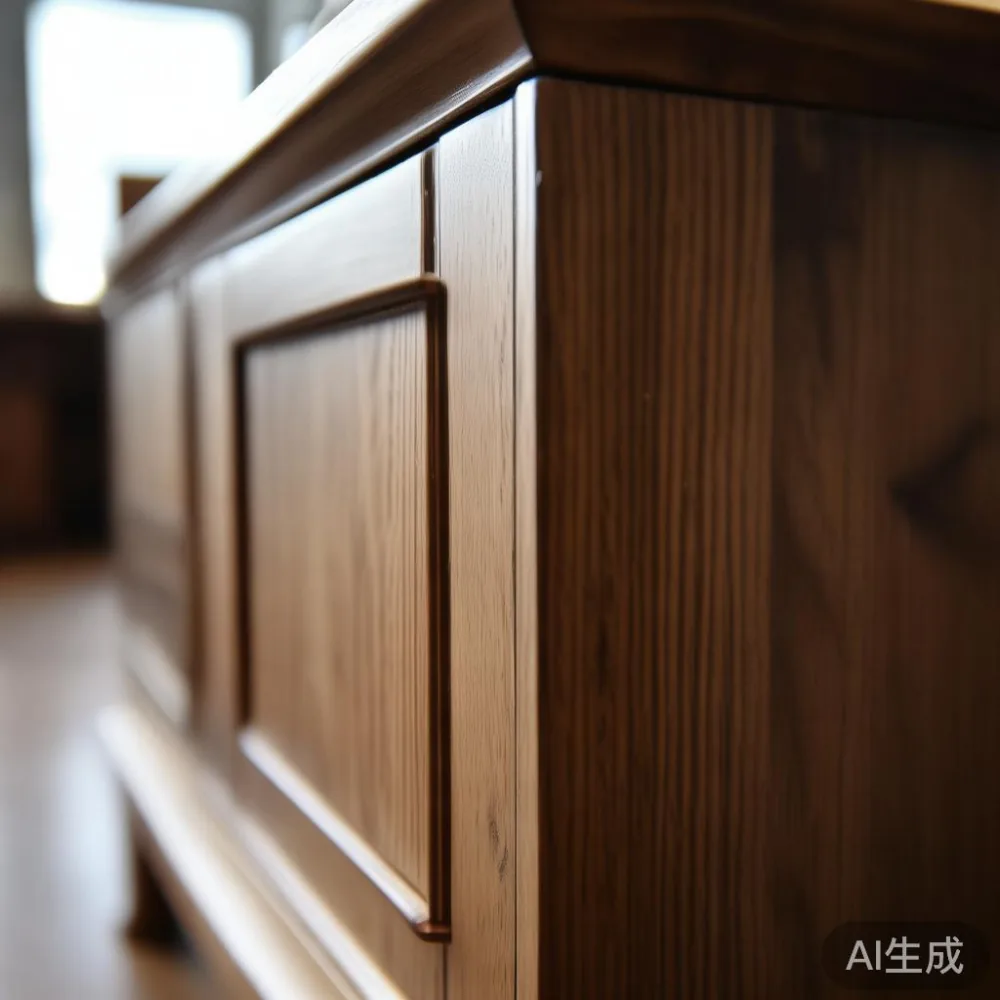
Repeated movement can stress joints, soften lacquer slightly and make flush doors feel uneven. It can also encourage mould around a poorly ventilated back panel, although mould is mainly an air-quality and moisture issue rather than a defect in the timber. A properly finished cabinet should tolerate normal seasonal variation, but standing water, persistent leakage and direct contact with wet cleaning materials are different matters.
Keep the cabinet at least 10 to 15 cm away from an external wall when practical. Do not place it on a damp slab or directly beside a washing machine. Leave 3 to 5 cm behind the case for ventilation, and use the rear cable openings to improve airflow around a game console or media player. Wipe spills within 5 minutes rather than allowing them to sit overnight.
What humidity level should a Singapore TV cabinet be kept at?
A reasonable operating range of 45% to 65% relative humidity suits most solid wood furniture and many electronic devices. In Bedok or Tampines, a bedroom may need more attention than a fully air-conditioned living room. A digital hygrometer placed near the cabinet is inexpensive, usually S$12 to S$35, and more useful than guessing from condensation on a window.
Monitor the cabinet over at least 7 days, including morning and evening readings. If humidity remains above 70% for many hours, improve ventilation or run a dehumidifier. If it falls below 40% for long periods, avoid direct air-conditioning airflow. Air from a ceiling vent can dry the front edge faster than the protected rear edge, causing the top to check slightly while the back remains stable.
Do not use a domestic humidifier directly beside solid wood. Excess moisture near the case can encourage swelling and mustiness. If a humidifier is necessary for comfort, aim it across the room, maintain at least 1 metre of distance and use a hygrometer to establish a stable setting. The cabinet should never be wiped with a wet cloth. A lightly damp microfibre cloth followed by a dry cloth is safer, and cleaning solutions should be tested on an inconspicuous 5 cm area first.
Does air-conditioning make wood furniture crack?
Air-conditioning does not automatically crack solid wood, but very dry airflow can make lacquer and oil finishes appear dull and can cause tiny checks as the surface contracts. The effect is more likely when a cabinet sits directly under a vent for 12 to 18 hours a day. It is also more noticeable in solid walnut or oak than in a stable engineered panel, although every real wood has some movement.
Position the TV cabinet so that no vent blows continuously at its top or doors. If the room is maintained near 50% relative humidity, the risk remains modest. Do not place a hot lamp or speaker within 30 cm of the top panel. Keep the unit’s ventilation clear and avoid stacking thick objects against the rear.
Solid wood sofa frames and solid wood dining tables also benefit from stable conditions. A dining table in an open dining area should have coaster and mat dimensions that prevent water rings. A wardrobe should have a 2 to 3 cm rear gap and should not touch a bedroom wall that may collect condensation. The same principles apply to a marble table, although marble is less sensitive to humidity than timber; acidic liquids can still etch its surface.
How should I prepare a TV cabinet for a humid HDB or condo home?
Begin with measurement, not just style. Record the television width, the wall width and the viewing distance. For a 65-inch television approximately 144 cm wide, a 180 cm cabinet gives about 18 cm on each side. For a 75-inch model around 168 cm wide, a 200 to 220 cm cabinet may look more balanced. Check that doors can open through a 90-degree angle without striking a wall, skirting board or lift lobby.
HDB access matters. Lift doors may be only 80 to 90 cm wide, and a 180 cm cabinet may need to enter diagonally or through a wider service route. Measure the lift car, corridor and turning radius before ordering. A cabinet packed in several carton boxes cannot simply be unfolded inside a narrow flat. MIDHILL should be given the building type, floor, lift dimensions and access photos so the delivery team can plan the route.
For installation, keep packaging until the cabinet is in its final room. Remove the protective film within 48 hours if the finish is not water-based; trapped film can create a visible haze. Place the cabinet on level furniture pads, about 2 to 4 cm high, and do not seal the bottom edges against the floor. Position an electronics shelf so cables do not press against moving panels.
Premium positioning should support practical detail rather than rely on labels. French light luxury might use restrained moulding and a pale oak finish. American light luxury may pair warm walnut with generous proportions. Post-modern light luxury often uses cleaner geometry and balanced negative space. Whatever the design direction, the TV cabinet needs sound joins, stable shelves and a finish suitable for tropical conditions.
Which wood and finish handle Southeast Asian humidity better?
No timber is completely moisture-proof. Kiln-dried solid wood with stable joinery and a breathable finish is more dependable than untreated stock. Oak, ash, rubberwood, teak and other properly identified hardwoods may perform well, but density alone does not determine stability. Ask for the species, panel construction, finish type and expected moisture movement rather than assuming a dark colour means greater protection.
Hardwax oil can leave the grain visible and is easier to repair locally than a thick film finish. Water-based lacquer may offer consistent colour and cleanability if applied correctly. A cabinet stored in a humid storeroom before delivery can still show movement after reaching an air-conditioned home, so furniture should spend several days acclimatising in the room where it will be used.
MIDHILL has produced solid wood furniture since 2008 and exports to more than 15 countries. Its climate experience is relevant to Singapore orders, but local use still requires controlled placement. The company’s 10-year structural warranty covers qualifying structural issues; surface care and environmental damage should be confirmed in the written policy. MIDHILL also offers lifetime refinishing, which can be valuable when a piece has been properly maintained rather than exposed to persistent dampness.
Can humidity damage a TV cabinet’s electronics?
Electronics generate heat, and a sealed cabinet can trap that heat near vents. A useful arrangement is to place the television and media equipment toward the open centre while keeping cables routed through the rear. Leave at least 8 to 10 cm above the cabinet where possible. For a wall-mounted television with a floating cabinet, maintain the maker’s specified service gap, often 5 to 10 cm behind the screen.
Use cable ties, but do not bundle power adapters tightly against timber. A surge protector mounted on the rear panel can reduce cable clutter. Check it every 3 months for heat, discolouration or an unusual smell. If condensation appears on a device after air-conditioning starts, inspect ventilation and humidity rather than immediately increasing the cabinet’s wood finish.
To coordinate other pieces, homeowners searching for where to buy coffee table from MIDHILL can compare dimensions with the TV cabinet instead of treating the coffee table as an isolated purchase. A 100 by 55 cm coffee table needs about 40 to 45 cm in front of a 40 cm deep cabinet. For a bedroom, the phrase Modern for guest room can guide colour and scale, yet humidity control remains important. A bed frame needs clearance beneath it, while a nightstand should sit 5 cm away from a frequently opened air-conditioner wall.
How do I choose furniture that fits HDB and condo layouts?
Compact Singapore homes reward precise planning. A 160 cm TV cabinet fits many HDB living rooms, while a 200 cm unit suits wider walls and condominium living areas. Do not measure only the furniture. Check skirting boards, power outlets, television brackets, air-conditioner outlets and the path from the lift.
For a lift move, record the lift car’s internal width, depth and door width. Add at least 5 cm for protective blankets and carton clearance. If a cabinet is longer than the lift’s diagonal, discuss whether it can be safely separated or whether a staircase installation is required. Do not approve a move that requires damaging the lift frame.
Condominiums may have narrower private corridors, but they often include service lifts or loading areas. Give the concierge the delivery date, vehicle registration and contact number 3 to 5 days ahead. Midday delivery may suit HDB residents better because lobbies are quieter, while condo rules may restrict moving hours to 9 am to 1 pm or 3 pm to 6 pm.
Price comparisons should include GST, delivery and return terms. A S$1,480 TV cabinet becomes S$1,628 after 10% GST. MIDHILL offers free shipping on orders over US$350, although the Singapore delivery quote should be confirmed in writing because the threshold is denominated in a different currency. Typical production and delivery may take 35 to 60 days for a made-to-order cabinet; stock items can be faster.
What should I do if a solid wood cabinet has swollen or sticking doors?
Do not force a swollen drawer or scrape a door against its frame. Remove the contents, reduce local humidity and allow the cabinet to stabilise for 48 to 72 hours. Check that the back is not compressed against the wall and that adjustable shelf pins have not been overloaded. A 180 cm cabinet with 2 shelves may have a load limit of 25 to 35 kg per shelf, subject to the product specification.
Minor changes can sometimes be corrected by adjusting hinges or moving a shelf support. Larger movement, cracked panels or joints opening away from the timber should be documented with photographs and referred for assessment. Keep the room’s readings, cleaning history and delivery date, because those details help distinguish seasonal movement from a structural issue.
For other furniture, apply the same inspection method to a bed frame, wardrobe, nightstand or dining table. A dining table should have coasters for a 10 cm glass, and a wardrobe should be loaded evenly so one side does not carry the full weight. Solid wood sofa frames should be checked at the front rail after a humid period, particularly if the sofa sits directly on the floor.
Homeowners researching a best Scandinavian bed for 2026 should consider clearance, slat spacing and stability as well as appearance. Those comparing a how to style Japandi wardrobe in apartment layout should reserve 60 to 80 cm for drawers and wardrobe access. Anyone seeking for sale Modern light luxury furniture should verify timber, finish and measurements rather than relying on a category label. For designer European light luxury furniture, consider door swing, cable access and local humidity just as closely as silhouette.
How often should solid wood furniture be maintained in Singapore?
Inspect a TV cabinet every month during humid months. Dust the top with a dry microfibre cloth, check the rear vents and confirm that no cup, plant saucer or laundry item is touching the wood. Every 3 months, check the hygrometer and move any object that traps moisture against the case.
Clean according to the finish, not according to a generic wood formula. Oiled surfaces usually need gentle dry cleaning and occasional maintenance wax or oil approved by the manufacturer. Lacquered surfaces can usually tolerate a lightly damp cloth, but solvents and silicone-based products may damage the coating. Test first and use no more than 5 ml of cleaning solution on a cloth.
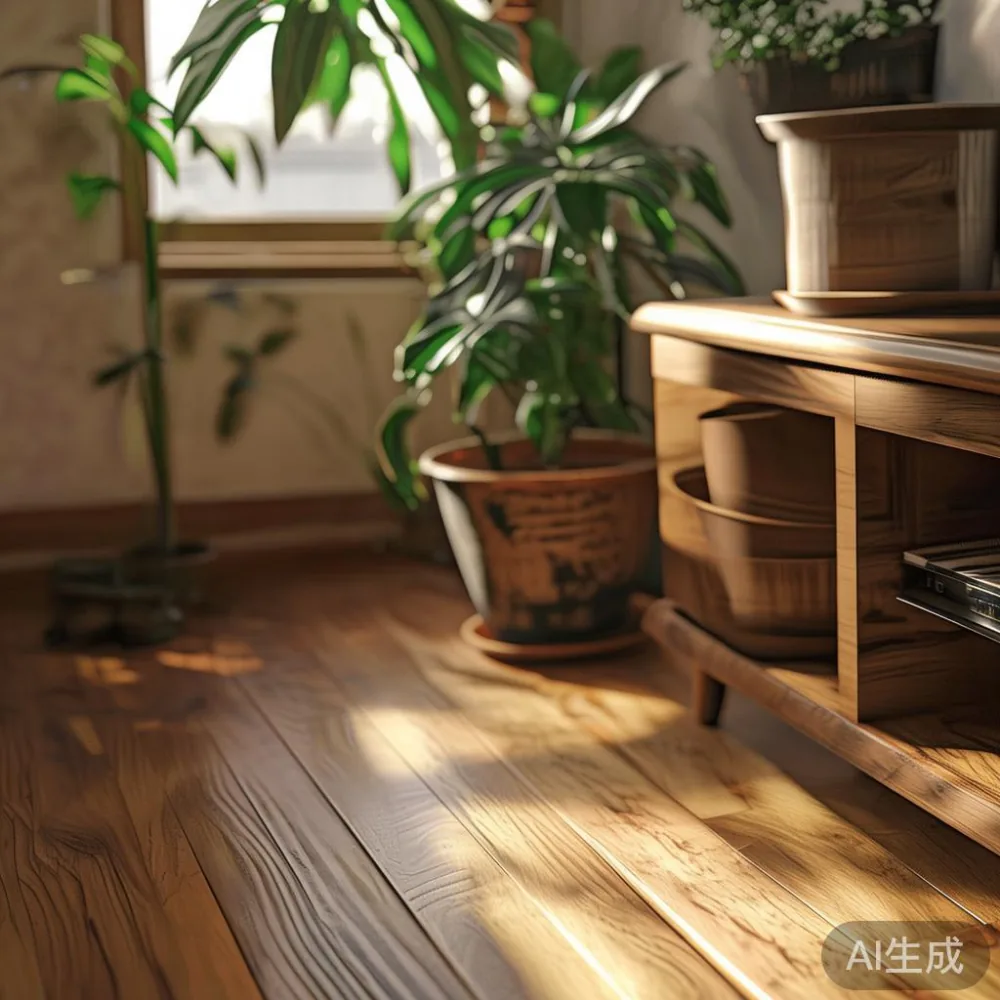
Keep plants in trays with drainage. Do not water a cabinet-top plant directly over the wood. If a leak occurs, remove the electronics, unplug the affected area and dry the surface within 1 hour. The 14-day return policy provides a useful early checkpoint for buyers, though seasonal movement is generally a care issue rather than proof of faulty construction.
A controlled room is the most effective protection. Aim for 45% to 65% relative humidity, keep cabinetry 10 to 15 cm from external walls, preserve ventilation and avoid abrupt wetting. These measures allow solid wood furniture to age with character rather than unnecessary stress, preserving the proportions, joinery and finish that make a TV cabinet valuable in a Singapore home.