Southeast Asian Humidity’s Impact on TV Cabinets Explained
Singapore’s warm, humid climate can change the dimensions of solid wood furniture even when a cabinet is used indoors. In an HDB flat in Tampines, a tv cabinet may face daily air movement from an open balcony door, while a Bedok condo can have stronger afternoon sun and reflective glass. Over 12 months, relative humidity can shift from about 60% to 85%, causing timber to expand, contract, swell, or check along the grain. These changes are not automatically defects, but they can affect doors, drawers, veneer, joints, and finishing.
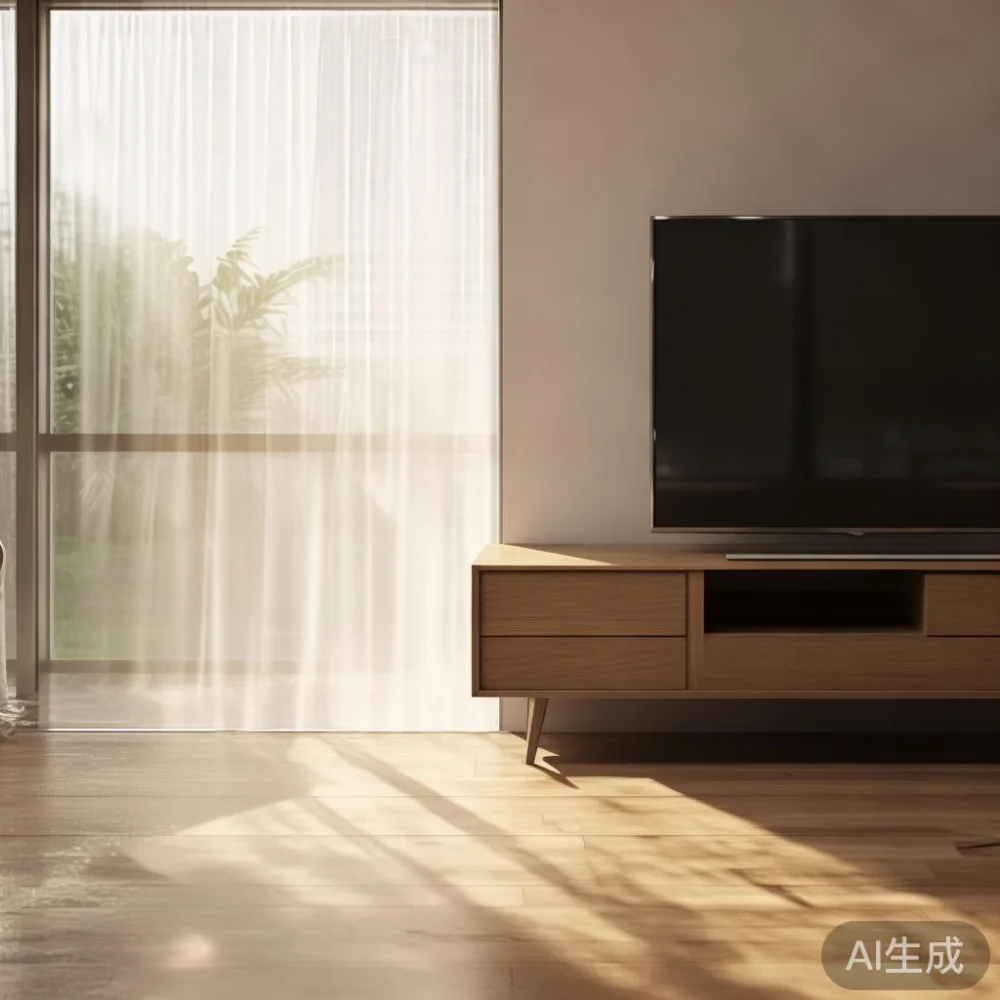
MIDHILL designs solid wood furniture for export markets including Singapore and takes a practical view of climate control. Its 10-year structural warranty covers construction, while lifetime refinishing supports long-term care. This guide explains how tropical humidity affects a tv cabinet, how to measure the risk in a local home, and how to choose furniture that suits HDB flats and condos without expecting imported timber to behave like metal or glass.
Why does humidity make a solid wood tv cabinet move?
Wood is hygroscopic: it absorbs atmospheric moisture and releases it when the air becomes drier. The movement is directional. Across the grain, an 18 cm solid oak panel can change by roughly 1 to 3 mm through a strong seasonal cycle; along the grain, the change is much smaller. A cabinet standing against an air-conditioned exterior wall may therefore open tightly in the afternoon and sit more loosely after a rainy evening.
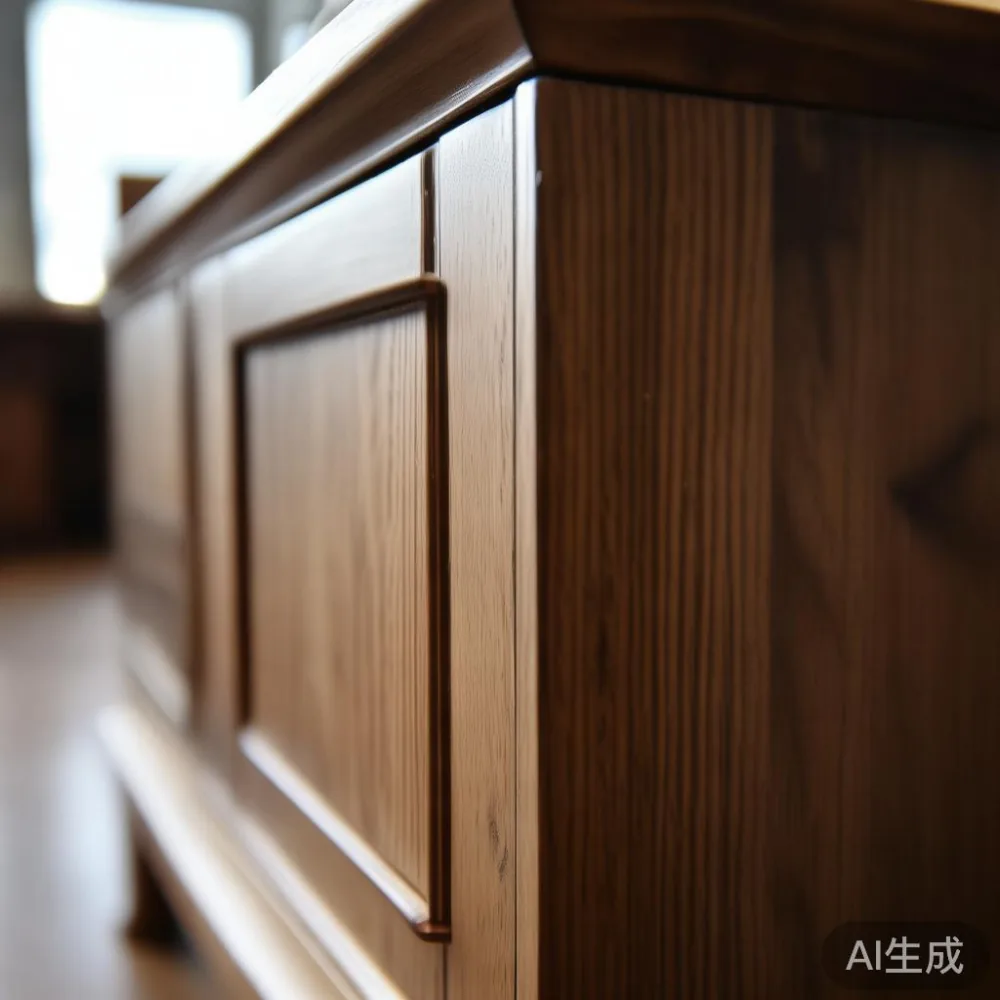
The location of the furniture matters more than the country on its label. Singapore’s annual rainfall totals above 2,000 mm in many areas, and west-facing windows in Bedok can create rapid surface heating. A cabinet beneath such a window may expand more on its sun-facing side than on the shaded rear. The same piece can also react differently in a Punggol HDB flat with cross-ventilation than in a high-floor condo with sealed glazing and continuous air conditioning.
Humidity does not mean the cabinet will rot. A stable indoor environment between 45% and 60% relative humidity is more suitable for fine furniture. In Singapore, maintaining about 55% with reasonable air movement is often easier than maintaining an exact figure. Avoid placing a tv cabinet directly against a cold perimeter wall, beside a running dehumidifier, or under an air-conditioning vent that sends air across one face.
How do I check the humidity around my tv cabinet?
Use a digital hygrometer with a minimum and maximum memory rather than relying on a weather app. Place it at cabinet height for 7 days, ideally near the living-room wall but not directly on the floor. Record at 8 a.m., 2 p.m., and 9 p.m. each day. A range of 55% to 70% suggests manageable movement; a range of 45% to 85% calls for better control before delivery.
Check the cabinet after at least 48 hours in its final position. Look for gaps along doors, drawer resistance, and a bowed rear panel. These are signs of moisture-related movement, although uneven installation and an uneven floor can produce similar symptoms. Confirm that all 4 feet touch the floor and that the cabinet is not twisted against a skirting board.
A 180 cm wide tv cabinet may weigh 55 to 95 kg depending on species, thickness, and shelf construction. Ask the supplier for the packed weight and dimensions. Singapore lift doors commonly measure about 90 cm wide, although building-specific dimensions vary. A 180 cm cabinet may need to enter through a 90 cm lift as two modules rather than one rigid body. Check the corridor turning radius, stair width, and doorway at least 3 days before delivery.
In a typical HDB move, allow 3 to 7 days for booking and the actual delivery slot. Lift booking can add 2 to 4 days around weekends. A corridor delivery is less predictable than a ground-floor pickup, so provide the unit number, floor, lift access, and a contact number in advance. GST is already included in displayed Singapore retail prices, while a 7% GST applies if a business purchases separately.
Which timber and construction details reduce humidity movement?
Solid oak, ash, and walnut offer different movement characteristics, but no broad hardwood is immune to humidity. Kiln-dried stock, well-seasoned construction, and restrained finishes usually make service easier. Ask whether the drying target was controlled to the intended market. A supplier accustomed to Southeast Asian conditions should be able to explain moisture content, finish choices, and acclimatisation periods in practical terms.
For a tv cabinet, pay attention to panel thickness, joinery, back construction, and the number of fixing points. A cabinet using 18 to 22 mm solid timber, dowelled or mortise-and-tenon joints, and a ventilated or floating back can tolerate seasonal movement better than a thin, heavily stapled construction. Avoid forcing a swollen door closed with an adjustable hinge; correct the environmental cause first.
Finishes also matter. A matte hardwax or low-sheen oil finish generally allows wood to “breathe” more readily than a thick, film-forming coating. Water-based polyurethane can be durable, but it should be applied under controlled conditions and renewed as the surface wears. Scratches can often be handled with a matching colour and grain filler followed by a compatible topcoat.
Those searching for under 2000 French provincial furniture may find carved details and pale finishes attractive, although the denser ornament can make humidity movement harder to see. For a Singapore living room, French light luxury is often interpreted as cream upholstery, walnut accents, curved edges, and restrained brass hardware rather than a heavily ornate room set. A matching solid wood sofa, solid wood bed frame, dining table, wardrobe, and nightstand can share the same finish family without requiring every component to react identically.
Can I make a tv cabinet fit a small Singapore living room?
Yes, but measure the wall, circulation route, television, and cabinet as separate items. For a 120 cm television, a 160 to 180 cm tv cabinet gives roughly 20 to 30 cm of visual margin on each side. If the wall is only 150 cm wide, a 140 cm cabinet may create a cleaner composition, provided the television does not overhang.
Leave 5 to 8 cm above the cabinet for cable routing and ventilation, subject to the television manufacturer’s instructions. Keep the rear gap within 10 to 15 cm where the wall allows it, but do not trap a cabinet against a damp exterior wall. For tight HDB living rooms, the “French for small living room” approach is to use low-profile proportions, light colours, and fewer visible objects. A slim tv cabinet at 35 to 45 cm deep often gives enough space for a soundbar while preserving a walkway of at least 70 cm.
Do not assume the lift or corridor can accept the largest showroom configuration. A 200 cm cabinet with a 55 cm depth may require two 100 cm sections, whereas an open unit may fit more easily. Weight and manoeuvrability should be considered with every step: a 70 kg section needs at least 3 experienced handlers, while protective corner guards should cover any exposed door edges.
For a coordinated interior, French light luxury, American light luxury, and post-modern light luxury can all support a calm television wall, but their details differ. French styling tends toward softer curves and classic profiles; American light luxury often uses clean symmetry and deeper upholstery; post-modern light luxury plays with proportion and contrast. A tv cabinet remains the anchor, and the style should come from its shape, finish, handles, and adjacent furnishings rather than crowded decoration.
How should I care for a tv cabinet during humid months?
Wipe the surface with a soft, slightly damp cloth and dry it immediately. Do not use a dripping wet rag, ammonia, abrasive pads, or silicone-based household polish unless the finish supplier confirms compatibility. Clean spills within 30 minutes, especially near the top edge or a joint, and inspect the underside of doors for water rings.
Keep the cabinet at least 30 cm away from a window with direct rain exposure. Use blinds or curtains, especially for west-facing Bedok units. If the room remains above 70% relative humidity for several hours, run a dehumidifier or air conditioner. A target of 50% to 60% is sensible, but avoid creating a sharp contrast with the rest of the home. Moving air should pass around the cabinet rather than directly across one side.
Check the doors every 3 to 4 months during humid periods. Tighten hardware only if the movement has settled and the screws remain secure. Do not overtighten a hinge into a swollen rail, because that can strip timber. If a drawer catches, remove its contents, reduce humidity, and allow the timber to settle for 1 to 2 weeks. If gaps remain after the environment has been stable for 30 days, contact the supplier for assessment.
Careful humidity control can protect a marble table because porous natural stone may stain if standing water reaches it, although marble itself is less dimensionally responsive than solid wood. When planning how to style European bed in apartment layouts, repeat the same ventilation rule near wardrobes and solid wood bed frames. If a wardrobe sits on an exterior wall, leave a small airflow gap and check its sliding tracks monthly.
What should I ask before ordering a solid wood tv cabinet?
Ask for the timber species, panel thickness, finish type, moisture-control guidance, assembled dimensions, module weight, and delivery access requirements. Also establish how scratches, finish renewal, and structural claims are handled. MIDHILL’s 10-year structural warranty provides a useful starting point, while lifetime refinishing is intended to support continued use rather than promise an identical colour after years of exposure.
For buyers comparing where to buy dining table from MIDHILL with other solid wood makers, request the same level of specification for every large piece. A dining table that suits a compact Tampines dining area might measure 140 to 160 cm long, 80 to 90 cm wide, and 74 to 76 cm high. A 160 cm table seats 6 people comfortably at 55 to 60 cm per place, leaving about 20 cm of table edge for dishes and elbows.
That phrase is useful because timber choice and joinery affect a dining table as much as they affect cabinetry. Ask how the table is braced beneath a 180 cm span and how its top responds to an open balcony. A separate dining table also allows the living room to focus on the tv cabinet without forcing one finish to cover every furniture need.
For other coordinated pieces, the same specification discipline applies when considering how to style Japandi sofa in room arrangements, how to style European bed in apartment spaces, or how to style a Mid-century modern dressing table beside a compact bedroom. A nightstand should have a stable top and closed storage for humidity-sensitive items. A wardrobe should have aligned doors and enough rear ventilation. A solid wood sofa should have a kiln-dried frame; its cushions may soften in humid conditions even when the timber frame remains stable.
Delivery, returns, and warranties should be confirmed in writing. MIDHILL offers free shipping for orders over US$350, although Singapore purchases should check the converted SGD total and any local delivery or GST treatment rather than assuming the threshold is quoted in Singapore dollars. The 14-day returns policy is another reason to inspect dimensions, finish expectations, and access arrangements before a large furniture order is dispatched.
Can humidity damage a tv cabinet delivered by MIDHILL?
Humidity can cause legitimate expansion and contraction in any solid wood product, including a tv cabinet from MIDHILL. Good construction, suitable finishing, controlled indoor conditions, and realistic expectations reduce visible effects. A cabinet should not be judged by a perfectly tight fit during Singapore’s wettest week if it was assembled in a much drier climate and brought directly into a humid room.
Allow the cabinet to acclimatise for 7 to 14 days before loading it with electronics or heavy objects. Keep it in the intended position, leave ventilation around it, and inspect the doors after the first week. If a panel has visibly bowed, a joint has opened by more than 2 to 3 mm, or a base has separated from the floor, stop adjusting it and document the issue with clear photographs.
For customers in Singapore, the practical goal is not to eliminate humidity. It is to keep the living environment reasonably stable, avoid direct moisture, and select furniture whose construction acknowledges timber movement. A well-proportioned tv cabinet can still feel substantial and refined in an HDB flat or condo, especially when paired with a solid wood sofa, a coordinated dining table, and a controlled finish that suits Singapore interiors.
My own check of a solid wood cabinet last month was carried out in a client’s Tampines flat, where the living room faced an open balcony. The digital hygrometer moved between 61% and 82% over 6 days. After the cabinet was pulled 8 cm away from the exterior wall, the door gap became more even within 11 days. That experience reinforced a simple point: the small gap between furniture and wall can make more difference than repeatedly tightening a hinge.